'I have a bomb strapped to me' - Woman tells Irish church from altar at Confirmation
Search


24 Mar 2026

Please allow ads as they help fund our trusted local news content.
Kindly add us to your ad blocker whitelist.
If you want further access to Ireland's best local journalism, consider contributing and/or subscribing to our free daily Newsletter .
Support our mission and join our community now.
To continue reading this article, you can subscribe for as little as €0.50 per week which will also give you access to all of our premium content and archived articles!
Alternatively, you can pay €0.50 per article, capped at €1 per day.
Thank you for supporting Ireland's best local journalism!


Ministers have been told “much more needs to be done” to improve cancer care after figures showed an “alarming” drop in survival rates for some forms of the disease.
The proportion of patients still alive a year after being diagnosed with leukaemia has fallen from 77.9% to 75.4%, the figures show, with fewer people also still alive 12 months after being diagnosed with cancer of the head or neck.
Age standardised survival rates for this form of the disease fell from 75.2% to 72.6%, the Public Health Scotland data shows.
The report also shows fewer women are surviving a year after a diagnosis of oesophageal cancer, with this dropping from 46.6% to 42.7%.
There has been a decrease in the five-year age standardised survival rate for leukaemia, down from 61.9% to 57.5%, and among men diagnosed with non-Hodgkin lymphoma – a form of blood cancer – from 68.% to 64.1%.
The report looked at survival rates for patients diagnosed with cancer between 2018 and 2022, following them through to the end of 2023.
Over the course of the five-year period between 2018 to 2022, it found 70.9% of patients survived for at least one year.
Almost half (49.2%) survived at least five years.
Public Health Scotland said the chances of survival depend “largely on which type of cancer” a person is diagnosed with – with survival rates ranging from 23.1% for pancreatic cancer to 97.9% for testicular cancer.
The report does show an increase in the number of people alive a year after being diagnosed with lung cancer – up from 40.8% to 45.7% – while the five-year survival rate rose from 16.4% to 19.9%.
The number of men living at least a year after a pancreatic cancer diagnosis increased from 24.7% to 28.5%, and the one-year survival rate for prostate cancer rose from 96.5% to 97.6%. The five-year survival rate for prostate cancer increased from 85.6% to 88.6%.
For women, the five-year survival rate for breast cancer increased from 85.3% to 86.7%.
Opposition parties have criticised the Scottish Government over its failure to meet key targets setting out that 95% of patients should start treatment within 62 days of being urgently referred when cancer is suspected
Scottish Labour health spokeswoman Dame Jackie Baillie said: “Early diagnosis and treatment can save lives and it is crucial that more is done to give every patient the best possible chance of survival.
“Under the SNP, a key 62-day cancer treatment target has been missed for the last 13 years – it is not good enough.”
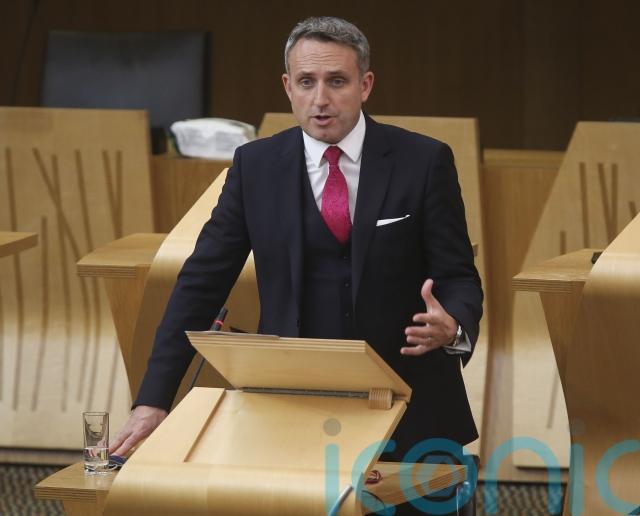
Scottish Liberal Democrat leader Alex Cole-Hamilton said it was “alarming to see a drop in survival rates for certain types of cancer”.
He added: “Much more needs to be done to improve care, but all we have seen is an SNP Government never once meeting a key cancer waiting times target in the 14 years since it was introduced.”
Similarly, Scottish Conservative health spokesperson Dr Sandesh Gulhane said the “drop in survival rates for certain cancers on the SNP’s watch (is) deeply concerning”.
The Tory said: “Early diagnosis is crucial for a patient’s chances of survival but gross mismanagement from successive SNP health secretaries mean far too many cases are falling through the cracks.
“The SNP have failed to meet their own cancer waiting time targets for well over a decade. That incompetence costs lives and is creating a ticking timebomb for Scotland in the future.”
The Scottish Government has been contacted for comment.

Subscribe or register today to discover more from DonegalLive.ie
Buy the e-paper of the Donegal Democrat, Donegal People's Press, Donegal Post and Inish Times here for instant access to Donegal's premier news titles.
Keep up with the latest news from Donegal with our daily newsletter featuring the most important stories of the day delivered to your inbox every evening at 5pm.

This publication supports the work of the Press Council of Ireland and Office of the Press Ombudsman, and our staff operate within the Code of Practice of the Press Council. You can obtain a copy of the Code, or contact the Council, at www.presscouncil.ie, Lo-call 1800 208 080 or email: info@presscouncil.ie.