Christopher 'Crunchie' Holt (r) with his friend Ger McBride who died in late 2024
Search


25 Mar 2026

Please allow ads as they help fund our trusted local news content.
Kindly add us to your ad blocker whitelist.
If you want further access to Ireland's best local journalism, consider contributing and/or subscribing to our free daily Newsletter .
Support our mission and join our community now.
To continue reading this article, you can subscribe for as little as €0.50 per week which will also give you access to all of our premium content and archived articles!
Alternatively, you can pay €0.50 per article, capped at €1 per day.
Thank you for supporting Ireland's best local journalism!


A Scottish bus company has said it is taking legal advice after its bid for funds to expand its electric bus fleet was rejected by Transport Scotland.
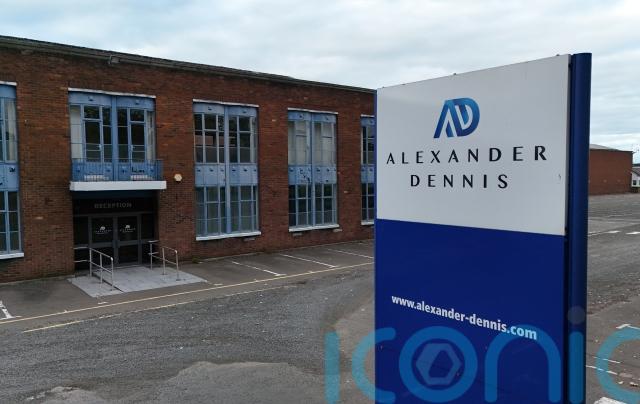
McGills Group, which is the largest independent bus operator in the UK, said it had sought £4.3 million from a Government scheme to buy 33 zero-emission vehicles from Falkirk-based bus manufacturer Alexander Dennis Limited (ADL).
The company said the move would have boosted Scottish jobs and enabled it to remove more diesel vehicles from its fleet across Scotland.
However when the results of the third round of the Scottish Zero Emission Bus Challenge Fund (ScotZEB3) were announced on Wednesday, the £45 million of Government cash went to five other bus operators.
McGills said the largest share – £13 million – had been awarded to coach firm Ember to buy 100 Chinese electric coaches to expand its existing network, which McGills said would not result in any diesel vehicles being replaced.
Chairman Ralph Roberts said the company was “disappointed” with the decision and would be “reviewing how the bid was scored”.
“The original purpose of these rounds of funding was to convert diesel buses to zero emission – improving air quality in local communities and accelerating the sector’s journey to net zero,” he said.
“It now appears the fund is being used to support new competing services rather than replace existing diesel fleets, which raises serious questions about whether it is delivering on its stated aims.”
Mr Roberts added: “There is also a fundamental question about fairness and transparency in how this funding has been allocated.
“We will be looking closely at the scoring process and will consider legal remedies to challenge this decision and ensure the process has been conducted properly.
“Ultimately, if public funding is not being directed towards removing diesel buses from our roads, then the Scottish Government needs to explain how this approach helps deliver cleaner air and a faster transition to net zero.”
In a statement Ember said the investment would enable it to operate the largest intercity and regional coach network in Scotland, and make Scotland “the only country in the world with a fully electric national coach network”.
The company added that it has has “tried hard” to source electric coaches from Scotland, but that ADL, which is the only bus manufacturer in the country, does not make them and has no plans to do so.
ADL is now set to receive orders for more than 100 zero emission vehicles from bus companies Rock Road and Lothian Buses.
Last year, the Scottish Government was forced to step in to fund a furlough scheme for staff at ADL after the firm announced it was considering consolidating its operations at a single site in Yorkshire, putting around 400 jobs at risk.
At the time, bosses said the firm would need an increase in orders if it was to become sustainable in the central belt.
Today @FionaHyslop announces £45m from @scotgov through third Scottish Zero Emission Bus Challenge Fund (ScotZEB3).
This will bring over 330 zero emission vehicles to Scotland’s operators, alongside installation of charging infrastructure.
Read more ➡️ https://t.co/dVyfQUZNDt pic.twitter.com/B6w1Ztbf70
— Transport Scotland (@transcotland) March 25, 2026
Transport Secretary Fiona Hyslop said: “This final investment of £45 million from the Scottish Government through ScotZEB3 signals our commitment to a zero emission future for Scotland’s bus sector.
“Since 2020, we have invested over £154 million in zero emission buses and infrastructure. This additional £45 million will support the ambition and leadership of operators that seek to decarbonise their operations as quickly as possible.
“It also helps ensure that the bus sector can access the benefits of Scotland’s investment in secure, renewable sources of electricity.
“With every £1 of public funding leveraging over £2.50 of private investment, ScotZEB3 has demonstrated that Government and industry can work together to deliver transformative climate action.
“The programme is not only reducing emissions – it’s supporting jobs and our economy, connecting communities across Scotland and improving the experience for passengers across the country.”
In total, more than 300 zero emission buses and 295 charging points have been funded.
Ember will be the biggest recipient, netting more than £13 million for 100 buses and 43 charging points.
Rock Road has been given £11.5 million for 93 buses and 101 chargers.
Lothian buses – which operates in Edinburgh – was given £9.6 million for 60 vehicles and 88 chargers, while around £6 million was set aside for bus giant First, and around £4.5 million for Stagecoach for 44 buses and 25 chargers.

Subscribe or register today to discover more from DonegalLive.ie
Buy the e-paper of the Donegal Democrat, Donegal People's Press, Donegal Post and Inish Times here for instant access to Donegal's premier news titles.
Keep up with the latest news from Donegal with our daily newsletter featuring the most important stories of the day delivered to your inbox every evening at 5pm.

This publication supports the work of the Press Council of Ireland and Office of the Press Ombudsman, and our staff operate within the Code of Practice of the Press Council. You can obtain a copy of the Code, or contact the Council, at www.presscouncil.ie, Lo-call 1800 208 080 or email: info@presscouncil.ie.