
Fenna Rasmussen pictured with her daughter Tatum, son Ryder and their dogs, Roxy and Nala.
Search


08 Apr 2026

Please allow ads as they help fund our trusted local news content.
Kindly add us to your ad blocker whitelist.
If you want further access to Ireland's best local journalism, consider contributing and/or subscribing to our free daily Newsletter .
Support our mission and join our community now.
To continue reading this article, you can subscribe for as little as €0.50 per week which will also give you access to all of our premium content and archived articles!
Alternatively, you can pay €0.50 per article, capped at €1 per day.
Thank you for supporting Ireland's best local journalism!


A poll has the SNP “absolutely in pole position” in the run-up to next month’s Holyrood election – with the same study showing a fall in support for Labour as the party fights for second place.
Research by Ipsos put support for the SNP at 39% in the constituency section of the ballot, up by three points from March.
Meanwhile, support for Labour in the constituency vote was down five points, the poll found, with both Anas Sarwar’s party and Reform UK on 15%.
The latest Ipsos Scottish Political Monitor, carried out for STV News, put support for the Tories up by two points to 11%, with the Liberal Democrats on 10% and the Scottish Greens, who are only standing in some constituencies, on 7%.
NEW: Scotland voting intention poll from @IpsosScotland @STVNews, with four weeks to go until polling day.
📢 The SNP have opened up a 24-point lead over Scottish Labour and Reform UK. Our poll puts the SNP on 39% of the constituency vote, with Labour and Reform each on 15%. pic.twitter.com/5T31RzxOa4
— Emily Gray (@EmilyIpsosScot) April 8, 2026
On the regional list section, the SNP had also increased its lead over its rivals, with support up to 29%, ahead of the Scottish Greens on 16%, with Reform UK having the same levels of support.
Support for Labour had dropped to 15% on the regional ballot, according to the poll, with the Tories on 13% and the Liberal Democrats on 9%
Seat projections showed such a result could see the SNP win 63 seats at Holyrood on May 7 – just short of the overall majority that leader John Swinney is targeting.
The Greens could be second, with 17 seats, ahead of Reform UK – led in Scotland by Malcolm Offord – on 15 seats, with Labour just behind with 14 MSPs. The Scottish Tories could then have 12 MSPs, with the Liberal Democrats on eight, it suggested.
Emily Gray, managing director of Ispos in Scotland, told the Press Association: “This latest poll shows that the SNP are absolutely in poll position at this election.”
While she said the Scottish Greens are in a “strong position” on the regional list, based on this poll, she added that the “race for second place is probably between Labour and Reform”.
Looking ahead to the election, Ms Gray said: “The big change from last time round is Reform UK, now they are challenging Labour for second place.
“Five years ago it was Labour and the Conservatives that were in that position, but the Conservatives really do seem to be in the doldrums, with no real signs of recovery.”
A total of 1,038 adults across Scotland were questioned for the survey, with the polling taking place between March 26 and 31.
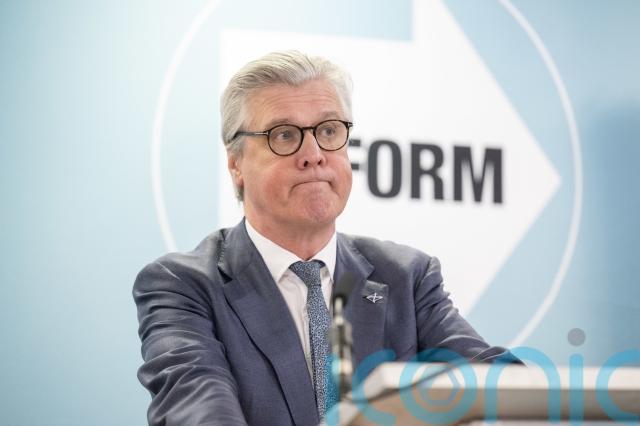
Ms Gray said the results contained “more good news” for the SNP, with the poll also showing an increase in Mr Swinney’s approval rating.
Two fifths (40%) of voters are “satisfied” with his performance, and with 48% “dissatisfied”, the SNP leader has an satisfaction rating of -8 – with this up by four points since March.
Scottish Labour leader Anas Sarwar’s approval rating was unchanged on -29, the survey found, with dissatisfaction growing with Lord Offord.
With 57% of voters dissatisfied with him, and only 16% satisfied, his net approval rating of -41 was down by 4.5 points from last month.
Ms Gray said, however, that “the public are much more disenchanted with all the political leaders in Scotland than they were five years ago”.
In the 2021 Holyrood election, she said that “most of the party leaders got a positive approval rating overall,” with that of then SNP leader Nicola Sturgeon being “especially high”.
But she said: “That looks really different now, none of the party leaders gets a positive rating. And so John Swinney is effectively the best rated of a fairly poorly rated bunch.”
But votes aren’t locked in yet.
With a month to go, 42% of Scots say they might still change their mind on who to vote for on their constituency vote (compared to 25% in April 2021).
42% also say they may still change their mind on their regional list vote (32% in April 2021). pic.twitter.com/8ApkCS2uL0
— Ipsos Scotland (@IpsosScotland) April 8, 2026
But with 42% of voters saying they could change their minds about who to back on both the constituency and list section of the ballot, Ms Gray said: “The big question now is how things might change over the next four weeks.”
She said the number of voters who could switch allegiances was “higher than we would typically see at this point in an election campaign”.
And she said: “What that tells us is the parties do have that opportunity to shift the dial over the next few weeks, especially when it comes to the issues that really matter to voters like the NHS, cost of living and energy and fuel prices.”
Speaking to the Press Association in Stornoway on the Isle of Lewis, the First Minister said two fifths of respondents being willing to switch allegiance was as a result of Scots “mulling over the issues and the ideas and the points put forward by different political parties”.
“Obviously, I welcome the fact that the SNP remains in a very leading position in the opinion polls, but we will work to go and strengthen that position in the remaining four weeks of the campaign,” he said.
Scottish Green co-leader Gillian Mackay, meanwhile, said finishing second would be a “huge breakthrough” for her party.
She said: “If we can make these numbers a reality it would transform Scottish politics overnight.”

Subscribe or register today to discover more from DonegalLive.ie
Buy the e-paper of the Donegal Democrat, Donegal People's Press, Donegal Post and Inish Times here for instant access to Donegal's premier news titles.
Keep up with the latest news from Donegal with our daily newsletter featuring the most important stories of the day delivered to your inbox every evening at 5pm.

This publication supports the work of the Press Council of Ireland and Office of the Press Ombudsman, and our staff operate within the Code of Practice of the Press Council. You can obtain a copy of the Code, or contact the Council, at www.presscouncil.ie, Lo-call 1800 208 080 or email: info@presscouncil.ie.