
Derry Death Notices - Evening - Saturday, April 11, 2026.
Search


12 Apr 2026

Please allow ads as they help fund our trusted local news content.
Kindly add us to your ad blocker whitelist.
If you want further access to Ireland's best local journalism, consider contributing and/or subscribing to our free daily Newsletter .
Support our mission and join our community now.
To continue reading this article, you can subscribe for as little as €0.50 per week which will also give you access to all of our premium content and archived articles!
Alternatively, you can pay €0.50 per article, capped at €1 per day.
Thank you for supporting Ireland's best local journalism!


The “dangerous act” of non-fatal strangulation is becoming “increasingly prevalent”, Scotland’s prosecutors have warned.
Branding strangulation an “extreme and distressing form of control”, Laura Buchan, legal director with the Crown Office and Procurator Fiscal Service, warned such behaviour is becoming more common, both as part of sexual activity and domestic abuse.
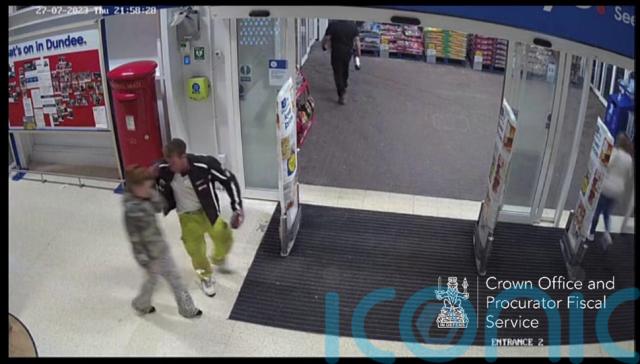
She was speaking after the landmark case against Lee Milne, 40, who was sentenced to eight years in prison after being convicted of killing his wife Kimberly when she jumped to her death from a bridge.
The 28-year-old took her own life after an 18-month abusive ordeal at the hands of Milne.
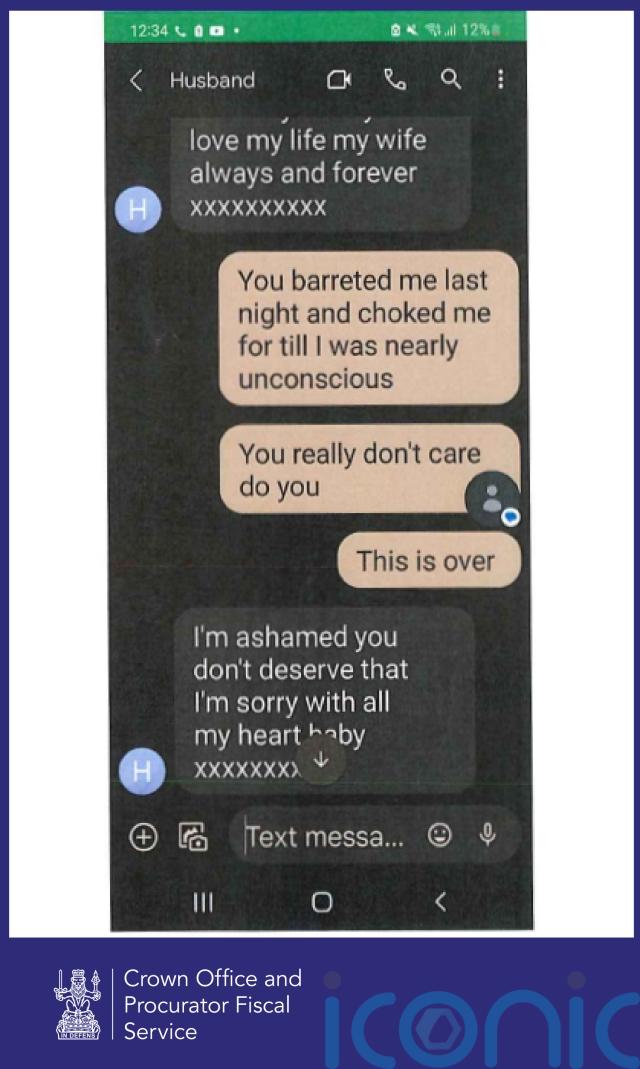
She had sent a text message to her husband saying he had strangled her to the point of unconsciousness in the weeks leading up to her death.
Ms Buchan said strangulation is the second most common method for women to be murdered in the UK, after using a knife or other sharp weapon.
Meanwhile the organisation Assist, which supports domestic abuse victims through the criminal justice process, said around half of victims report being subjected to strangulation to “exert control over them”.
Ms Buchan said: “It is deeply concerning to me – and all prosecutors – that the dangerous act of strangulation is increasingly prevalent.”
Making clear there is “no ‘safe’ way to strangle anyone”, she added: “In gripping, choking or strangling, hands are effectively being used as weapons and lives are endangered.
“We know it takes very little pressure to stop someone taking their next breath. This is an extreme and distressing form of control.
“Strangulation, in whatever circumstances it occurs, is an act that is both physically life‑threatening and deeply traumatising. We are determined to tackle it.”
She urged victims – who are predominantly women – to reject the perceived ‘normalisation’ of non-fatal strangulation (NFS) and report cases to police.
Ms Buchan warned: “Deliberately choking a victim or sexual partner can quickly cause stroke, heart attack, internal injuries or death, as well as the terror of being unable to breath or shout for help, which causes long-term trauma.
“Strangulation is the second most common method of female murder in the UK, after a knife or sharp instrument, according to official statistics.”
Emma Forbes, Scotland’s procurator fiscal for domestic abuse, said: “Raising awareness of NFS is crucial because it is so dangerous.
“We all need to better understand the dangers, but we especially need to protect those most at risk – young people and women.”
She said victims should be reassured prosecutors “see the trauma it causes and understand that it can be a warning of worsening abuse”.
Dr Forbes added that Scotland’s “ground-breaking domestic abuse legislation” allows authorities to show evidence of a “range of abusive behaviour over a period of time – not only one-off incidents”.
This, she said, helps “capture the significance of all sorts of coercive and controlling behaviour, including NFS”.
Speaking directly to victims, she said: “If you are worried, please report. You will be believed and we will treat reports very seriously.”
Fiona McMullen, operations manager at Assist, said victims tell the organisation that “non-fatal strangulation is the most terrifying form of abuse they are subjected to because they don’t know whether they will survive it”.
Ms McMullen said: “Around 50% of our clients tell us this has happened to them during a relationship or post-separation. They describe it as used to exert control over them.
“The impact on physical and mental health is significant, including the risk of stroke, brain injury, depression, PTSD and suicide.
“This impact is often underestimated, particularly if there are no visible injuries.
“Many younger clients tell us that NFS is normalised not only as part of a sexual relationship but as part of physical abuse and coercive control.
“We also know NFS is a risk marker for domestic homicide. We support attempts to ensure that NFS is better recognised and understood.”

Subscribe or register today to discover more from DonegalLive.ie
Buy the e-paper of the Donegal Democrat, Donegal People's Press, Donegal Post and Inish Times here for instant access to Donegal's premier news titles.
Keep up with the latest news from Donegal with our daily newsletter featuring the most important stories of the day delivered to your inbox every evening at 5pm.

This publication supports the work of the Press Council of Ireland and Office of the Press Ombudsman, and our staff operate within the Code of Practice of the Press Council. You can obtain a copy of the Code, or contact the Council, at www.presscouncil.ie, Lo-call 1800 208 080 or email: info@presscouncil.ie.