Search


14 Apr 2026
Search
14 Apr 2026

Please allow ads as they help fund our trusted local news content.
Kindly add us to your ad blocker whitelist.
If you want further access to Ireland's best local journalism, consider contributing and/or subscribing to our free daily Newsletter .
Support our mission and join our community now.
To continue reading this article, you can subscribe for as little as €0.50 per week which will also give you access to all of our premium content and archived articles!
Alternatively, you can pay €0.50 per article, capped at €1 per day.
Thank you for supporting Ireland's best local journalism!


The once-notorious “Highland hotel robbers” are among more than 100,000 Victorian prisoners whose records have been made available online.
Scotland’s People, the official site for Scottish government records, has published details of more than 100,000 inmates from Ayr and Inveraray jails.
In the summer of 1883, American James Edward Lyon and Eliza Thorpe targeted well-to-do guests in fancy hotels from Argyll to Aberdeenshire.
Cash, jewellery and other valuables went missing and Lyon and Thorpe always seemed to be around when it happened.
The pair, who travelled as man and wife, were arrested at a hotel in Edinburgh, while their associate Joseph Dowling was caught red-handed with some of the stolen items.
At their trial the men were convicted but the case against Thorpe, who was 20 years old, was found not proven.
Lyon was sentenced to seven years behind bars.
Photographs of Lyon, Thorpe and Dowling were kept in an album of interesting cases by the local procurator fiscal.
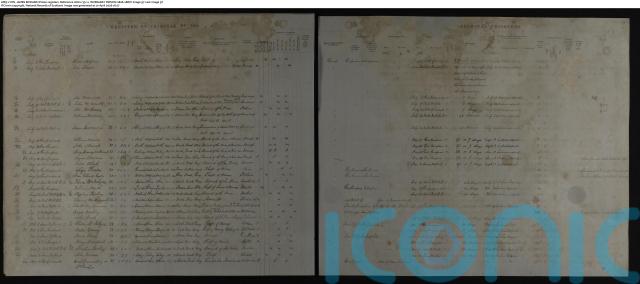
Their entries in the registers for Inveraray prison are among 4,600 records for the jail now on Scotland’s People.
Men, women and children were incarcerated at Inverary in the 19th century, with the youngest being seven-year-old James McCulloch, who was caught stealing.
The oldest was 82-year-old Ann Kerr, who was found guilty of “vagrancy”.
The newly published records also include 98,000 entries from Ayr Prison from 1841-1911.
Notable prisoners included murderers Joseph Calabrese, Thomas Bone and Mary Boyd. All of them were sentenced to death but were spared.
Scotland’s People said prison records provide a rare glimpse into the lives of people, often in desperate circumstances, who may have left few other records behind.
They provide details including names, imprisonment dates and details of their offences, and can also include details of an inmate’s physical characteristics, health, religion and level of literacy.
Archivist Veronica Schreuder said: “Prison registers are a rich source of information for social researchers and family historians alike.
“While it can be a shock to find an ancestor in prison, it can sometimes lead to details that are unlikely to have been preserved for most people.
“Finding out the colour of their hair, details of their health or whether they could read or write can turn a name and some dates into a much more rounded person.
“And, of course, if they have committed a serious crime, it can explain a lot about the decisions of other relatives such as moving area, changing a name or simply never talking about them.”
The additions mean there are more than 400,000 historical prison records available to search on Scotland’s People.
This includes the old Edinburgh prisons, Barlinnie, Perth and Largs.
Histories of both prisons and more on the cases highlighted in this story are available at Scotland’s People.

Subscribe or register today to discover more from DonegalLive.ie
Buy the e-paper of the Donegal Democrat, Donegal People's Press, Donegal Post and Inish Times here for instant access to Donegal's premier news titles.
Keep up with the latest news from Donegal with our daily newsletter featuring the most important stories of the day delivered to your inbox every evening at 5pm.

This publication supports the work of the Press Council of Ireland and Office of the Press Ombudsman, and our staff operate within the Code of Practice of the Press Council. You can obtain a copy of the Code, or contact the Council, at www.presscouncil.ie, Lo-call 1800 208 080 or email: info@presscouncil.ie.