James Murtagh/ RTE Video
Search


17 Feb 2026

Please allow ads as they help fund our trusted local news content.
Kindly add us to your ad blocker whitelist.
If you want further access to Ireland's best local journalism, consider contributing and/or subscribing to our free daily Newsletter .
Support our mission and join our community now.
To continue reading this article, you can subscribe for as little as €0.50 per week which will also give you access to all of our premium content and archived articles!
Alternatively, you can pay €0.50 per article, capped at €1 per day.
Thank you for supporting Ireland's best local journalism!


Waiting at the lookout point high in the hills of the rainforest in St Lucia, a fine white mist snaking its way through the lush verdant canopy of trees, we suddenly see a flash of green, crimson and yellow flying across the valley.
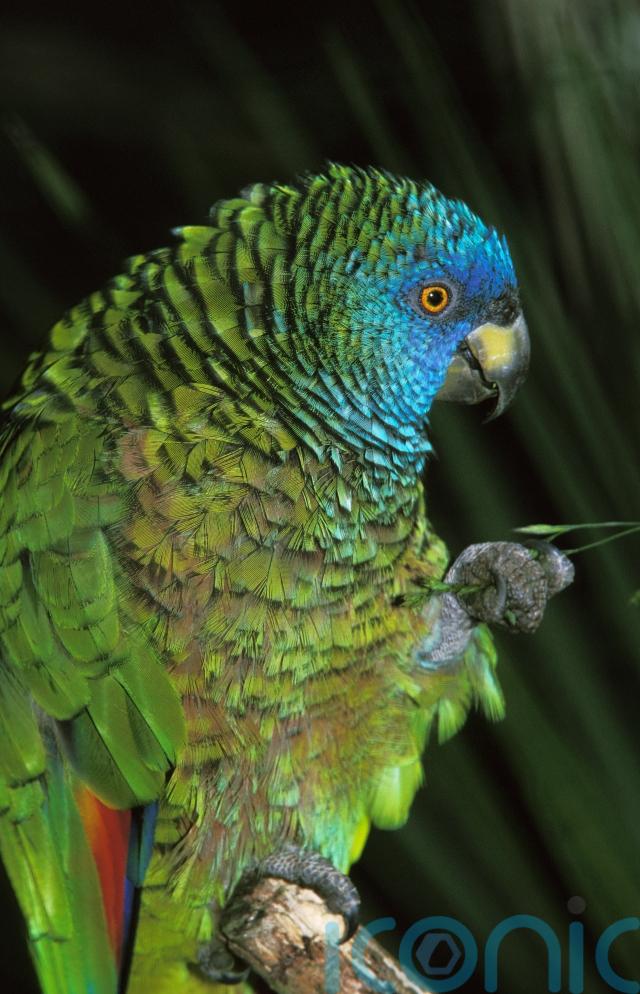
To gasps of delight, our guide Nestor Toussaint points out the St Lucia parrot, the island’s vibrant, vocal national bird and one of the rare and endangered species we are searching for on this fertile island in the Eastern Caribbean in a new ‘small six’ safari, an alternative take on Africa’s ‘Big Five’.
The trail in the centre of the island, an hour from the famous west coast with its pristine beaches and five-star resorts, is the place these colourful birds, St Lucia’s national symbol, make ‘cac-cac’ calls before crossing the rainforest corridor, flying in circles and across the great tree canopy. We see a further five before we leave.
Others in the ‘small six’ which can only be found on the island include the St Lucia black finch, the distinctive black and orange oriole (a species of songbird), the worm (thread) snake, whiptail lizard and pygmy gecko.
Many Caribbean islands have beautiful beaches and the tepid waters of the Caribbean Sea, but St Lucia, with its bubbling volcano, majestic pitons and hot mud baths, is much greener than many of its neighbours – and perfect for holidaymakers who want to explore the plethora of wildlife, flora and fauna this popular destination has to offer.
The small six safari is an initiative conceived by Nestor’s uncle, Adams Toussaint, St Lucia’s esteemed birding expert and conservationist, and his team. The group tour is intimate – maximum six people – so guides can give guests their full attention as they point out different species of plants and their unique properties, as well as wildlife, in the peace and calm of the rainforest.
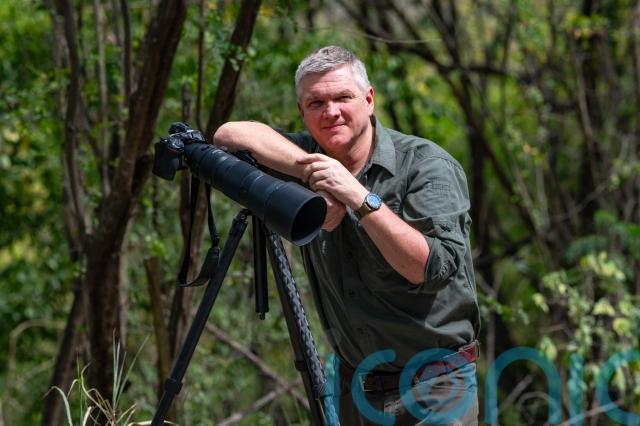
It’s been supported by bushcraft expert and TV presenter Ray Mears, who visited St Lucia earlier this year in search of these vulnerable creatures and has become an ambassador for the small six campaign to raise awareness of conservation and sustainable tourism on the island.
The overnight rain has left the Des Cartiers trail in the Quilesse Forest Reserve muddy, so we gingerly wend our way, negotiating the slippery path of decomposing leaves and avoiding exposed giant tree roots threatening to trip us up underneath the rich canopy of trees, where Nestor listens for bird calls and we all look up, straining our eyes for signs of these elusive species.
“The number one indication that a bird is there is the call,” he explains, occasionally using an app on his phone which mimics the calls of the birds we are looking for.
Birders will get the best out of this tour, but if you’re a beginner you’ll need to hire binoculars when you book or, even better, buy a pair before you go and practice with them at home before you visit. Nestor sets up a scope at the viewpoint where visitors can hopefully get a close-up of those elusive parrots on the wing.
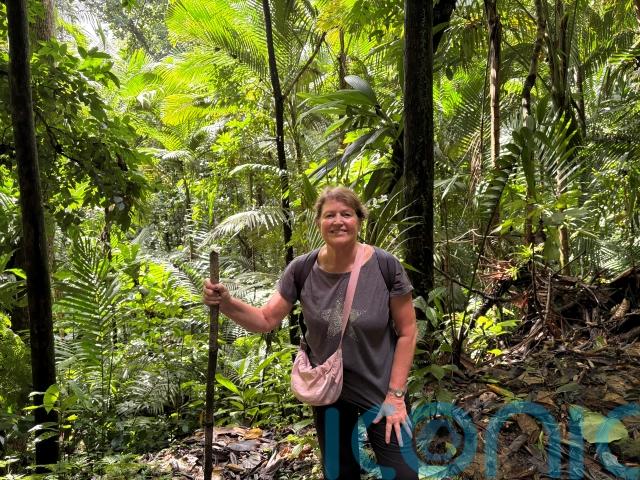
In the heart of the rainforest, cocooned by giant tree ferns, we see other endemic species – a brightly coloured warbler, a pewee, a type of flycatcher with a reddish-brown chest, and a black finch.
The plants offer an amazing array of medicinal properties, we are told, from the native calabash, St Lucia’s national tree, whose syrup can be used as a strong laxative, to cinnamon, supposedly great for blood circulation, while the incense tree is ideal for repelling mosquitoes and bad spirits.
More than 70% of the land in St Lucia is rainforest, which thrives in the island’s mountainous, volcanic terrain, around the majestic pitons in the south west and the protected interior forest ideal for exploring the wildlife, flora and fauna, so it’s a must for those who want a break from sunbathing.
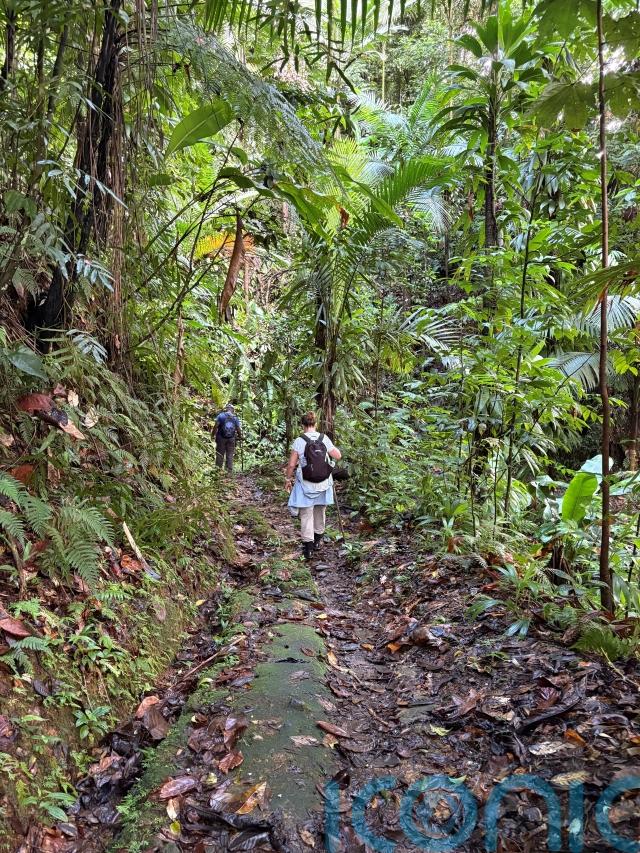
Trampling through sticky leaves, Nestor tells us of two types of tarantula who live in the rainforest, but are so stealthy that you rarely see them and he recalls discovering one on his back when he arrived home after a hike.
Later, we venture to the east coast, catching a motorised dinghy – although you can kayak – to tiny Praslin Island on the wilder, choppier Atlantic side, to tick off another of the small six, the St Lucia whiptail lizard, translocated in 1995 from its motherland, Maria Islands, in a bid to ensure the survival of the species.
We spot it as soon as we get off the boat. Sunning itself in scrubland by the beach, the 30cm long male whiptail is easy to spot because of its bright blue tail, while the female, who appears nearby, is brown and less noticeable.
Out of nowhere appears a large black insect which looks like a tiny bat but is, I’m reliably informed, a tarantula hawk, a rather sinister-looking bug which lays its eggs in tarantula spiders and when the larvae hatch they feed on the spider from within. So grisly, so interesting.
Yet, if you can’t drag yourself away from the beach, you don’t have to go to the rainforest to admire the wealth of plant and bird life.
Some hotels have their own botanical gardens and the delightful boutique East Winds Resort in the north west is one of them.
Head gardener Sylvanus Lewis, who has worked at the resort for 20 years, points out iridescent hummingbirds, bold bananaquits and Lesser Antillean bullfinches which flutter at the many sugar water feeding stations within the gardens and on guests’ terraces.
During the tour he offers us health-helping tea infused with a variety of locally harvested leaves.
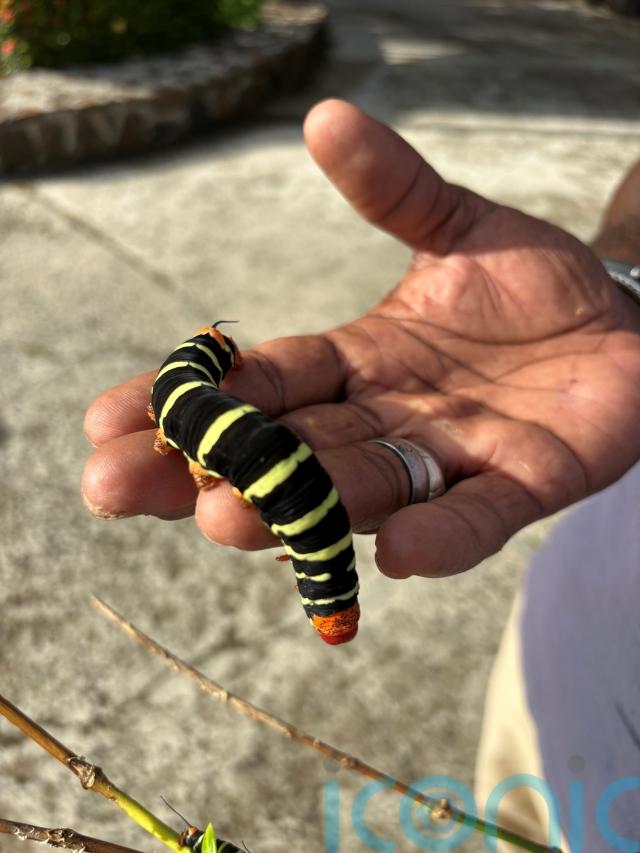
Lizards, brightly coloured butterflies, fruit bats and tree frogs are just some of the resort visitors, along with frangipani moths, whose huge velvety black and yellow caterpillars are a sight to behold.
Do we see all of the ‘small six’ on our rainforest safari? Well, not quite. The pygmy gecko doesn’t make an appearance and, after lengthy efforts to find the elusive worm snake by rustling up leaves with a stick at the side of the trail, we get back in the 4X4, a little deflated, ready to leave the forest.
Suddenly, out of nowhere, as if by magic, a majestic peregrine falcon swoops in front of the vehicle and flies off with a snake in its claws. Nature at its finest.
Travel facts
Tropic Breeze (tel: 01752 880880) offers seven nights at East Winds from £2,270 per person based on two adults sharing on an all-inclusive basis, including return flights from London and private transfers. Priced for travel in June 2026 and for bookings made by Feb 6, 2026. After Feb 6, price will be £2,965 per person.
The St Lucia Small Six Safari costs US $280/around £210 for two. For details visit stluciawildlife.com

Subscribe or register today to discover more from DonegalLive.ie
Buy the e-paper of the Donegal Democrat, Donegal People's Press, Donegal Post and Inish Times here for instant access to Donegal's premier news titles.
Keep up with the latest news from Donegal with our daily newsletter featuring the most important stories of the day delivered to your inbox every evening at 5pm.

This publication supports the work of the Press Council of Ireland and Office of the Press Ombudsman, and our staff operate within the Code of Practice of the Press Council. You can obtain a copy of the Code, or contact the Council, at www.presscouncil.ie, Lo-call 1800 208 080 or email: info@presscouncil.ie.