Search


21 Apr 2026
Search
21 Apr 2026

Please allow ads as they help fund our trusted local news content.
Kindly add us to your ad blocker whitelist.
If you want further access to Ireland's best local journalism, consider contributing and/or subscribing to our free daily Newsletter .
Support our mission and join our community now.
To continue reading this article, you can subscribe for as little as €0.50 per week which will also give you access to all of our premium content and archived articles!
Alternatively, you can pay €0.50 per article, capped at €1 per day.
Thank you for supporting Ireland's best local journalism!


The first beavers to be born from wild parents in a Highland national park for 400 years have been spotted by nature workers.
Beavers released in the Cairngorms National Park have given birth to two babies, or kits.
They were born to two of the six families relocated there, which was part of an effort to re-establish the species in the area.
The exact dates of when the two were born is unclear, however, with park officials saying they were born “in the past few weeks”, with the second born in early August when it was picked up on the cameras for the first time.
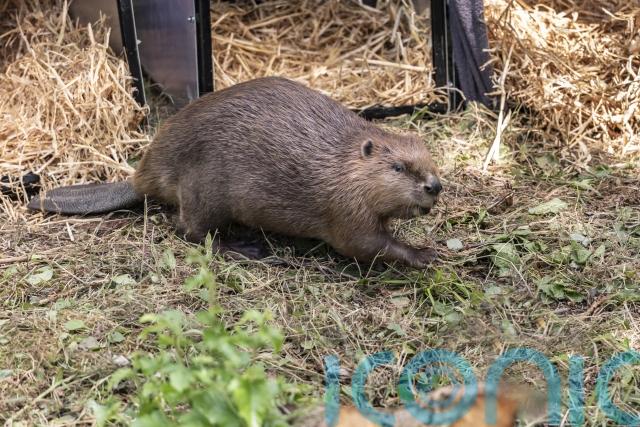
It is hoped the beavers will help restore rivers and wetlands throughout the park, reducing the effects of climate change.
Sarah Henshall, head of conservation at the Cairngorms National Park Authority, said: “This is a really exciting milestone in our project to bring beavers back to the Cairngorms National Park.
“We’ve been monitoring the beavers closely since the first releases in December and it’s encouraging that two of the beaver pairs have already bred successfully.
“There are also encouraging signs of breeding behaviour at other locations – including evidence of them busily expanding their lodges – so we are hopeful that there will be more kits to come.
“Today’s news is another positive step towards establishing a sustainable population of beavers in the national park.
“To get to this point in the journey of bringing beavers back to the Cairngorms National Park, there has been extensive engagement with the agricultural community, fishing interests, the public and other key stakeholders.
“We have to thank the land owners and all the partners involved for their hard work and support of this project.”
Dr Roisin Campbell-Palmer, head of restoration at Beaver Trust, added: “The successful birth of a kit is what all the partners on this project have been hoping for this summer.
“With any translocation of a species there are no guarantees that the animals will settle, so for two pairs to have bred successfully proves the work that has gone into identifying suitable habitat and locations has been worthwhile.”
It comes as the park authority and partners are considering potential release locations for the second year of the project.
Following conversations with landowners and communities, the project has developed a robust monitoring and mitigation plan for beavers that is specific to the Cairngorms and goes above and beyond the national scheme.
Jenny Bryce, NatureScot’s beaver team manager, said: “After all the hard work by the park authority and many others, it is so rewarding to see the beaver families moved to the Cairngorms National Park doing so well and producing their first kits.
“This project is an important step towards restoring beavers in Scotland, a species which provides many benefits for nature, creating habitats such as ponds and wetlands where other species thrive, as well as moderating water flows and improving water quality.
“We will continue to work alongside the park authority, local people and organisations to closely monitor all the beaver families and assess their impact on the surrounding area.
“We are committed to helping solve any issues that might arise as the beavers settle in to their new homes.”

Subscribe or register today to discover more from DonegalLive.ie
Buy the e-paper of the Donegal Democrat, Donegal People's Press, Donegal Post and Inish Times here for instant access to Donegal's premier news titles.
Keep up with the latest news from Donegal with our daily newsletter featuring the most important stories of the day delivered to your inbox every evening at 5pm.

This publication supports the work of the Press Council of Ireland and Office of the Press Ombudsman, and our staff operate within the Code of Practice of the Press Council. You can obtain a copy of the Code, or contact the Council, at www.presscouncil.ie, Lo-call 1800 208 080 or email: info@presscouncil.ie.