
The woman was conveyed to University Hospital Limerick for treatment of serious injuries. She was pronounced deceased yesterday evening.
Search


02 Apr 2026

Please allow ads as they help fund our trusted local news content.
Kindly add us to your ad blocker whitelist.
If you want further access to Ireland's best local journalism, consider contributing and/or subscribing to our free daily Newsletter .
Support our mission and join our community now.
To continue reading this article, you can subscribe for as little as €0.50 per week which will also give you access to all of our premium content and archived articles!
Alternatively, you can pay €0.50 per article, capped at €1 per day.
Thank you for supporting Ireland's best local journalism!


The number of people in hospital with flu in England is at a record level for this time of year, as health officials warned the NHS is bracing itself for an “unprecedent wave” of infections.
An average of 1,717 flu patients were in beds in England each day last week, including 69 in critical care, according to the first of this year’s NHS winter situation reports.
This is 56% higher than the equivalent numbers for the same week in 2024, when the total was 1,098 with 39 in critical care.
It is also well above levels seen at this point in both 2023 (243 patients) and 2022 (772).
Flu numbers peaked last winter at 5,408 patients in early January – the highest weekly figure recorded since the Covid-19 pandemic.
This year’s flu season started earlier than usual and is yet to reach a peak, meaning pressure on hospitals is likely to grow in the run-up to Christmas.
Professor Julian Redhead, NHS national medical director for urgent and emergency care, said flu cases are now “incredibly high” and that the latest figures “confirm our deepest concerns: the health service is bracing for an unprecedented flu wave this winter”.
He added: “The NHS has prepared earlier for winter than ever before, but despite that we know that ballooning flu cases coinciding with strikes may stretch our staff close to breaking point in the coming weeks.
“With just a couple of weeks left to ensure maximum immunity from flu for Christmas Day, I urge anyone eligible to come forward to get their jab.”
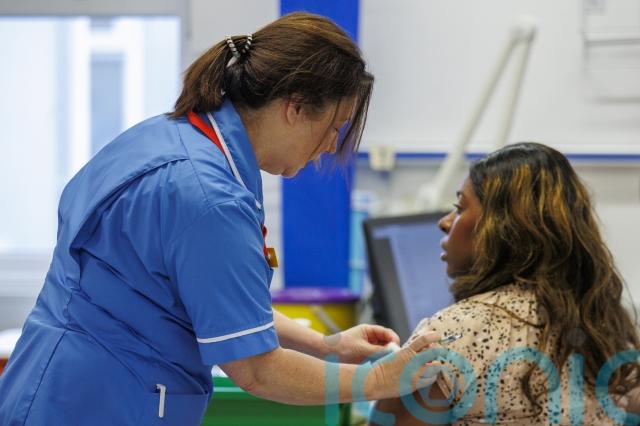
Flu jabs are available for everyone aged 65 and over; for those under 65 in clinical risk groups; care home residents and carers; pregnant women; close contacts of those who are immunosuppressed; frontline health and social care workers; and children.
The NHS situation report also shows that 30% of patients arriving by ambulance at hospitals in England last week waited at least 30 minutes to be handed over to A&E teams.
This is lower than 36% in the equivalent week in 2024, but higher than in 2023 (27%).
Some 10% of ambulance handovers last week, or 9,580 patients, were delayed by more than an hour, compared with 16% at this point in 2024 and 10% the previous year.
Rory Deighton, acute director at NHS Confederation, which represents NHS organisations, said: “It is clear that the flu season has hit much earlier and much harder than in previous years, piling pressure onto NHS services which have already had one of their busiest summers ever.
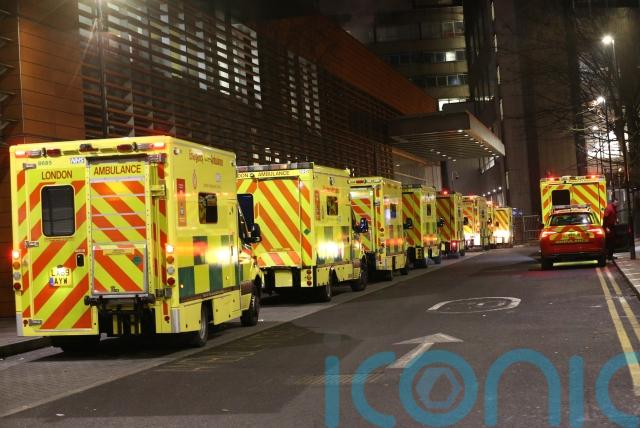
“It is welcome to see that despite ambulances dealing with increased demand and higher handover numbers compared to last year, delays at hospitals are lower.
“But it is deeply worrying that against this backdrop of mounting pressures the NHS will also have to mitigate the disruption of further strikes, which could have a huge impact on patients.”
Resident doctors in England are due to go on strike for five days from 7am on December 17 until 7am on December 22, as they continue their fight with the Government over training and pay.
It follows similar strike action by resident doctors, formerly called junior doctors, between November 14 and November 19.
NHS England chief executive Sir Jim Mackey branded the decision by doctors to strike as “something that feels cruel” and which is “calculated to cause mayhem at a time when the service is really pulling all the stops out to try and avoid that and keep people safe”.
Speaking at a board meeting on Thursday, Sir Jim said the planned strike action had caused “a genuine and palpable feeling of anger, frustration and exasperation” among colleagues, adding: “I really do hope we can find a way of avoiding this.”
Separate figures from the UK Health Security Agency (UKHSA) show the rate of hospital admissions for flu stood at 7.8 per 100,000 people last week, up sharply from 4.8 the previous week and almost double the rate at this point last year (4.4).
Admission rates were highest among people aged 85 and over, at 40.0 per 100,000; 75-84 year-olds (21.4); and children aged four and under (21.2).
Dr Jamie Lopez Bernal, UKHSA consultant epidemiologist, said he expected to see flu and other seasonal viruses circulating “more widely in the lead up to Christmas” with a potential peak over the festive period and the New Year.
“Nobody wants anyone in their family, especially young children, to spend Christmas in hospital,” he said, adding: “The best defence against this is a vaccine, but time is running out as it can take up to two weeks from vaccination for your body to build maximum protection.”
Sarah Woolnough, chief executive of The King’s Fund health think tank, said: “Today’s data confirms that the NHS is entering the most challenging period of the year with pressures hitting the health and care service from all directions.
“Rising flu waves and industrial action are all adding strain to a system which is already struggling to deliver timely care for patients.
“The flu season started unusually early this year and is yet to peak, so it is too soon to know how long this surge will be sustained for.”
Data in the NHS situation report shows that while flu patients are at a record high for this time of the year, the numbers for norovirus and Covid-19 are lower than in previous winters.
An average of 263 hospital beds in England were filled last week by patients with diarrhoea and vomiting or norovirus-like symptoms, compared with 756 at this point in 2024.
There was an average of 825 patients in hospital beds each day who had tested positive for Covid-19, lower than the 1,390 for this week last year.

Subscribe or register today to discover more from DonegalLive.ie
Buy the e-paper of the Donegal Democrat, Donegal People's Press, Donegal Post and Inish Times here for instant access to Donegal's premier news titles.
Keep up with the latest news from Donegal with our daily newsletter featuring the most important stories of the day delivered to your inbox every evening at 5pm.

This publication supports the work of the Press Council of Ireland and Office of the Press Ombudsman, and our staff operate within the Code of Practice of the Press Council. You can obtain a copy of the Code, or contact the Council, at www.presscouncil.ie, Lo-call 1800 208 080 or email: info@presscouncil.ie.