
The man was sentenced at the Central Criminal Court in Dublin
Search


21 Apr 2026

Please allow ads as they help fund our trusted local news content.
Kindly add us to your ad blocker whitelist.
If you want further access to Ireland's best local journalism, consider contributing and/or subscribing to our free daily Newsletter .
Support our mission and join our community now.
To continue reading this article, you can subscribe for as little as €0.50 per week which will also give you access to all of our premium content and archived articles!
Alternatively, you can pay €0.50 per article, capped at €1 per day.
Thank you for supporting Ireland's best local journalism!


Seafloor animals decreased by 37% in a deep-sea mining exploration zone, a landmark report has found.
Scientists from the Natural History Museum (NHM), University of Gothenburg and National Oceanography Centre spent more than five years studying how biodiversity could be affected by deep-sea mining.
The controversial practice involves heavy machinery scooping up valuable mineral-rich deposits – or polymetallic nodules – from seabeds more than 200 metres deep.
But there are huge concerns over the potentially irreversible impacts this nascent industry could have on the deep-sea habitat, which plays a crucial role in the climate system.
For the study, the teams captured baseline data on wildlife in the Clarion–Clipperton Zone (CCZ) – an area of the Pacific Ocean that has been targeted for mining.
They then tracked natural changes before testing a polymetallic nodule mining machine in the area and assessing the impacts.
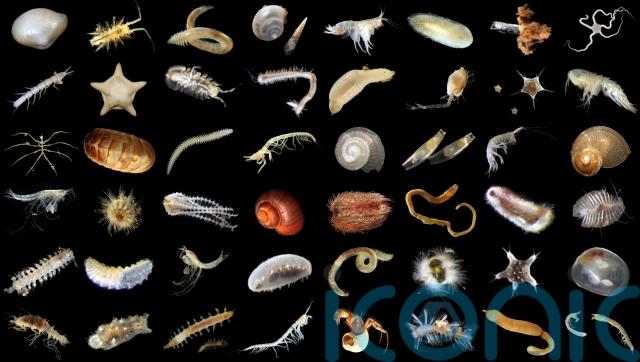
Taking into consideration natural fluctuations, the scientists found a 37% reduction in the number of invertebrates living within the sediment directly affected by the tracks of the machine.
These so-called macrofaunal animals are organisms visible to the naked eye at 0.3mm to 2cm in size, such as polychaete worms, crustaceans, snails and clams.
The reduction in animal abundance was also found to have caused a 32% reduction in the diversity of species in the directly affected regions.
The teams found that sites affected by the plume of sediment from the mining machine showed no change in animal abundance but there was an increase in the dominance of some animals in these areas, indicating the disruption of delicate ecosystems.
With more than 160 days at sea in the Pacific, the use of remotely operated vehicles to take samples from the seabed and three years of analytical work in the laboratory, the study is thought to be the largest yet into the impacts of mining on seafloor animals.
Eva Stewart, lead author and PhD student at NHM and University of Southampton, said: “Being able to study these remote and poorly known deep-sea regions is extremely important as we consider the potential impacts of deep-sea mining.
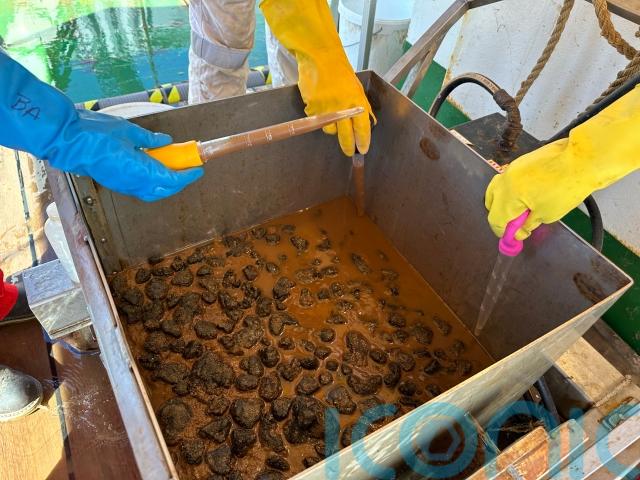
“Finally, we have good data on what the impacts of a modern commercial deep-sea mining machine might be.
“We have also discovered many new species and shown how the abyssal ecosystem changes naturally over time.”
During the study, a total of 4,350 sediment macrofaunal animals were collected across four expeditions, from which 788 species were identified by several institutions, including the NHM.
The animals found were mainly marine worms, closely followed by crustaceans and molluscs such as snails and clams.
Dr Thomas Dahlgren, researcher at the University of Gothenburg and co-lead of the project, said: “I have spent over 20 years working in the Clarion-Clipperton Zone, and this is by far the largest study we have ever undertaken.
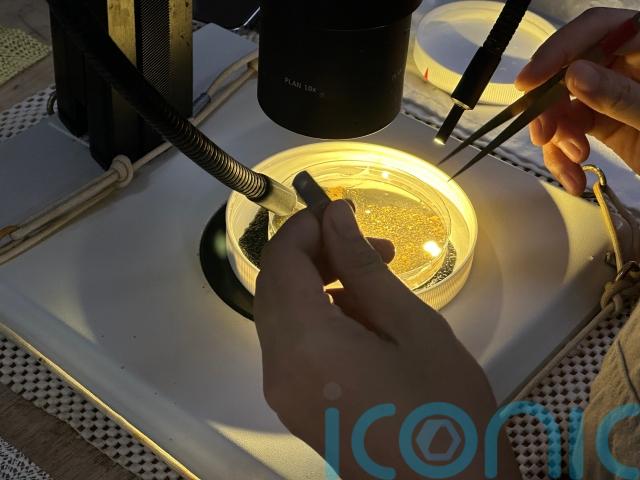
“At Gothenburg, we led the identification of the polychaete worms, one of the most abundant groups.
“As most species are undescribed, molecular (DNA) data was crucial to aid the taxonomic studies and provide the core data for the ecological study.”
Dr Adrian Glover, NHM deep-sea scientist and senior author, said the new data and interpretations can be used to inform the current policy discussions on deep-sea mining by providing actual quantitative data on species-level impacts.
“They will form a critical evidence base going forward and, we hope, set a new standard for environmental work in the region, regulated by the International Seabed Authority (ISA),” he said.
“Now it is important to try to predict the potential for biodiversity loss caused by mining.
“This will require us to survey and undertake taxonomic works in the regions set up by the ISA as large, protected areas across the CCZ.
“Currently we have no idea, for the most part, of what lives in them and thus what the risk of biodiversity loss is in the potential mined regions.”

Subscribe or register today to discover more from DonegalLive.ie
Buy the e-paper of the Donegal Democrat, Donegal People's Press, Donegal Post and Inish Times here for instant access to Donegal's premier news titles.
Keep up with the latest news from Donegal with our daily newsletter featuring the most important stories of the day delivered to your inbox every evening at 5pm.

This publication supports the work of the Press Council of Ireland and Office of the Press Ombudsman, and our staff operate within the Code of Practice of the Press Council. You can obtain a copy of the Code, or contact the Council, at www.presscouncil.ie, Lo-call 1800 208 080 or email: info@presscouncil.ie.