Search


12 Dec 2025
Search
12 Dec 2025

Please allow ads as they help fund our trusted local news content.
Kindly add us to your ad blocker whitelist.
If you want further access to Ireland's best local journalism, consider contributing and/or subscribing to our free daily Newsletter .
Support our mission and join our community now.
To continue reading this article, you can subscribe for as little as €0.50 per week which will also give you access to all of our premium content and archived articles!
Alternatively, you can pay €0.50 per article, capped at €1 per day.
Thank you for supporting Ireland's best local journalism!


The assisted dying Bill could have “enhanced protections” added regarding assessments of mental capacity, Parliament heard during the final debate on the legislation this year.
Labour peer Lord Falconer of Thornton, who is leading the Terminally Ill Adults (End of Life) Bill through the House of Lords, told peers that those who are “particularly vulnerable” should have an “enhanced level of assessment”.
This came after it was suggested that anyone who has been deprived of their liberty under the Mental Capacity Act (2005) in the last year should be ineligible for an assisted death.
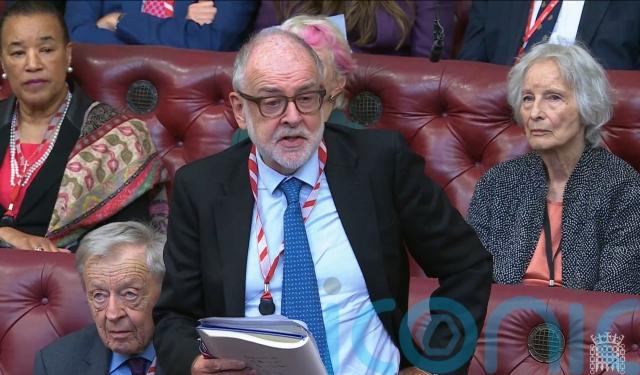
Former president of the British Medical Association, Baroness Finlay of Llandaff, argued that an impairment of capacity serious enough to result in a Deprivation of Liberty Safeguards (DOLS) application should act as a “yellow flag” and an “indicator that risk may be elevated”.
Labour peer and former MP Baroness Berger added: “I hope we can all agree that people whose incapacity for basic decisions is so severe that they are deprived of their liberty or have an application made for the deprivation of their liberty are the most vulnerable members of society.
“And the protection of people who lack capacity is a solemn duty. The state looks after their interests because they cannot.”
Health minister Baroness Merron warned that treating those who have previously, in a different context, lacked capacity differently from those who have not may “conflict” with non-discrimination obligations under the European Convention on Human Rights (ECHR).
Lord Falconer acknowledged the “perfectly legitimate points” made by Lady Finlay and said: “If your capacity is so serious that your liberty is taken away, then that does indicate that something is very seriously wrong”.
However, he argued that the principle of the Mental Capacity Act 2005 is that capacity should be looked at “on a case by case basis”.
He suggested that, instead of excluding these people completely, there should be “some form of enhanced protection” for those who have had their liberty deprived, and offered to meet with colleagues to pursue a way forward.
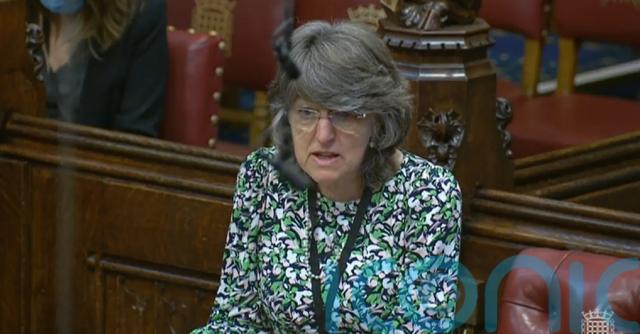
Peers also debated safeguards within the Bill, including whether a person seeking assisted dying should be required to have registered with a GP for at least 12 months.
Baroness Lawlor instead proposed that the patient be known to the doctor for two years and seen on at least six appointments.
Lord Deben criticised the suggestion, arguing peers should be trying to make the Bill more practical.
He said: “It does not make it more practical to ask something which is manifestly impossible.
“I could not demand assisted dying because I have not seen my registered practitioner for many years.
“We are not in a sensible position, if that is what we ask.”
Meanwhile, several peers urged colleagues to increase the pace at which amendments are debated to ensure the Bill does not run out of time to be passed into law, given the more than 1,000 that have been tabled at committee stage in the upper chamber.
Former Lord Justice of Appeal Baroness Butler-Sloss warned that there is “the perception that we are being unreasonable”, and urged colleagues to “exercise restraint, by dealing with the amendments relatively briefly”.
She said: “I don’t like the Bill, but I am here like other noble lords to try and make it work.
“It needs scrutiny, it needs improvement, but we must get it to third reading.
“If we don’t, there is a very real danger that the reputation of this House, which not only I but all your lordships care about deeply, will be, or possibly will be, irreparably eroded.”
Ahead of Friday’s debate, chief whip Lord Kennedy of Southwark urged peers to “make considerably more progress today” than they have in the previous three days of committee, during which only six groups of amendments were debated.
He added: “I expect, as I believe all noble lords do, that despite sincerely held views and differences of opinion we will always conduct ourselves with courtesy and respect for each other and show the public watching our debates the House of Lords in the best possible light.
“So please refrain from doing anything that would bring that into question.”
Their comments came after Kim Leadbeater, the MP who introduced the Bill in the Commons last year, criticised “totally unnecessary” amendments that could hold up the change of law before the final debate of the year.
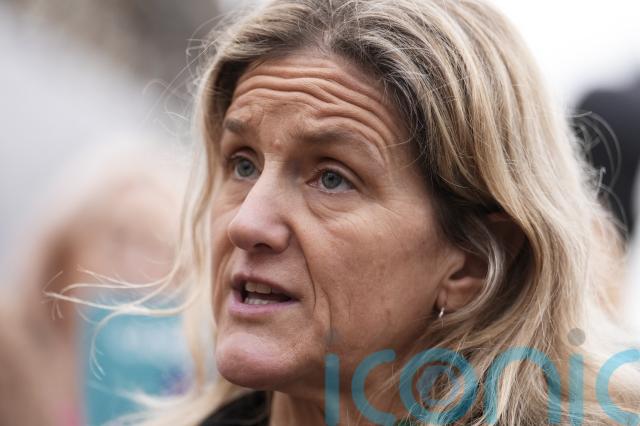
Ms Leadbeater told BBC Radio 4’s Today programme: “What we’re seeing with this Bill, sadly, is well over 1,000 amendments have been tabled, many of which are totally unnecessary and some of which are actually just very cruel.
“It’s looking increasingly like people who are fundamentally opposed to a change in the law, a view which I respect, (are) trying to prevent the law passing.”
She added: “The House of Lords is not elected, and I am worried about the damage of the reputation to the Lords based on this behaviour.”
But defending the Lords, independent crossbench peer Baroness Grey-Thompson said members were interrogating the Bill “line by line” and filling “massive gaps” to put safeguards in.
Lord Charles Moore, a former editor of The Daily Telegraph, accused lobbyists of pressing the media “very hard” to produce stories which “try to attack anybody who tries to debate this Bill fully”.
The Bill will become law only if both the House of Commons and House of Lords agree on the final drafting of the legislation – with approval needed before spring when the current session of Parliament ends.
If passed, it would allow terminally ill adults in England and Wales with fewer than six months to live to apply for an assisted death, subject to approval by two doctors and a panel featuring a social worker, senior legal figure and psychiatrist.

Subscribe or register today to discover more from DonegalLive.ie
Buy the e-paper of the Donegal Democrat, Donegal People's Press, Donegal Post and Inish Times here for instant access to Donegal's premier news titles.
Keep up with the latest news from Donegal with our daily newsletter featuring the most important stories of the day delivered to your inbox every evening at 5pm.

This publication supports the work of the Press Council of Ireland and Office of the Press Ombudsman, and our staff operate within the Code of Practice of the Press Council. You can obtain a copy of the Code, or contact the Council, at www.presscouncil.ie, Lo-call 1800 208 080 or email: info@presscouncil.ie.