The woman was conveyed to University Hospital Limerick for treatment of serious injuries. She was pronounced deceased yesterday evening.
Search


02 Apr 2026

Please allow ads as they help fund our trusted local news content.
Kindly add us to your ad blocker whitelist.
If you want further access to Ireland's best local journalism, consider contributing and/or subscribing to our free daily Newsletter .
Support our mission and join our community now.
To continue reading this article, you can subscribe for as little as €0.50 per week which will also give you access to all of our premium content and archived articles!
Alternatively, you can pay €0.50 per article, capped at €1 per day.
Thank you for supporting Ireland's best local journalism!


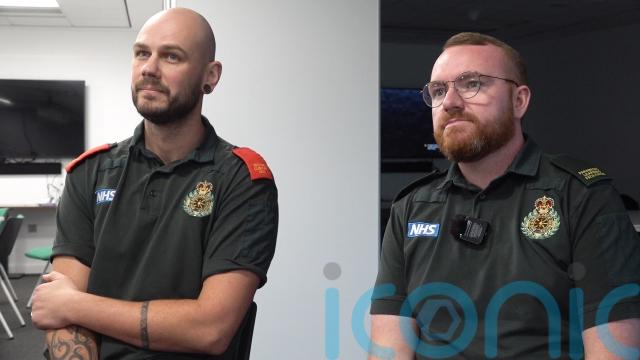
A paramedic who was knocked over at the Liverpool parade crash said he saw Paul Doyle’s car come back towards him and believed he was in the middle of a terrorist incident.
Jay Vernon, 34, was on duty as a cycle response paramedic for North West Ambulance Service (NWAS) in Liverpool city centre on May 26 when he was called to a reported cardiac arrest in Water Street, just after the victory parade had ended.
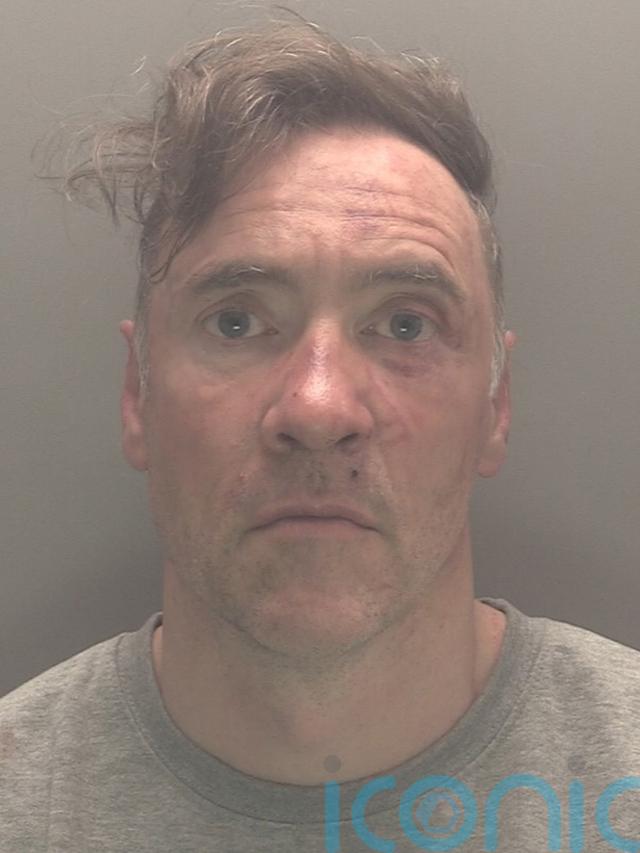
Doyle, 54, is due to be sentenced on Monday for 31 offences related to the crash, which happened when he ploughed into crowds of fans making their way back from the city’s waterfront after the Premier League victory celebration.
Mr Vernon said he had been making his way along Water Street on foot in front of an ambulance when he was hit by Doyle’s car.
He said: “I was struck with almighty force from behind, which has then sent me flying over to the right hand side, and I landed in the gutter on Water Street.
“I’ve put my hands out to brace myself, as you normally would, and then, as I’ve been in the gutter, there was a number of people around me and on the floor.
“As I’ve looked left, I’ve seen a car. I’ve then seen the car reverse lights come on and it start heading back up towards Water Street.
“It was at that point in my mind, I immediately thought, ‘I’m in the middle of a terrorist incident’.”
Mr Vernon, from Aigburth, Liverpool, said he jumped out of the way of the car as it reversed back at speed and saw the vehicle hit the front of the ambulance and ricochet back into the street.
He only suffered grazes in the incident and was able to press the emergency button on his radio, sending a signal to all vehicles on the network, and told the dispatcher: “I’ve been struck by a vehicle. I’m on Water Street and there are multiple casualties.”
He began tending to the injured around him and saw the vehicle move again.
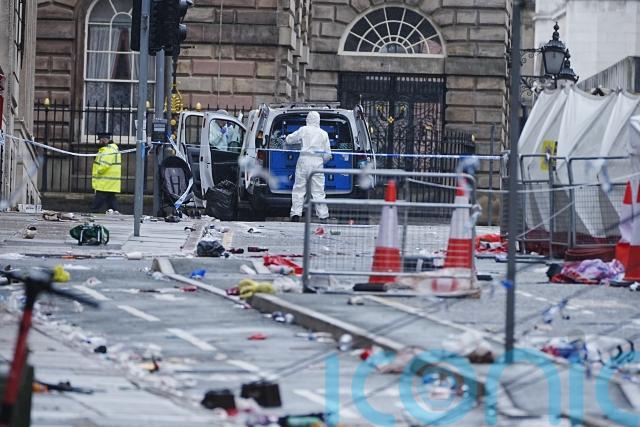
He said: “It was at that moment in time then that I actually feared for my safety.
“I obviously had passed some messages via the emergency button, but I felt really vulnerable.”
Mr Vernon went inside an ambulance to find safety, before opening the door and allowing children inside the vehicle to keep them out of harm’s way.
He then went back out towards Doyle’s car to provide help.
He said: “There were people on the floor. There were pushchairs that, obviously, children have been in, on their side.
“There were bottles of alcohol and stuff all over the floor and a significant amount of people running in in every direction imaginable to get away from what I assume they would think was a terrorist incident as well.”
As he headed back down the street the car had come to a stop, but he could see police had opened the boot and were pulling the inside of it apart.
He said: “It was at that moment that I stopped and was thinking, ‘What am I going down towards here?’”
He continued to the scene, where he quickly triaged patients and passed equipment to those who were tending to the injured.
He said: “Ultimately, the adrenaline and that desire to help people just kicked in and I think that’s what got me through the majority of the incident.”
Mr Vernon was one of 29 of the 134 injured people who Doyle was charged with an offence against.
He was at home last month on a rest day when he saw a news notification on his watch saying the defendant had pleaded guilty to all offences, which included attempting to cause grievous bodily harm with intent to Mr Vernon.
He said it came as a “relief” that he did not have to attend court to give evidence.
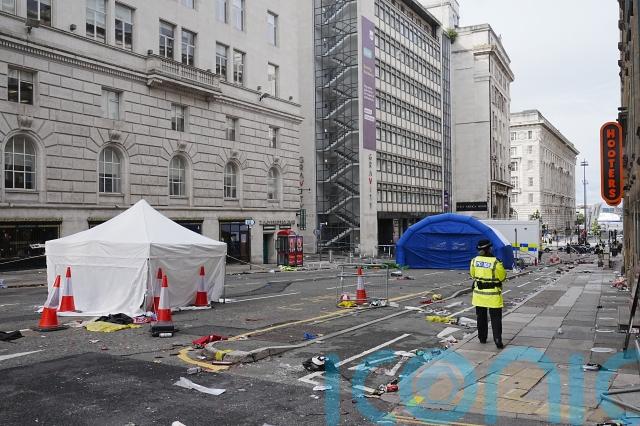
Among the other paramedics who were first on the scene was Matt Hall, 39, who had also been called to a reported cardiac arrest but was returning to his ambulance, parked on a side street, after being told the patient had left the area.
He heard the message over the radio and returned to Water Street, by which time Doyle’s car had come to a stop.
He said: “The driver of the car was gone at that point, and we had several casualties lying around. Most of them at that point were receiving some kind of treatment.”
He said the injured included people with blunt force trauma injuries, chest injuries, rib fractures and other broken bones.
Planning for the parade meant there were ambulances nearby which could get there quickly and police cordoned off the area to create a scene of “relative calmness”, he said.
He said: “I looked calm, I think, but like all of us inside you’re running at a million miles an hour and you’re thinking of lots of potentials and lots of things that you need to do.”
He said that thanks to his colleagues the response to the major incident ran “efficiently” and “very well”.
He said: “I’m sure there are some residual and lasting effects for people, but it’s not the worst-case scenario.
“It could have been a very, very different story.”

Subscribe or register today to discover more from DonegalLive.ie
Buy the e-paper of the Donegal Democrat, Donegal People's Press, Donegal Post and Inish Times here for instant access to Donegal's premier news titles.
Keep up with the latest news from Donegal with our daily newsletter featuring the most important stories of the day delivered to your inbox every evening at 5pm.

This publication supports the work of the Press Council of Ireland and Office of the Press Ombudsman, and our staff operate within the Code of Practice of the Press Council. You can obtain a copy of the Code, or contact the Council, at www.presscouncil.ie, Lo-call 1800 208 080 or email: info@presscouncil.ie.