Courtesy of My Lovely Horse Rescue
Search


21 Apr 2026

Please allow ads as they help fund our trusted local news content.
Kindly add us to your ad blocker whitelist.
If you want further access to Ireland's best local journalism, consider contributing and/or subscribing to our free daily Newsletter .
Support our mission and join our community now.
To continue reading this article, you can subscribe for as little as €0.50 per week which will also give you access to all of our premium content and archived articles!
Alternatively, you can pay €0.50 per article, capped at €1 per day.
Thank you for supporting Ireland's best local journalism!


Not all jobs could be saved during the Covid-19 pandemic but the government prevented “mass unemployment”, Rishi Sunak has told the Covid inquiry.
The former prime minister also said he was advised by medical officials not to “go too early” with interventions at the start of the pandemic.
Mr Sunak, who was chancellor during the height of the pandemic, having stepped into the role in mid-February 2020, was giving evidence to the UK Covid-19 Inquiry.
It is the second time he has appeared in front of the inquiry – the first being in 2023 when it was looking into decision-making during the pandemic.
Module 9 of the independent public inquiry is looking into the economic response of the government and has already heard evidence from officials including Alok Sharma, the former business secretary, and Andrew Bailey, the Bank of England’s governor.
Mr Sunak said on Monday: “It wasn’t going to be possible to save every person’s job and people were going to experience economic hardship as a result of what was happening.
“I thought it was important to be honest with people about that up front.
“As it turned out, the impact on living standards, particularly for the most vulnerable in society… were stronger than I would have perhaps anticipated going into this and I’m very proud of that.”
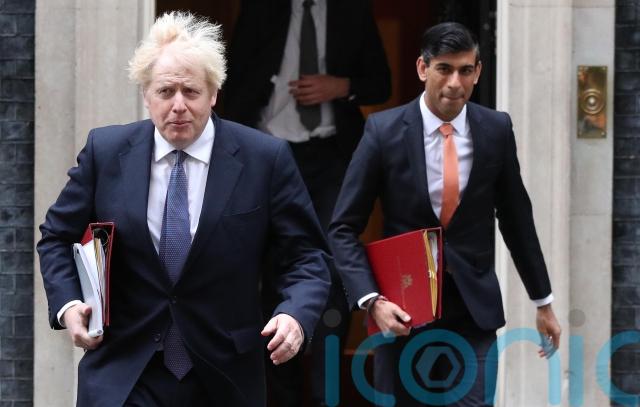
Mr Sunak said the government was “successful in preventing mass unemployment” and that the impact on jobs was “considerably better than what anyone had forecast at the early stages of the pandemic”.
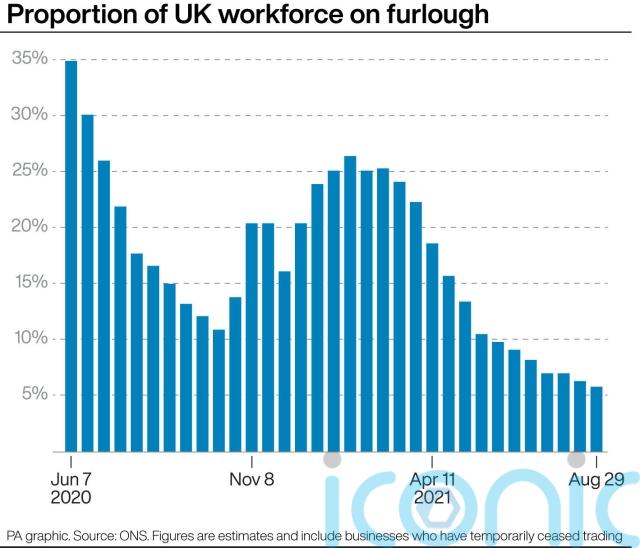
The coronavirus job retention scheme, known as furlough, was announced my Mr Sunak in March 2020.
Around 11.7 million employee jobs were furloughed through the scheme, which applied from March 1 2020 to September 30 2021, and cost around £70 billion.
The inquiry has received “generally positive evidence” about the impact of the scheme, which mitigated against an “increase in inequality because of its preservation of jobs”, counsel to the inquiry Richard Wright KC said.
Mr Sunak said a more targeted version of the furlough scheme was drawn up by the government in 2020 but “never saw the light of day” because of the national lockdowns that followed.
“I cared about trying to figure out if there was a better way to do this – is there a more targeted way that would save us money and help economic activity return,” he told the inquiry, but he concluded the benefits of such an alternative would not “outweigh the costs”.
Mr Sunak told the inquiry that the initial advice Treasury officials were given was not to intervene too early.
“Especially in those early conversations, a lot of what the medical and scientific community were advising us at that time was not to go too early with the various interventions, because they were worried about public acceptance of them,” he told the inquiry.
“Even at that point, there was a belief that that voluntary social distancing together with school closures… would be sufficient to manage the virus.
“Two or three days after, it was decided that wasn’t going to be achievable, which is why we had to move to a full mandatory lockdown.”
A key finding from the Covid inquiry last month was that the government did not take the virus seriously enough until it was “too late”, with February 2020 a “lost month” for action.
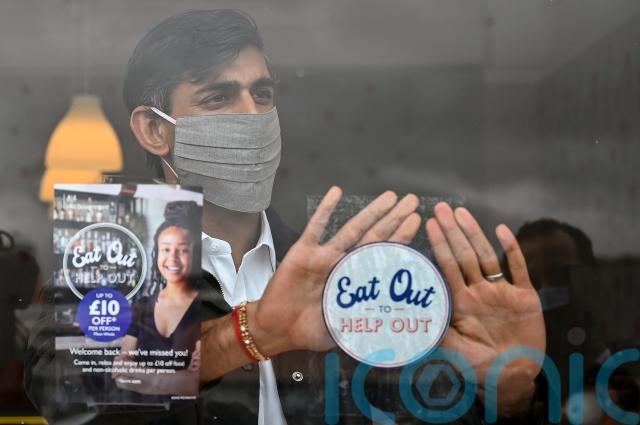
Giving more detail on the Government’s thinking behind the furlough scheme, Mr Sunak said he faced pressure from members of the opposition party at the time to keep it running longer, as well as from “credible voices” such as the Trades Union Congress (TUC) and the devolved nations.
But he said there was a point when keeping the scheme running would do more damage to the economy than stopping it, as it artificially props up some businesses and jobs that otherwise may not have been viable.
Mr Sunak told the inquiry: “If this thing happens again, it’s not obvious to me that there’s some learning from that period that would make it easier for someone in my position to make that balance.”
On the self-employed income support scheme, the former prime minister said there were challenges with it, given that those applying had to self-certify.
But he said it was right to support self-employed people and that he would “do it again” if in the same position.

Subscribe or register today to discover more from DonegalLive.ie
Buy the e-paper of the Donegal Democrat, Donegal People's Press, Donegal Post and Inish Times here for instant access to Donegal's premier news titles.
Keep up with the latest news from Donegal with our daily newsletter featuring the most important stories of the day delivered to your inbox every evening at 5pm.

This publication supports the work of the Press Council of Ireland and Office of the Press Ombudsman, and our staff operate within the Code of Practice of the Press Council. You can obtain a copy of the Code, or contact the Council, at www.presscouncil.ie, Lo-call 1800 208 080 or email: info@presscouncil.ie.