The man was sentenced at the Central Criminal Court in Dublin
Search


21 Apr 2026

Please allow ads as they help fund our trusted local news content.
Kindly add us to your ad blocker whitelist.
If you want further access to Ireland's best local journalism, consider contributing and/or subscribing to our free daily Newsletter .
Support our mission and join our community now.
To continue reading this article, you can subscribe for as little as €0.50 per week which will also give you access to all of our premium content and archived articles!
Alternatively, you can pay €0.50 per article, capped at €1 per day.
Thank you for supporting Ireland's best local journalism!


Dentists in England will be paid more to see patients in need of urgent treatment under new reforms published by the Government.
It comes as a report suggests dental vouchers worth £150 a year should be introduced in a bid to “end the postcode lottery” of care.
The call from the Policy Exchange think tank – backed by former health secretary Sir Sajid Javid – could “save NHS dentistry” and “fix our national smile”.
The dentistry reforms being published by the Government following a consultation with the sector and the public could help millions of patients, according to the Department of Health and Social Care (DHSC).
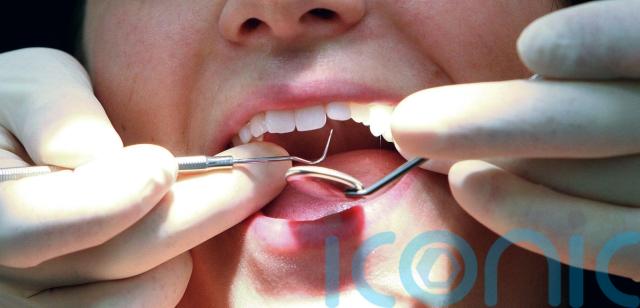
The changes will allow patients who need urgent treatment to get appointments more easily, with dentists incentivised to offer urgent care, for issues such as severe pain, infections, or trauma to teeth, on the NHS.
Those who need complex care, such as treatment for severe gum disease or decay in several teeth, will also be able to book a single package of treatment, rather than it being spread over several appointments.
The move could save patients around £225, the DHSC said.
Shiv Pabary, chairman of the British Dental Association’s (BDA) general dental practice committee, said the changes being announced “are the biggest tweaks this failed contract has seen in its history”.
“We do hope changes can make things easier for practices and patients in the interim, but this cannot be the end of the road,” he added.
“We need a response proportionate to the challenges we face, to give NHS dentistry a sustainable future.”
The latest changes form part of the Government’s wider plan for NHS dentistry, which includes more urgent appointments, and supervised toothbrushing for three to five-year-olds.
Gareth Lyon, head of health and social care at Policy Exchange, said NHS dentistry “is in a truly shocking state”.
“A majority of people are not receiving NHS dental support at all – including millions of children,” he added.
Policy Exchange suggests that a universal £150 voucher could be used to pay for dental insurance or a capitation plan, where a monthly fee goes towards regular care such as check-ups and hygiene appointments.
People could also have the option of taking their voucher to any General Dental Council-registered professional for non-cosmetic treatment.
All registered dentists should be required to accept the voucher, the report said, and should also be required to accept children as patients at current NHS dental rates.
Policy Exchange claims that in the two years to March 2024, 18 million adults and 6.6 million children in England have accessed an NHS dentist, the equivalent of 40% of adults and 57% of children.
Mr Lyon added: “The results are felt not just in poor dental health and avoidable pain and suffering for patients but also in far higher costs to the health system as dental problems are diagnosed late or not at all, requiring extensive and expensive hospital treatment.
“We’re also missing out on early diagnosis of cancers and other health problems dentists can help identify.
“We are proposing to abolish the postcode lottery where a lucky few get subsidised treatment, opening up the whole of our dental system to everyone – putting patients in control, ending the failed prices and subsidy system and incentivising early treatment and diagnosis.
“It is time to take radical action to save NHS dentistry and to fix our national smile.”
BREAKING: The final shape of changes to the NHS contract for 2026.
Find out what it means for you and sign up for our coming webinar. 👇https://t.co/yURNrfIx39 https://t.co/q6XsjDtHkH
— BDA (@TheBDA) December 16, 2025
The BDA rejected the Policy Exchange suggestion, and chairman Eddie Crouch said it came “with the sound of barrels being scraped”.
“NHS desperately needs investment, but this policy would not end dental deserts. It could easily mean spending more money on less access,” he said.
“A struggling service urgently requires real reform and sustainable funding. We don’t need distractions, or detours into ideological comfort zones.”
Last week, figures revealed that levels of tooth decay among adults in England are similar to those seen in the late 1990s.
The latest Adult Oral Health Survey provided the first picture of oral health in England in more than a decade.
It found more than four in 10 people (41%) had obvious signs of rotten teeth when examined, up from 28% in 2009 and similar to levels in 1998.
When using the most sensitive measure of tooth decay – which also assesses enamel decay – almost two thirds (64%) had decay in one or more teeth.
Elsewhere, official data published earlier this year shows as many as six in 10 children in some areas have rotting teeth by the age of five.

Subscribe or register today to discover more from DonegalLive.ie
Buy the e-paper of the Donegal Democrat, Donegal People's Press, Donegal Post and Inish Times here for instant access to Donegal's premier news titles.
Keep up with the latest news from Donegal with our daily newsletter featuring the most important stories of the day delivered to your inbox every evening at 5pm.

This publication supports the work of the Press Council of Ireland and Office of the Press Ombudsman, and our staff operate within the Code of Practice of the Press Council. You can obtain a copy of the Code, or contact the Council, at www.presscouncil.ie, Lo-call 1800 208 080 or email: info@presscouncil.ie.