Search


21 Apr 2026
Search
21 Apr 2026

Please allow ads as they help fund our trusted local news content.
Kindly add us to your ad blocker whitelist.
If you want further access to Ireland's best local journalism, consider contributing and/or subscribing to our free daily Newsletter .
Support our mission and join our community now.
To continue reading this article, you can subscribe for as little as €0.50 per week which will also give you access to all of our premium content and archived articles!
Alternatively, you can pay €0.50 per article, capped at €1 per day.
Thank you for supporting Ireland's best local journalism!


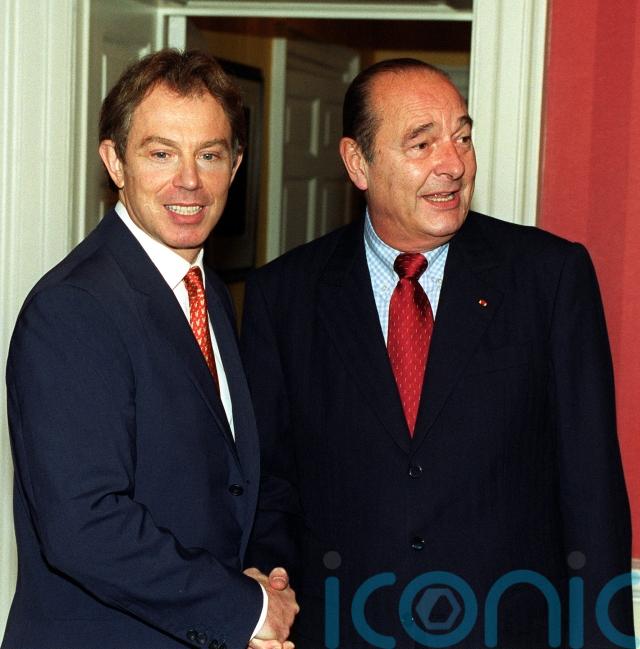
Downing Street refused to release details of a conversation between Tony Blair and French president Jacques Chirac following the death in Paris of Diana, Princess of Wales, according to newly-declassified government files.
Papers released to the National Archives at Kew, west London, show No 10 was happy to release dozens of other official documents relating to Diana’s death and the arrangements for her funeral under the Freedom of Information Act.
However officials ruled that publication of a memo outlining the discussion between Mr Blair and Mr Chirac was “fundamentally not in the public interest”.
Diana died in the early hours of August 31 1997 when the car in which she was travelling with her partner Dodi Fayed – who was also killed along with his driver – crashed in the Pont de l’Alma road tunnel during a high speed pursuit by photographers.
It was several hours before Mr Chirac could be contacted by his aides to inform of what had happened leading to intense speculation as to his whereabouts.
His chauffeur subsequently claimed that he had been with a mistress.
The request for the release of UK government files, eight years later, was among the first to be considered under the FoI Act which came into effect at the start of 2005.
Most of the papers covered by the request were considered unexceptional.
One official wrote: “I see nothing embarrassing for us as it shows No 10 getting on with the job under unique and unexpected circumstances and much of the information is already in the public domain in one way or another.”
However when it came to the discussion between Mr Blair and the president, the file noted: “It is vital that the prime minister’s conversations with other world leaders are essentially confidential in nature.
“Releasing details of these conversations would be likely to limit the frankness of such conversations in future. This is fundamentally not in the public interest.”
There is nothing in the file to indicate whether sensitivity over the movements of the president – who was still in the Elysee Palace – on the night was a factor in the decision.
Among the papers which were released were a series of telegrams from the British ambassador to France, Sir Michael Jay, describing the scenes on the night and the outpouring of public grief which followed.
“From the president down, the French authorities have dealt with last night’s events with extraordinary generosity, efficiency and sensitivity. The emergency services and hospital staff did all they could to save the princess’s life,” he wrote.
“Wider public reaction is of great sadness amid great affection for the princess, as was clear from the crowd’s response as the cortege left the hospital this evening.”

Subscribe or register today to discover more from DonegalLive.ie
Buy the e-paper of the Donegal Democrat, Donegal People's Press, Donegal Post and Inish Times here for instant access to Donegal's premier news titles.
Keep up with the latest news from Donegal with our daily newsletter featuring the most important stories of the day delivered to your inbox every evening at 5pm.

This publication supports the work of the Press Council of Ireland and Office of the Press Ombudsman, and our staff operate within the Code of Practice of the Press Council. You can obtain a copy of the Code, or contact the Council, at www.presscouncil.ie, Lo-call 1800 208 080 or email: info@presscouncil.ie.