
Researchers claim to have re-discovered forgotten meanings in UK buildings
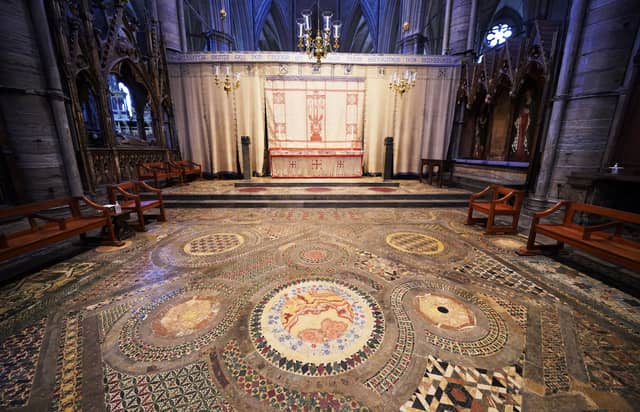

Researchers claim to have re-discovered forgotten meanings contained within historic architecture, including at Westminster Abbey – and say the discovery could be “massive” for the UK’s tourism industry.
Heritage consultants James Wenn and James Syrett say knowledge about these meanings appeared to decline around the time of the First World War, when aristocrats who knew about them were sent to fight and die in the trenches.
But the pair say they had an “immediate lightbulb moment” in 2019 after Mr Syrett showed Mr Wenn a garnet crystal, as Mr Wenn was pondering the mystery of why Anglo Saxons used the crystals so often in jewellery.
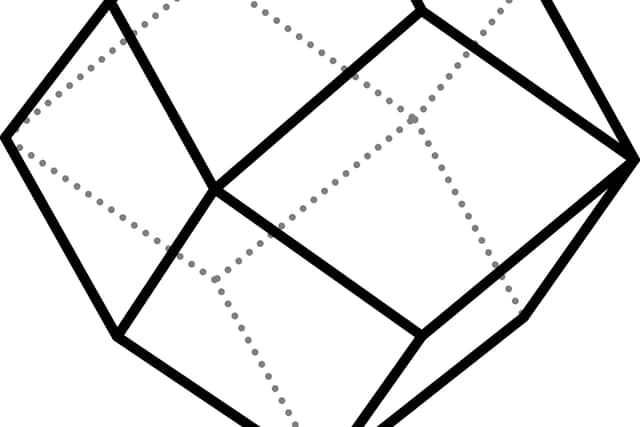
Mr Wenn said it immediately explained the form of Anglo-Saxon church towers, known as Rhenish helm roofs, which take the shape of half of a rhombic dodecahedron.
The use of the shape had been thought merely ornamental but was used as a symbol of harmony, they argue, as rhombic dodecahedra can fit together without gaps.
The 3D shape with 12 diamond-shaped sides fits the description of the shape of the universe, according to the Greek philosopher Plato.

The shape also features in the coronation pavement inside Westminster Abbey, and the pair say an explanation of its significance influenced an element of the King’s coronation in 2023.
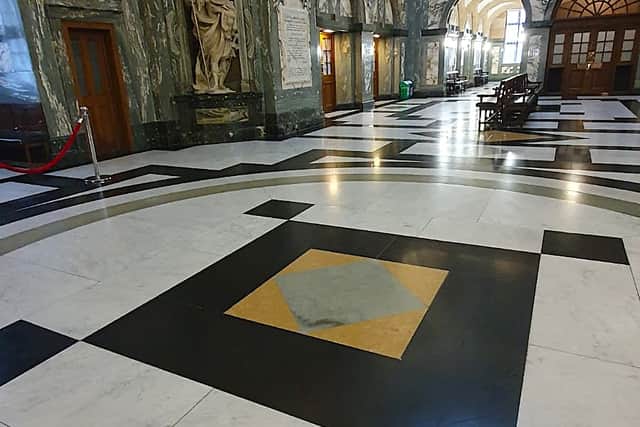
The spot where every monarch has been crowned for 700 years sits within a giant diagonal square on the coronation pavement — a slice through a rhombic dodecahedron.
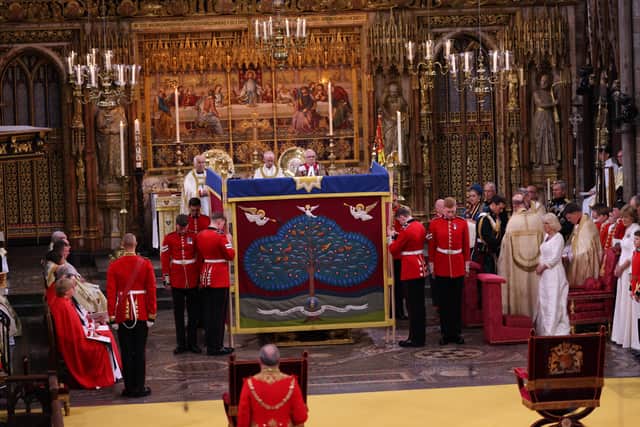
Mr Wenn and Mr Syrett said they presented their research to representatives of the King ahead of the ceremony.
Mr Wenn said: “What they did in the coronation that was different to the previous one is that they made sure that the screen around the King was a perfect cube sitting inside of the square of the pavement.”
He said that a rhombic dodecahedron “is like a cube covered in pyramids”.
He said that the screen used in the coronation of Queen Elizabeth II in 1953 “wasn’t a cube”.

Mr Syrett said: “Aristocrats, who were the people who were the guardians of this knowledge, were sent to fight and die in the trenches in a way that hadn’t really happened before.
“It was an industrial war machine that chewed them up.
“The other thing… was the modernist movement and so the futurists and the Dadaists expressly said in their manifesto that they wanted to get rid of the old social order because they felt it had let them down and they wanted a clean slate and to start afresh on everything.
“We say it’s the combination of those two things that did for it (the knowledge).”
He added: “We don’t really see anything post-World War One which shows, we think, knowledge of this stuff.
The pair, who are both aged 36 and live in Chelmsford, Essex, run a heritage consultancy called Byrga Geniht, which helps people to learn more about historic buildings.
Mr Syrett said that, following their re-discovery about meanings in UK architecture: “We can now say we’re as sophisticated a culture as Ancient Rome, Aztec America, Ancient Egypt.
“We believe this is going to be massive for tourism and people are going to want to come to Britain and discover this stuff which was previously forgotten.”
Describing the start of their re-discovery, Mr Wenn said: “The whole thing started because I was explaining one of the greatest mysteries in the study of the Anglo-Saxons.
“Nobody knew why they used garnet for nearly all their jewellery.
“Then James showed me a garnet crystal fresh out of the ground, and there was an immediate lightbulb moment.”
Oxford University Professor Marcus du Sautoy, who is known for his work to popularise maths, is among those who support the pair’s work, describing it as “an intellectual version of the metal detectorists uncovering a treasure trove of wonders”.
Another area that they are continuing to research is the common motif of the eight-pointed star.
Mr Wenn said: “People in the past do have esoteric religious, ethnic, cultural identities and activities and when you see them crop up, just because it’s not what people are running with right now doesn’t mean that they weren’t.
“And they were definitely for many hundreds of years just passionately interested in this rabbit hole of things.
“And so it’s that rabbit hole we’re charting for a modern public who’s lost touch with it.”