Search


31 Dec 2025
Search
31 Dec 2025

Please allow ads as they help fund our trusted local news content.
Kindly add us to your ad blocker whitelist.
If you want further access to Ireland's best local journalism, consider contributing and/or subscribing to our free daily Newsletter .
Support our mission and join our community now.
To continue reading this article, you can subscribe for as little as €0.50 per week which will also give you access to all of our premium content and archived articles!
Alternatively, you can pay €0.50 per article, capped at €1 per day.
Thank you for supporting Ireland's best local journalism!


“Embarrassing” failures in the case of Alaa Abd El-Fattah would have been avoided if the Government had acted on its commitments to appoint an envoy for detained Britons, Dame Emily Thornberry has said.
The chairwoman of Parliament’s Foreign Affairs Committee criticised “serious shortcomings” in information sharing which she said could have been prevented by a dedicated official to carry out background checks.
Former foreign secretary David Lammy said last year that the Government would be introducing an envoy to deal with “complex detention cases” involving Britons abroad, but no such figure has yet been appointed.
In a letter to Foreign Secretary Yvette Cooper, Dame Emily said: “Thank you for your letter and for updating me on the troubling failures in due diligence and information sharing in relation to the case of Alaa Abd El Fattah.
“Your recognition of the distress caused to Jewish communities, particularly in the context of rising antisemitism in the UK and internationally, is necessary and welcome.”
My reply to Foreign Sec's letter on due-diligence failures in the Alaa Abd el-Fattah case.
Had the FCDO followed through on their promise of appointing an envoy focused on cases such as this, something successive Committees have called for, such failings could have been avoided. pic.twitter.com/YTrT2JVjWz
— Emily Thornberry (@EmilyThornberry) December 31, 2025
She added: “Had an envoy been established following the then-foreign secretary’s commitment in 2024, with access the necessary FCDO (Foreign, Commonwealth and Development Office) resources including staffing, it is clear to me that such embarrassing failures of due diligence and information sharing would have been avoided.
“It would have been firmly within the envoy’s remit to carry out appropriate background and social media checks.
“More broadly, the envoy would demonstrate that the arbitrary detention of Brits will never be tolerated, increase the confidence of families of those detained, separate the responsibility from individual embassies, and create opportunities for a whole-of-government approach to these complex cases.
“May I take this opportunity, therefore, to reiterate my committee’s recommendation that such an envoy be appointed as soon as possible.”
Mr Abd El-Fattah was granted UK citizenship in December 2021 under former Conservative prime minister Boris Johnson, reportedly through his British-born mother.
His imprisonment for charges of spreading false news was branded a breach of international law by UN investigators and he was pardoned by Egyptian President Abdel-Fattah el-Sisi in September after years of lobbying by Conservative and Labour governments.
He flew to the UK on Boxing Day and was reunited with his son, who lives in Brighton, after a travel ban was lifted.
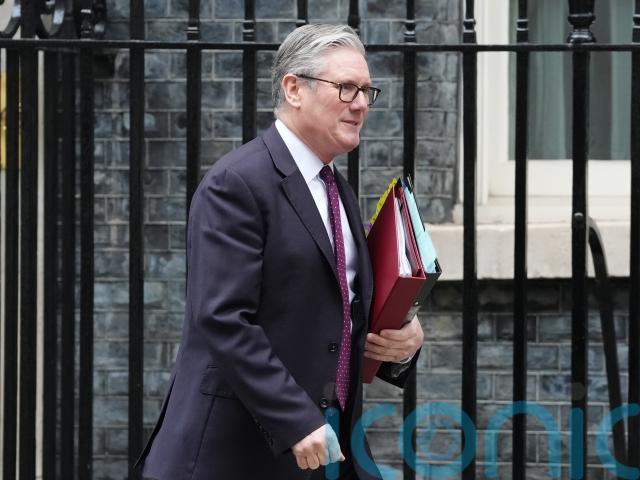
Politicians including Prime Minister Sir Keir Starmer welcomed his return before the resurfacing of tweets dating back to 2010 in which the activist appeared to call for violence against Zionists and the police.
Downing Street has since described the posts as “abhorrent” but said an apology issued by Mr El-Fattah earlier this week was “fairly fulsome”.
The Conservatives and Reform UK have both suggested he should have his British citizenship stripped due to the posts, although it is understood there are no plans for this and the law does not appear to provide grounds to deport him.
The husband of Nazanin Zaghari-Ratcliffe, who spent six years campaigning for his wife’s release from an Iranian prison and also called for Mr El-Fattah to be freed, said the comments were “horrible and indefensible”.
But Richard Ratcliffe said human rights are “not like Father Christmas’s presents” and could not be selectively applied, adding: “You don’t just get them if you are good.”
He told the Press Association: “I don’t regret campaigning for Alaa, nor does Nazanin, even if we were surprised by what has emerged. We have told his family this. Of course, I was shocked by some of his posts.
“I had no idea, and I should have known. So that is on me for not checking.
“Some things I have since seen look like they have been taken out of context, and some things just look horrible and indefensible whatever the context was.
“Maybe they resonated differently in Cairo a decade ago, but they are indefensible to anyone reading in London now fearing the polarisation of the world.”
Mr Abd El-Fattah has since described his more controversial posts as “mostly expressions of a young man’s anger and frustrations in a time of regional crises (the wars on Iraq, on Lebanon and Gaza), and the rise of police brutality against Egyptian youth”.
He said: “I particularly regret some that were written as part of online insult battles with the total disregard for how they read to other people. I should have known better.”
Dame Emily Thornberry told PA that several presidents and prime ministers had backed Mr Abd El-Fattah’s release and people need to know “the sort of person they are going out to bat for.”
But she added: “That doesn’t change the fact that we have an obligation to assist British citizens no matter who they are, and particularly if they have been unlawfully detained which, you know, I think is an argument that this man had.”
The Government has been contacted for comment.

Subscribe or register today to discover more from DonegalLive.ie
Buy the e-paper of the Donegal Democrat, Donegal People's Press, Donegal Post and Inish Times here for instant access to Donegal's premier news titles.
Keep up with the latest news from Donegal with our daily newsletter featuring the most important stories of the day delivered to your inbox every evening at 5pm.

This publication supports the work of the Press Council of Ireland and Office of the Press Ombudsman, and our staff operate within the Code of Practice of the Press Council. You can obtain a copy of the Code, or contact the Council, at www.presscouncil.ie, Lo-call 1800 208 080 or email: info@presscouncil.ie.