
A photo of Scarlett Faulkner surrounded by candles in a church I PICTURE: Facebook
Search


03 Apr 2026

Please allow ads as they help fund our trusted local news content.
Kindly add us to your ad blocker whitelist.
If you want further access to Ireland's best local journalism, consider contributing and/or subscribing to our free daily Newsletter .
Support our mission and join our community now.
To continue reading this article, you can subscribe for as little as €0.50 per week which will also give you access to all of our premium content and archived articles!
Alternatively, you can pay €0.50 per article, capped at €1 per day.
Thank you for supporting Ireland's best local journalism!


Former Meta boss Sir Nick Clegg has called for tougher regulation of tech firms, branding social media a “poisoned chalice” and the rise of AI online a “negative development”.
The ex-deputy prime minister warned that engaging with “automated” content appears to be “much worse, particularly for younger people’s mental health” than interactions with other human beings.
And he criticised the “TikTokification” of apps like Instagram, which is owned by Meta, where he said users were being “bombarded” by short-form videos “plucked from the deepest, darkest recesses of the internet”.
Sir Nick made the remarks during an evidence session of the cross-party Independent Commission on Community and Cohesion, chaired by former Tory home secretary Sir Sajid Javid and former Labour MP Jon Cruddas.
According to a transcript shared with the Press Association, he said: “If I was a regulator or actually in politics – I’ve always thought this actually, even when I worked in Silicon Valley – I would be way tougher with the big companies on the transparency that they must provide on these algorithmic systems which otherwise chop and change.”
The critique marks an apparent shift in tone from the former media executive, who announced he was stepping down as tech giant Meta’s president of global affairs in January last year.
The previous month, he railed against what he described as “needless regulatory complexity” in the EU holding up his plans to train the company’s AI models using people’s public social media posts.
Sir Nick told the commission: “The recent advent of generative AI is doing something very, very profound, and in my view, potentially actually very negative when it comes to social media, because it means, actually, these apps are no longer social at all.
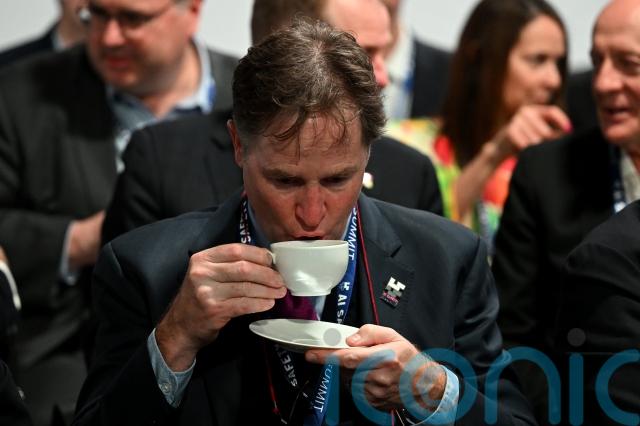
“So if you use Instagram today, you are bombarded by short-form video recommendations, which are algorithmically recommended at you, plucked from the deepest, darkest recesses of the internet, because the system, the increasingly sophisticated AI system, thinks that you might look.”
He added: “It’s the TikTokification, if I could put it like that, of social media, which is very, very different to the social media that I, at least, was interested in when I moved to Silicon Valley in the autumn of 2018, which was human-generated content, and human beings using these apps to communicate with each other.
“I think it is becoming an increasingly automated experience, where people are increasingly receiving, in a passive way, algorithmically recommended content, and that the content itself will increasingly be synthetic, too.
“I think that is, in general terms, a negative development, because there is quite a lot, again, of clear academic evidence that passive consumption of content on social media is much worse, particularly for younger people’s mental health, than interaction with other human beings via social media.”
Sir Nick said he still appreciated the “democratising” effect of social media and that simply removing online platforms would be “devastating” for users like small businesses.
But he added: “Having said all of that it’s a bit of a poisoned chalice, because that individual empowerment… comes, of course, with dramatic, excessive centralisation and aggregation of power in the hands of the small number of men who run these west coast and increasingly Chinese-based global behemoths.
“So it is a really difficult trade-off in terms of power, because these apps generally tend to be quite individually empowering, but they also come at the cost of an immense amount of power being put in the hands of people who are not elected by anyone, and as we’ve seen, have become increasingly active, certainly in American politics.”
It comes amid widespread concern over the creation of deepfake images using Elon Musk’s Grok AI chatbot.
Ofcom has announced an investigation into reports that the tool on X was being used to digitally undress people and make content “that may amount to child sexual abuse material”.
The UK will also bring into force a law making the creation of non-consensual sexual images illegal after the row, in which Mr Musk claimed the British Government was “fascist” and trying to curb free speech.
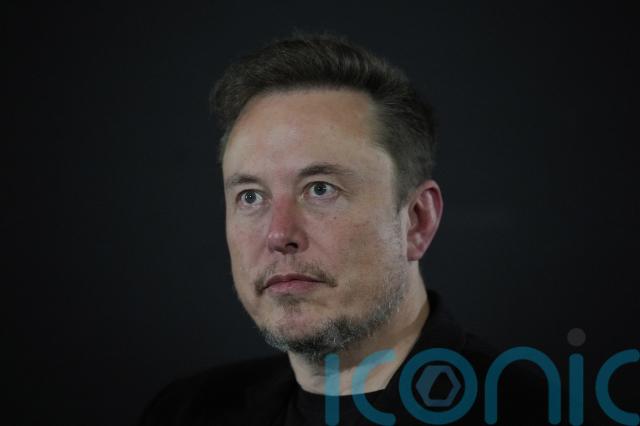
In his evidence to the commission, Sir Nick sought to draw a distinction between the political reach of different platforms, describing X as a “highly elite” app used by a “tiny number of people” who like to “shout at each other about politics”.
“Facebook is used generally by slightly older people in flyover states in the US and they don’t want to talk about politics at all,” he said.
“In fact, there’s very little politics or current affairs on those apps, so that they’re just very, very different.”
The session was the fifth of nine planned by the commission, which was set up with the aim of examining and addressing community divisions across Britain in the wake of the 2024 summer riots.
Meta – which also owns Facebook and WhatsApp – and TikTok have been contacted for comment.
Emeka Forbes, director of the commission’s secretariat, said: “Britain is at a turning point, as it grapples with a twin crisis of connection and cohesion.
“We’ve heard from a diverse range of voices as we begin to unpick these challenges, and it’s clear that a coordinated cross-society effort will be needed to make real headway.” The commission is expected to publish a report on its work later this year.

Subscribe or register today to discover more from DonegalLive.ie
Buy the e-paper of the Donegal Democrat, Donegal People's Press, Donegal Post and Inish Times here for instant access to Donegal's premier news titles.
Keep up with the latest news from Donegal with our daily newsletter featuring the most important stories of the day delivered to your inbox every evening at 5pm.

This publication supports the work of the Press Council of Ireland and Office of the Press Ombudsman, and our staff operate within the Code of Practice of the Press Council. You can obtain a copy of the Code, or contact the Council, at www.presscouncil.ie, Lo-call 1800 208 080 or email: info@presscouncil.ie.