Credit: An Garda Síochána Missing Persons Facebook
Search


17 Mar 2026

Please allow ads as they help fund our trusted local news content.
Kindly add us to your ad blocker whitelist.
If you want further access to Ireland's best local journalism, consider contributing and/or subscribing to our free daily Newsletter .
Support our mission and join our community now.
To continue reading this article, you can subscribe for as little as €0.50 per week which will also give you access to all of our premium content and archived articles!
Alternatively, you can pay €0.50 per article, capped at €1 per day.
Thank you for supporting Ireland's best local journalism!


Employers have been told they need to look at their policies on single-sex spaces after an employment tribunal found nurses had suffered harassment which violated their dignity.
The Equality and Human Rights Commission (EHRC) issued the warning after the ruling, published on Friday, said sharing single-sex changing rooms with a trans colleague had created “a hostile, intimidating, humiliating and degrading environment” for nurses in Darlington.
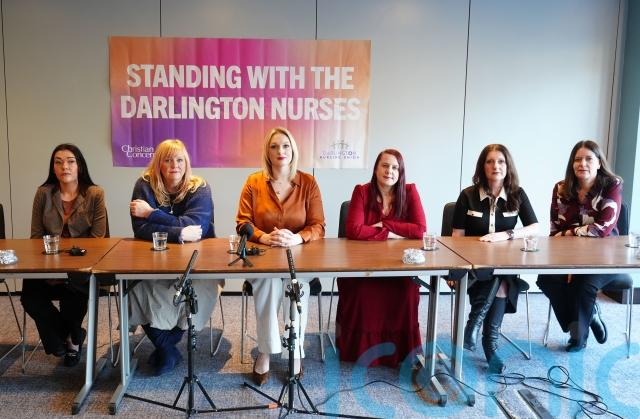
Eight members of the Day Surgery Unit at Darlington Memorial Hospital brought a claim against County Durham and Darlington NHS Foundation Trust after Rose Henderson, who was born male but identifies as a woman, was allowed to use the women’s changing facilities.
An EHRC spokesperson said the equality regulator would consider the tribunal decision.
The spokesperson said: “Employers – especially those that offer changing facilities for their staff – should also be considering the issues raised in this ruling for their own policies and practices.
“This would include being aware of the kind of actions found to constitute indirect discrimination and harassment of staff in this particular case.”
The EHRC has shared an updated services code of practice with the minister for women and equalities Bridget Phillipson for approval, although it said the issues raised by the tribunal were more closely related to the existing employment code of practice which it is planning to update.
“We hope that the updated code can be laid in Parliament without delay, so that statutory guidance is made available to those that need it as soon as it can be,” the spokesperson said.
Ms Phillipson recently acknowledged people want “clarity” on the subject but said there is a balance to be sought between ensuring safe spaces for women and trans people’s access to the services they need.
The NHS in England acknowledged the need to revise its policy on single-sex spaces, but said it is waiting for the EHRC guidance before it can take action.
An NHS spokesman said: “We are working through the implications of the Supreme Court ruling, and we absolutely recognise the need for revised guidance on same-sex accommodation as soon as possible.
“It’s important that we wait for the Equality and Human Rights Commission to publish its statutory guidance following the Supreme Court’s judgment before final decisions about future policy are taken – but we are working closely with Government to ensure we can provide updated guidance for the health service as soon as possible.”
While the tribunal ruling is not binding on other trusts, it is expected to ramp up the pressure on both the NHS to have a clear and consistent policy and on the Government to implement Britain-wide employer guidance which they have been considering since September.
Nurse Bethany Hutchison, who led the claim, said the NHS “cannot ignore this (issue) any longer”, adding: “Allowing men to access female-only spaces simply because they claim to be women undermines truth and erodes common sense.”
She described the wait for the Government to publish and implement the updated code of practice, handed to ministers more than four months ago by regulator the Equality and Human Rights Commission (EHRC), as “quite frustrating”.
She told reporters the Government was “clearly dragging their feet and they need to pick up the pace”.
Ms Hutchison added: “This is not a difficult thing to work out. It’s pretty simple, and I think this ruling has shown that.”
The code, which will be used by businesses and other organisations to inform their provision of single and separate-sex services such as toilets and changing rooms, has been updated by the regulator in the wake of the Supreme Court ruling in April that the terms “woman” and “sex” in the 2010 Equality Act “refer to a biological woman and biological sex”.
But the draft code – described by the EHRC spokesperson as “both legally accurate and as clear as it is possible to be” – requires ministerial approval and would only come into force 40 days after the Government had laid it in Parliament.

Subscribe or register today to discover more from DonegalLive.ie
Buy the e-paper of the Donegal Democrat, Donegal People's Press, Donegal Post and Inish Times here for instant access to Donegal's premier news titles.
Keep up with the latest news from Donegal with our daily newsletter featuring the most important stories of the day delivered to your inbox every evening at 5pm.

This publication supports the work of the Press Council of Ireland and Office of the Press Ombudsman, and our staff operate within the Code of Practice of the Press Council. You can obtain a copy of the Code, or contact the Council, at www.presscouncil.ie, Lo-call 1800 208 080 or email: info@presscouncil.ie.