Search


22 Apr 2026
Search
22 Apr 2026

Please allow ads as they help fund our trusted local news content.
Kindly add us to your ad blocker whitelist.
If you want further access to Ireland's best local journalism, consider contributing and/or subscribing to our free daily Newsletter .
Support our mission and join our community now.
To continue reading this article, you can subscribe for as little as €0.50 per week which will also give you access to all of our premium content and archived articles!
Alternatively, you can pay €0.50 per article, capped at €1 per day.
Thank you for supporting Ireland's best local journalism!


A holocaust survivor has described her fear at the possibility that history is repeating itself, as she told the next generation to remember that “we are all human beings”.
Annick Lever was 11 when, as she was walking with a friend to get some shopping, young boys threw a rope around her neck and called her a “dirty Jew”.
She had no idea that she was Jewish.
Ms Lever was born in Saujon, in the south west of Nazi-occupied France, in November 1943, to a Jewish mother and a Catholic father.
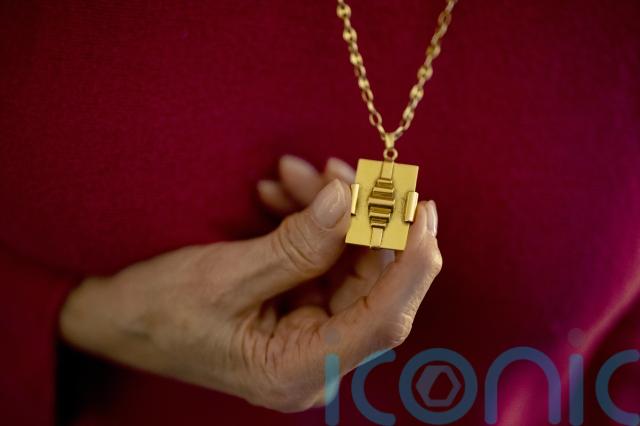
When she was two months old, she and her mother, aunt, baby cousin and maternal grandparents were taken to a makeshift prison in the nearby town of La Rochelle.
Her father, Pierre Xavier, was allowed to go free after his ancestry was analysed and deemed unproblematic by the authorities.
He contacted a couple who had agreed to look after his child should something happen to him and his wife, and together they were able to smuggle Ms Lever and her cousin out of jail.
Mr Xavier, a member of the resistance, later bribed someone at the prison to leave a door open, through which his wife and her sister escaped.
“But when they were out, they realised they could not leave their parents,” Ms Lever told the Press Association.
“So they came back in.
“It was fate. Little did they know what was ahead of them.”
In February 1944, Ms Lever’s mother, aunt and grandparents were put on trains and taken to a transit camp in Drancy before they were put in cattle trucks and taken to Auschwitz-Birkenau.
None of them survived.
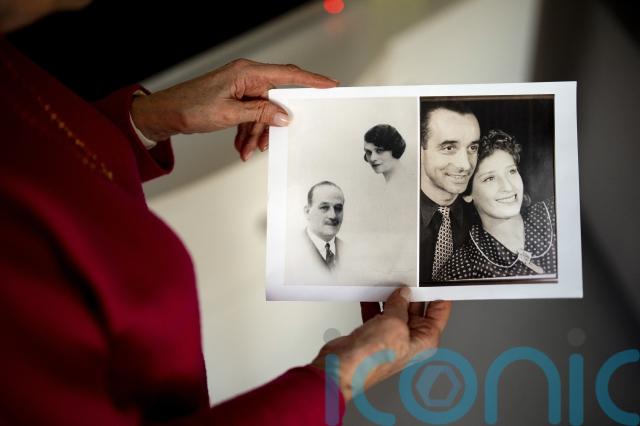
Ms Lever’s mother, Lilian Xavier, was killed during the journey to the Nazi death camp, and Ms Xavier’s sister, Marcelle Guidici, and parents, Jacob and Helene Foks, were murdered on arrival, in a gas chamber.
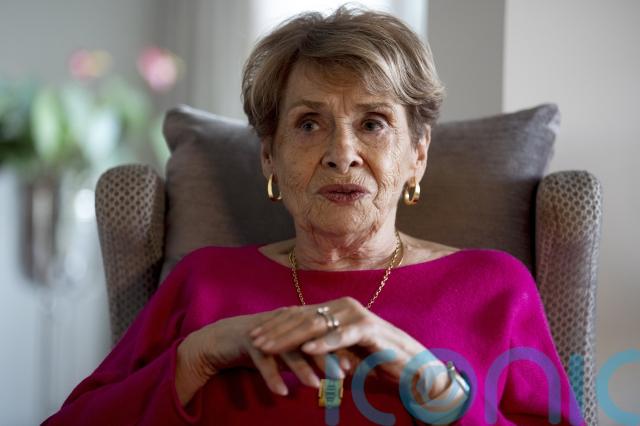
“I always say that my mother was just an ordinary person but because she was born Jewish they killed her,” Ms Lever said.
“And that for me makes quite an impression especially with what’s going on at the moment.
“I fear it and I feel it.
“Both my sons have married out, my granddaughters are not Jewish, but their fathers are and god knows what will happen in the near future.”
She told a story from her time as an au pair in Munich, Germany, working for a family with parents who had both been involved in the war, who were kind to her and who eventually realised she was Jewish.
“The lady of the house said to me ‘Annick, be careful, because history has a way of repeating itself’,” she recounted.
“And to hear that from a German person who was involved in the war, not only a citizen but involved in the war, I must say really marked me.
“Sadly enough maybe she’s right, because with what’s happening nowadays it’s very very difficult, really very difficult. I am very frightened right now.”
Asked if she believes history is repeating itself, she said: “Who knows? I mean the Nazi regime did not start from one day to the other, it just slowly built up. God knows what’s happening now.”
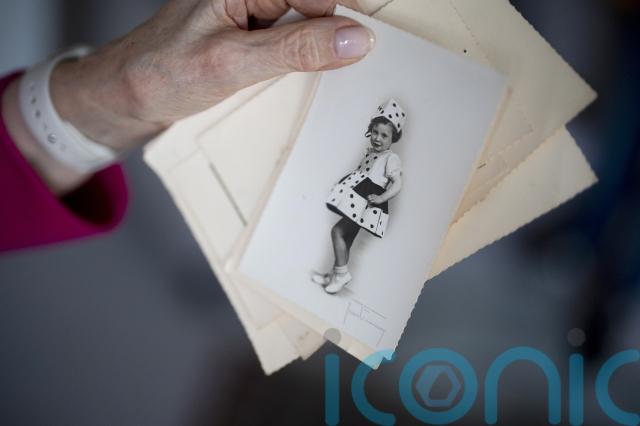
She said commemoration was important because the Holocaust “should never be forgotten”.
Referring to the theme of this year’s Holocaust Memorial Day on Tuesday, bridging generations, Ms Lever said: “That’s what I do, to talk to the other generation, the one who will be able to carry on.
“I’m 82 now. How long will I be here for?
“It should never, never be forgotten, especially that they always used to say after the Holocaust that the world had learned, but the world had not learned because look what happened afterwards.
“Look at all the genocides.
“Why hate other people like that? I always told those young people when I speak to them, I always say it doesn’t matter, the colour of your skin, it doesn’t matter what religions you believe in, all you have to remember is that we are all human beings and therefore you have to respect everyone for what we are.”
Ms Lever was raised by the woman who smuggled her and her cousin out of prison, Andree Castex, whom she called Mimi.
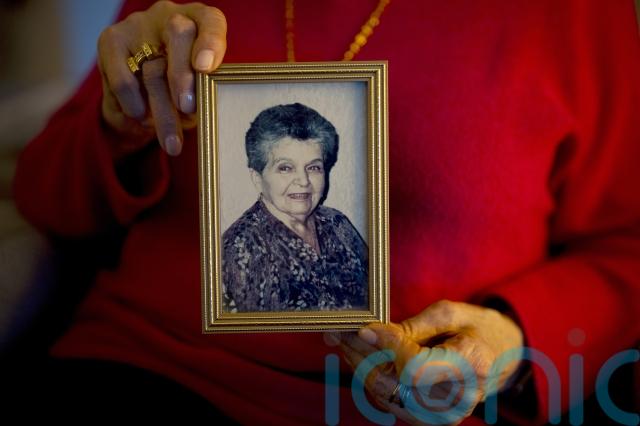
“She risked her life and her children’s life for me,” Ms Lever told PA.
“I really, really adored her and until she died, and after, I always called her mother, but now I do refer to her as Mimi, in respect for my mother.”
Her father explained to her that on her final night in the La Rochelle jail, her mother made two requests, that her husband would never marry again and Ms Lever would not call anyone else mother.
This family history was never fully explained to Ms Lever, who pieced the parts of the puzzle together bit by bit over time.
She said that growing up, she used to pretend to fall asleep at the dining table after a meal and hear her story being recounted by Mimi.
“It was very strange because in my bedroom when I was with Mimi there were two pictures, of my mother and my aunt,” she said.
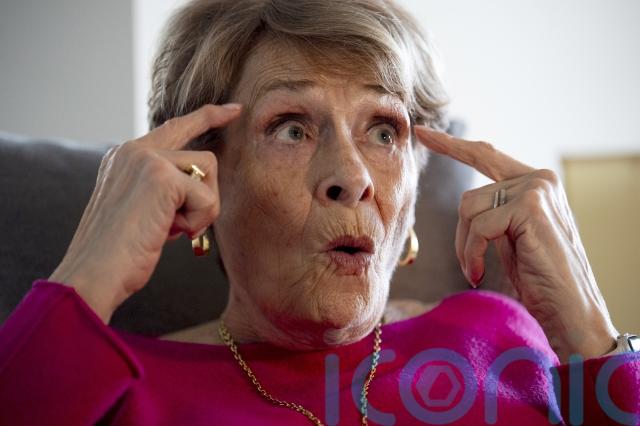
“I never, never asked who they were. I think I was so worried, frightened. It was disturbing for me, really.
“And I was supposed to be told when I was 12, actually when I had communion. My father then, he could not talk about it. It was too painful for him. He never really talked about it.
“So I never was told by people who really lived it what had happened. I just put two and two together.”
Ms Lever also reconnected with her mother’s family when Ms Xavier’s surviving sister sent a letter to her 17-year-old niece and invited her to stay with her family in Amsterdam.
“They tried to tell me about the family and Jewish way of life,” she said. “They made me understand that I really was Jewish.”
They later presented 19-year-old Ms Lever with a job opportunity in Bristol as an au pair to a Jewish family, which she took.
With them, she paid her first visit to a synagogue to celebrate the Jewish new year.
“As I was sitting there somebody said to me: ‘Look down, there is a boy down there’,” she told PA.
“I sort of looked down and that boy looked at the same time, and believe it or not that was my husband.
“Fifty-eight years later, we’re still married.”
She and her husband, Allen, have two sons and five granddaughters.
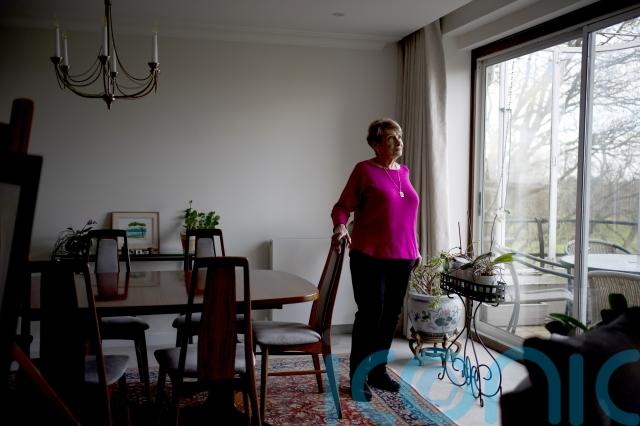
They live in a south-west London apartment filled with family photographs and Ms Lever’s paintings of her grandchildren.
She shares her story in schools and colleges across the UK and at Parliamentary events through the Holocaust Educational Trust.

Subscribe or register today to discover more from DonegalLive.ie
Buy the e-paper of the Donegal Democrat, Donegal People's Press, Donegal Post and Inish Times here for instant access to Donegal's premier news titles.
Keep up with the latest news from Donegal with our daily newsletter featuring the most important stories of the day delivered to your inbox every evening at 5pm.

This publication supports the work of the Press Council of Ireland and Office of the Press Ombudsman, and our staff operate within the Code of Practice of the Press Council. You can obtain a copy of the Code, or contact the Council, at www.presscouncil.ie, Lo-call 1800 208 080 or email: info@presscouncil.ie.