Search


27 Jan 2026
Search
27 Jan 2026

Please allow ads as they help fund our trusted local news content.
Kindly add us to your ad blocker whitelist.
If you want further access to Ireland's best local journalism, consider contributing and/or subscribing to our free daily Newsletter .
Support our mission and join our community now.
To continue reading this article, you can subscribe for as little as €0.50 per week which will also give you access to all of our premium content and archived articles!
Alternatively, you can pay €0.50 per article, capped at €1 per day.
Thank you for supporting Ireland's best local journalism!


It will be “impossible” for Londoners to travel without being scanned by facial recognition unless police use of the technology is properly restricted, the High Court has been told.
The Metropolitan Police is facing legal action over its use of live facial recognition (LFR), brought by a youth worker who was misidentified by the technology and the director of a civil liberties campaign group.
Shaun Thompson, who volunteers with young people affected by violence, and Silkie Carlo, from Big Brother Watch, are concerned that facial recognition could be used arbitrarily or in a discriminatory way.
Lawyers for the pair had their challenge heard at the High Court after Home Secretary Shabana Mahmood defended her plans to extend facial recognition to police forces across England and Wales, despite a consultation on its use not being complete.
Plans set out on Monday would see the number of vans increasing from 10 to 50 and be available to all forces across the two nations.
Dan Squires KC, for Mr Thompson and Ms Carlo, told the hearing on Tuesday that police use of the technology is increasing “exponentially”.
He said that in 2025, the Met Police used facial recognition 231 times and scanned around four million faces.
On one day, December 17 last year, facial recognition at Oxford Circus scanned more than 50,000 faces in a four-and-a-half-hour period, he added.
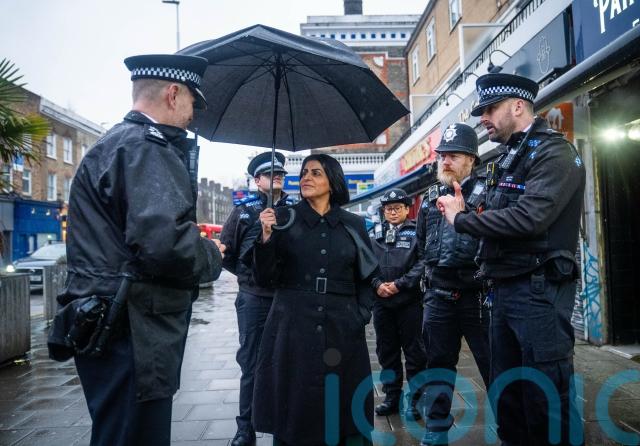
Mr Squires described facial recognition as “similar to a DNA profile”, turning people’s facial characteristics into coded data which is then compared with people on a “watch list”.
He said this can be done “at incredible speed with an enormous number of people”.
In written submissions, he said: “Amidst this escalation in use and in the number of people whose rights are affected, the way in which the MPS (Metropolitan Police Service) is using LFR is changing.
“Earlier this year, the MPS announced that the first permanent facial recognition cameras would be installed on buildings and lampposts in Croydon.”
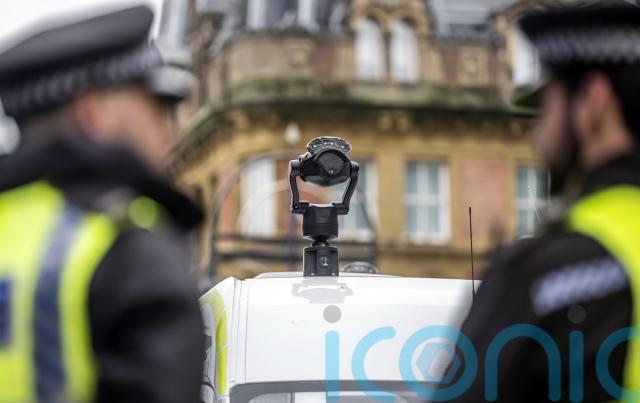
The barrister continued: “If there are insufficient constraints on ‘where’ the police can use LFR, such that any transport hub, high street or other public location can be targeted, it will be impossible for people to travel across London without their biometric data being taken and processed.”
Anya Proops KC, for the Met Police, said that at any one time there are “literally thousands” of people that officers are looking for in London.
In written submissions, she said: “Locating these individuals within a vast, bustling metropolis is akin to looking for stray needles in an enormous, exceptionally dense haystack.”
She continued: “LFR can spot the ‘needles’ in a way that officers simply cannot, enabling sought persons who would otherwise go undetected, or be at large for much longer periods, to be located by the MPS.”
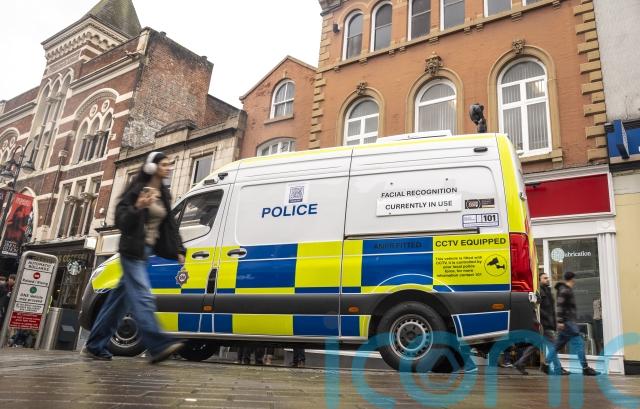
Ms Proops said that in 2025, up until September 18, officers made 801 arrests “specifically as a result of LFR” and that the intrusion into the public’s privacy is “only minimal”.
She also said that data taken from people not on a watchlist “is deleted a fraction of a second after it is created, precisely because the MPS has no interest in that data”.
She added: “It is only matched individuals whom the MPS has an interest in identifying/locating.”
The barrister continued: “The MPS uses LFR because it is a hugely effective policing tool, which substantially contributes to the MPS’s ultimate objective of keeping the public safe.”
The hearing, before Lord Justice Holgate and Mrs Justice Farbey, is due to conclude on Wednesday with a judgment expected at a later date.

Subscribe or register today to discover more from DonegalLive.ie
Buy the e-paper of the Donegal Democrat, Donegal People's Press, Donegal Post and Inish Times here for instant access to Donegal's premier news titles.
Keep up with the latest news from Donegal with our daily newsletter featuring the most important stories of the day delivered to your inbox every evening at 5pm.

This publication supports the work of the Press Council of Ireland and Office of the Press Ombudsman, and our staff operate within the Code of Practice of the Press Council. You can obtain a copy of the Code, or contact the Council, at www.presscouncil.ie, Lo-call 1800 208 080 or email: info@presscouncil.ie.