Search


21 Apr 2026
Search
21 Apr 2026

Please allow ads as they help fund our trusted local news content.
Kindly add us to your ad blocker whitelist.
If you want further access to Ireland's best local journalism, consider contributing and/or subscribing to our free daily Newsletter .
Support our mission and join our community now.
To continue reading this article, you can subscribe for as little as €0.50 per week which will also give you access to all of our premium content and archived articles!
Alternatively, you can pay €0.50 per article, capped at €1 per day.
Thank you for supporting Ireland's best local journalism!


Backers of the assisted dying Bill have rejected accusations of bullying amid claims from opponents they are attempting to force it through Parliament.
The latest war of words comes as Dame Esther Rantzen – one of the Bill’s highest profile supporters – has written to peers urging them to “stop inventing fictitious excuses” to block the proposed legislation.
The Terminally Ill Adults (End of Life) Bill, which was voted through by MPs in the Commons in June, is back in the Lords on Friday for further scrutiny.
Members of the Lords have tabled more than 1,000 amendments – a record number for a private member’s Bill – prompting supporters to accuse opponents of trying to delay or talk out the draft legislation, leading it to run out of time to be passed before spring when the current session of Parliament ends.
But this week, Bill supporters have said the Parliament Act could be invoked to override objections from peers if the draft law is not approved before the King’s Speech in May.
The rarely-used legislation allows for Bills that have been backed by the Commons in two successive sessions but rejected by peers to pass into law without Lords approval, and backers have insisted they are confident the Act would apply if the Bill was taken through a second time.
Former justice secretary Lord Charlie Falconer, who is sponsoring the Bill in the House of Lords, said it is “really important” that Parliament resolves the issue, and he suggested were the Parliament Act to be used, the Bill could be approved “sometime in the spring of 2027”.
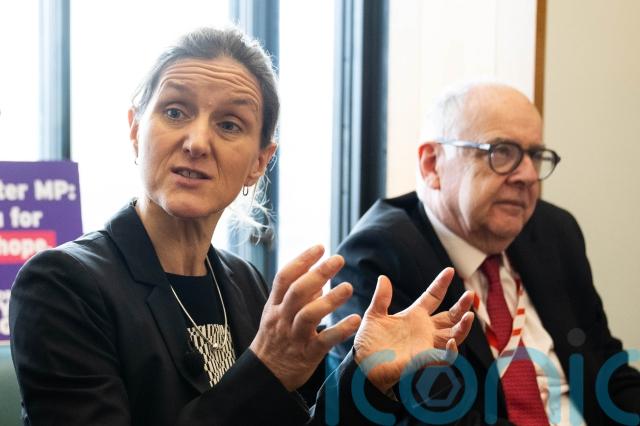
He told reporters on Thursday: “There is no resolution if it just peters out in the Lords because there is no time.
“That will then lead to the thing coming back again and again and again throughout this parliamentary session with no resolution.
“We, as a Parliament, should be capable of reaching a conclusion.”
Supporters of the assisted dying legislation say there are precedents for the Act being used in relation to so-called “conscience issues”, with seven Bills having been passed using the powers under section 2 of the law, including the Hunting Act 2004.
A source close to Labour MPs and peers opposed to the Bill said threats to use the “nuclear option” – a description used by some Bill backers – of the Parliament Act to force it through were “the act of a bully who knows they are losing the argument on the substance”.
But Lord Falconer strongly rejected this, saying: “It’s neither bullying nor nuclear. It is absolutely the foundation of our constitutional democracy, which is ultimately – it is not the unelected Lords that can have their way. It is ultimately the Commons who are elected who can have their way.”
Former Commons clerk, Sir David Natzler, who is an expert in parliamentary procedure, branded the use of the word nuclear as “a meaningless phrase”.

He told reporters use of the Parliament Act would be “just the due process of parliamentary and statute law, it’s nothing to do with bullying”.
Labour MP Jess Asato said: “A Bill like this with such profound life and death impacts, which still ignores massive risks like coercion or the capacity of the vulnerable, must not be forced through without the scrutiny it deserves.”
Meanwhile, an ex-director of legislative affairs for two previous prime ministers has insisted peers are simply “doing their best to patch these holes” in the Bill and “responding to external concerns”.
Nikki da Costa, a vocal critic of the Bill, told BBC Radio 4’s Today programme: “This Bill managed to provoke two royal colleges – psychiatrists and physicians – from four years of neutrality to saying that this Bill, while they’re neutral on principle, that this Bill is unsafe.
“This Bill is dangerous for the vulnerable and people will be failed. So, you’ve got a situation where Lord Falconer wants the Lords as a scrutinising chamber to stop doing the work and just wave it through.”
Broadcaster and ChildLine founder Dame Esther – who is terminally ill with cancer – said some peers were not being honest about their motives for suggesting amendments.
In her letter to peers, she said: “The House of Lords is not being honest. The real motive behind these 1,000 amendments is not to improve the Bill, to block it.
“The truth is that none of the thousand amendments you propose would reassure you and enable you to vote for the Bill because you oppose it on principle.”
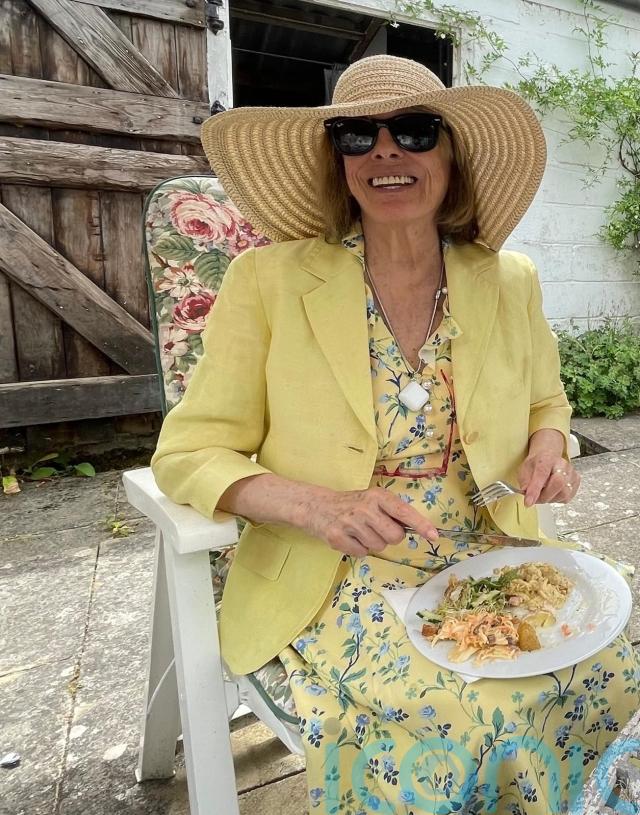
She said some are “forcing on non-believers” their personal religious principles, are disability campaigners who believe “quite wrongly that the Bill will apply pressure to disabled people when it only applies to terminally ill people like me”, or think there is a risk the legislation’s eligibility criteria could be broadened if passed.
She wrote: “Please stop inventing fictitious excuses to block what the majority of the public have asked for, and the House of Commons have voted for.
“It’s your choice, please allow us also the dignity of choice, not to shorten our lives, but to shorten our deaths.
“No change in the law can come in time for me. But at least you can give hope to future generations.”
Lord Falconer has written to peers setting out where he intends to propose amendments to strengthen and improve the Bill, including a tighter definition of the protections for people with eating disorders; an explanation of how a ban on advertising assisted dying services would operate; a clarification that medical practitioners would have to opt-in to take part in such a service; and extra protections for people aged 18-25.
Commons Leader Sir Alan Campbell said he hopes peers scrutinise the Bill in a “responsible way” and the Parliament Act does not have to be invoked.
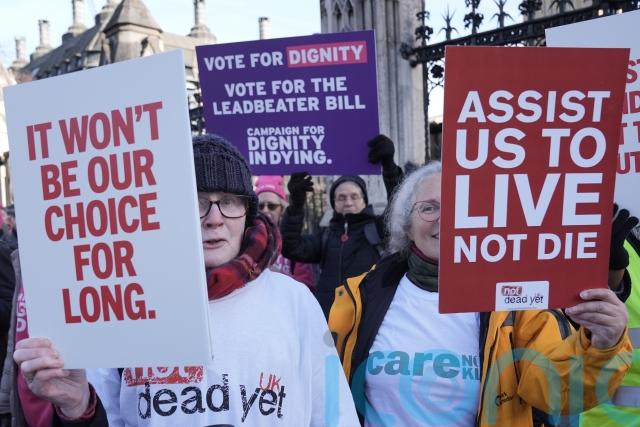
Downing Street would not be drawn on whether the Government could make time in the next session of Parliament for the Bill, reiterating the Government remains neutral on assisted dying.
The Bill’s proposals would allow adults with terminal illnesses in England and Wales who have less than six months to live to apply for an assisted death.
An application would have to be approved by two doctors and a panel including a social worker, senior legal figure and a psychiatrist.

Subscribe or register today to discover more from DonegalLive.ie
Buy the e-paper of the Donegal Democrat, Donegal People's Press, Donegal Post and Inish Times here for instant access to Donegal's premier news titles.
Keep up with the latest news from Donegal with our daily newsletter featuring the most important stories of the day delivered to your inbox every evening at 5pm.

This publication supports the work of the Press Council of Ireland and Office of the Press Ombudsman, and our staff operate within the Code of Practice of the Press Council. You can obtain a copy of the Code, or contact the Council, at www.presscouncil.ie, Lo-call 1800 208 080 or email: info@presscouncil.ie.