Search


03 Apr 2026
Search
03 Apr 2026

Please allow ads as they help fund our trusted local news content.
Kindly add us to your ad blocker whitelist.
If you want further access to Ireland's best local journalism, consider contributing and/or subscribing to our free daily Newsletter .
Support our mission and join our community now.
To continue reading this article, you can subscribe for as little as €0.50 per week which will also give you access to all of our premium content and archived articles!
Alternatively, you can pay €0.50 per article, capped at €1 per day.
Thank you for supporting Ireland's best local journalism!


Early detection tests that pick up multiple cancers and innovative breath tests could become part of NHS screening within a decade, the Government has said.
A new 10-year national cancer plan for England says blood, urine and saliva tests – such as those able to pick up signals of more than 50 cancers before symptoms appear – have the “potential to transform and modernise” diagnosis.
“The ability to screen or test for multiple cancers at once, often pre-emptively – moving away from the NHS’ reactive and episodic default care model – will be a particularly transformative breakthrough,” it said.
“Liquid biopsies that analyse blood biomarkers – as well as breath, saliva and urine tests – will diagnose multiple cancers far earlier, enabling care to begin before a patient knows they needed it rather than after long, frustrating waits.”
The National Cancer Plan is here.
It’s the most ambitious plan on cancer in a generation, built with the support of the cancer community.
Thank you to everyone who shared their story to help create it.
Your voices are shaping the future of cancer care.https://t.co/Pr3bPScJoa pic.twitter.com/v1maDRVooQ
— Department of Health and Social Care (@DHSCgovuk) February 4, 2026
The NHS is already running a major trial called Galleri, which is looking at whether a multi-cancer early detection blood test works in people with no symptoms.
The plan said: “Subject to UK National Screening Committee review – and evidence of their efficacy, safety and value – our ambition is that multi-cancer early detection tests can become part of our national screening programmes during the course of this plan.”
The document also sets out a drive to create the “next generation” of personalised treatments for cancer patients and a focus on new cancer vaccines to prevent the disease coming back.
“We are already seeing progress in cancer vaccines through the Vaccine Innovation Pathway and Cancer Vaccine Launch Pad and will deliver up to 10,000 cancer vaccines by 2030. Our ambition is that these kinds of treatments are more widely available by 2035,” it said.
Health Secretary Wes Streeting launched the plan on Wednesday during a visit to the Royal Free London hospital where he was treated for kidney cancer.
He described how, “in what must be a first, over half the ministerial team” in the Department of Health and Social Care are cancer patients – “myself, Karin Smyth and Ashley Dalton”.
Health minister Ms Dalton has breast cancer that then spread to other parts of her body, while Ms Smyth, another health minister, was diagnosed with skin cancer in 2023.
Mr Streeting outlined ambitions set down in the plan, including for 75% of patients diagnosed from 2035 to be cancer-free or living well after five years, up from 60% at the moment.
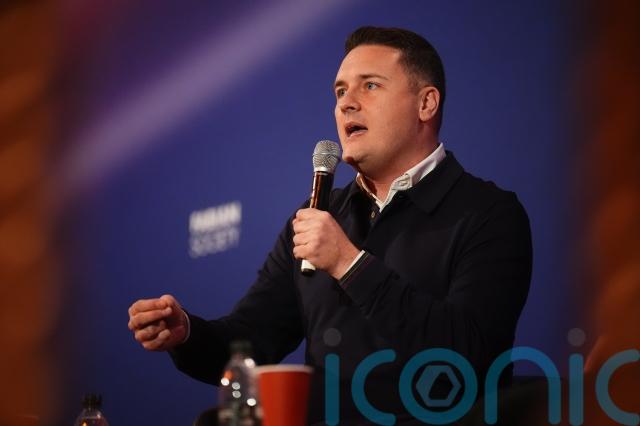
He also pledged to “up the ante on prevention”, including through targeting smoking and junk food ads, and described out how each cancer patient would receive a personal cancer plan.
He said: “Because everyone’s experience is unique, we’re announcing today each patient will receive a personal cancer plan with bespoke assessments to ensure that the support fits all of our distinct clinical, practical but also emotional needs.”
The plan further sets out how the Government will “prioritise improvement” in those hospitals lagging behind in key cancer areas, and will accelerate the uptake of GLP-1 obesity medicines such as Mounjaro, owing to the known link that obesity causes cancer.
The report also set out how, by 2028, the NHS app will be the “front door for cancer care, allowing patients to manage screening invitations, appointments, and treatment plans”.
It added: “By 2035 it will bring together genomic and lifestyle data with the single patient record to provide personalised risk profiles and prevention advice, giving patients greater control of their health.”
Community diagnostic centres and hospitals can also expect to have more MRI scanners with AI acceleration technology, “which will add capacity for 154,000 additional scans to March 2029, and reducing repeat tests through image sharing”.
Other measures include increasing the use of consultation rooms to assess patients straight before a test rather than making it two separate appointments, and follow-up appointments straight away rather than calling people back.
Elsewhere, breast pain and post-menopausal bleeding clinics will also be rolled out nationally by the end of 2026.
The plan also promises to do more to keep cancer patients in work, including through more detailed work with firms on how to support employees.
In a foreword to the report, Mr Streeting described receiving a cancer diagnosis at the age of 38.
He said: “A cancer diagnosis changes your life in an instant.
“I still remember being sat in my car on a cold, overcast day, with the snow about to fall, when my urologist called to say that I had kidney cancer and my world turned upside down.
The National Cancer Plan will make England a world leader in cancer survival, bringing the latest treatments and technology to NHS cancer care.
Here's what the National Cancer Plan will do ⬇️
— NHS England (@NHSEngland) February 4, 2026
“Nothing quite prepares you for it. It was like time stood still as I felt the rising sense of fear and foreboding that all cancer patients describe.
“But I also had hope because it was caught early and I knew I was in safe hands.”
He said not everyone is so lucky and “some of the hardest meetings I’ve had are with cancer patients and their families who were failed by the NHS”.
He added: “That is why our national cancer plan unashamedly puts patients first.”
The document also pledges that the NHS will meet all its cancer waiting-time targets by 2029.
Michelle Mitchell, chief executive at Cancer Research UK, said: “After almost a decade since the last dedicated cancer strategy, the publication of the national cancer plan for England marks an important milestone for cancer patients and their loved ones.
“There is much to welcome, including commitments to meet cancer waiting-time targets, diagnose cancer earlier, and accelerate the set-up of clinical trials – alongside the national rollout of targeted lung screening.
“These are positive steps towards transforming services and saving more lives.
“The key question that patients and their loved ones will ask, however, is how quickly will they see progress in cancer survival and outcomes?
“The improvements they’re waiting for will depend on how this plan translates into delivery.
“Funding must match the ambition of what’s been promised or the NHS will struggle to expand its diagnostic capacity or introduce innovations at scale.
“Clear leadership and accountability are also crucial. We look forward to working with the UK Government to ensure this plan delivers for people affected by cancer in England.”

Subscribe or register today to discover more from DonegalLive.ie
Buy the e-paper of the Donegal Democrat, Donegal People's Press, Donegal Post and Inish Times here for instant access to Donegal's premier news titles.
Keep up with the latest news from Donegal with our daily newsletter featuring the most important stories of the day delivered to your inbox every evening at 5pm.

This publication supports the work of the Press Council of Ireland and Office of the Press Ombudsman, and our staff operate within the Code of Practice of the Press Council. You can obtain a copy of the Code, or contact the Council, at www.presscouncil.ie, Lo-call 1800 208 080 or email: info@presscouncil.ie.