Search


04 Apr 2026
Search
04 Apr 2026

Please allow ads as they help fund our trusted local news content.
Kindly add us to your ad blocker whitelist.
If you want further access to Ireland's best local journalism, consider contributing and/or subscribing to our free daily Newsletter .
Support our mission and join our community now.
To continue reading this article, you can subscribe for as little as €0.50 per week which will also give you access to all of our premium content and archived articles!
Alternatively, you can pay €0.50 per article, capped at €1 per day.
Thank you for supporting Ireland's best local journalism!


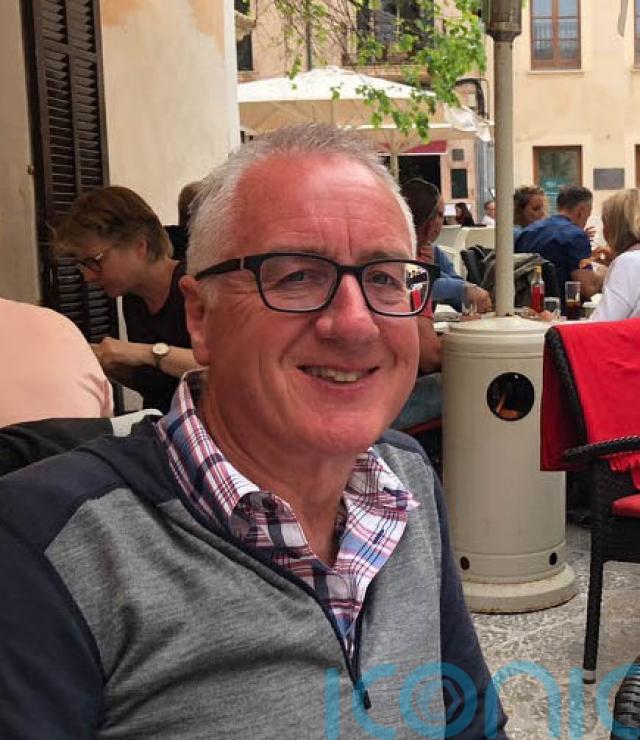
A stroke survivor whose only symptom was being unable to read has urged people to look out for uncommon signs of the potentially deadly condition.
Gordon Robb had a bleed on his brain but was reluctant to seek emergency care after not experiencing the usual symptoms of the condition, including facial weakness; arm weakness or speech problems.
Instead, the 63-year-old found that words – including emails, texts about the Ryder Cup and the screen of a cash point – looked as though they were written in a foreign language.
He had decided to make GP appointment but a cousin insisted on an A&E visit where it emerged that he had a haemorrhagic stroke.
Experts said that difficulty recognising written words on its own, without any other symptoms, affects fewer than 1% of people at the time of their stroke.
Now Mr Robb, a former vice-president of a biotech company, is taking part in a new British Heart Foundation-funded clinical trial led by academics at the University of Edinburgh in a bid to avoid future strokes.
Researchers are examining if clopidogrel or aspirin, which are drugs that reduce the risk of blood clotting, can prevent future strokes, heart attacks and premature deaths in people who have had a haemorrhagic stroke.
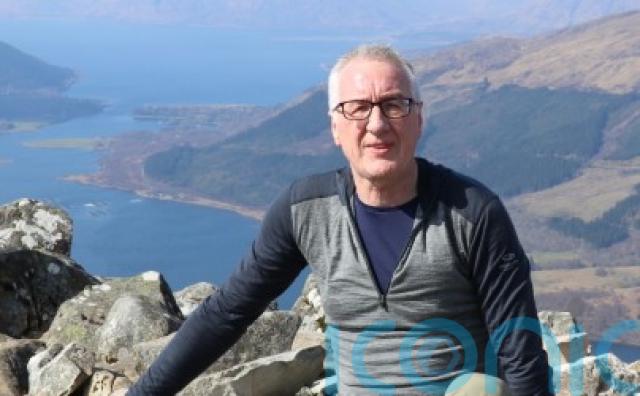
Mr Robb, from Bonnyrigg in Midlothian, Scotland, is taking the clopidogrel as part of the trial.

The keen cyclist and runner had his stroke in September last year.
His symptoms are improving, though it now takes longer to read compared to before his stroke, and he occasionally cannot find the right word during a conversation.
“I am incredibly lucky, and quite honestly felt like a fraud in the stroke ward because I was no different to how I am normally, except that I suddenly could not read words,” he said.
“I knew some of the classic signs of a stroke like facial weakness, being unable to raise my arms or speech issues, but had none of these.
“It just shows the importance of paying attention to unusual symptoms, even if they aren’t ones you have heard of before.
“If I hadn’t gone to the hospital, and quickly received treatment, I could have been walking around with a ticking time-bomb in my head.”
Recalling his stroke, he said: “I was in the garden, went in to have a cup of tea, listen to some music and check my emails on my phone – and it was like they were in a foreign language.
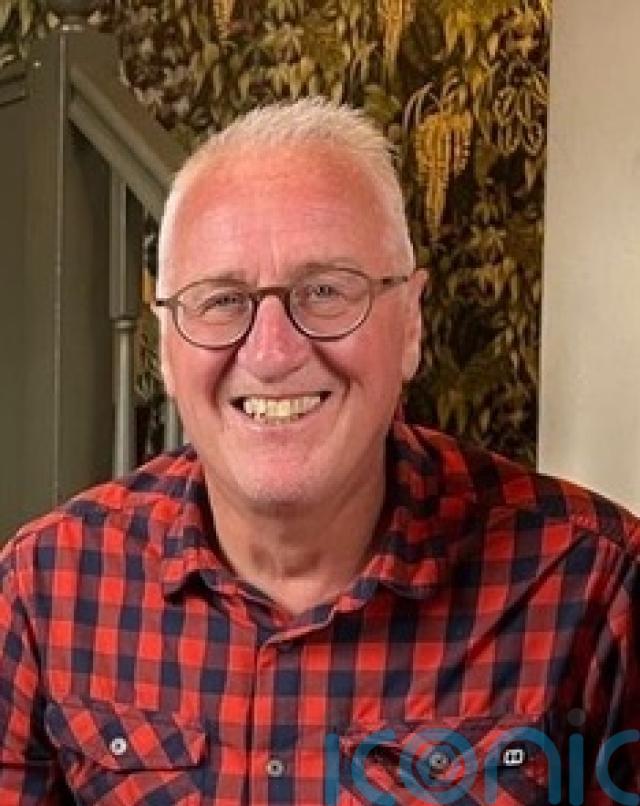
“I could see them clearly, and see who they were from, but the words meant nothing to me.
“I just assumed I was tired because I had been up late the night before.
“When friends were then messaging me about the Ryder Cup that evening and I couldn’t see the messages, I just gave myself an early night.”
The next day after he could not read the instructions on a cash machine he resolved to see his GP.
But his cousin, whose husband had died from a sudden stroke just three weeks earlier – drove straight to his house and insisted on taking him to A&E.
It was there he discovered he had a haemorrhagic stroke.
While in hospital he signed up to the new trial, led by Professor Rustam Al-Shahi Salman at the University of Edinburgh.
Professor Salman said: “It has been hard to overcome the instinctive fear that if people have had a haemorrhagic stroke, taking aspirin or a drug like it might cause more bleeding.
“So we were very relieved when our research showed such drugs to be safe after a haemorrhagic stroke.
“The Aspiring study will gather further evidence to establish if aspirin and clopidogrel can help lower the risk of future strokes and heart attacks, and potentially save the lives of people like Gordon who have had a haemorrhagic stroke.
“I believe there is a huge amount more to be done to help these people, whose lives have been turned upside down and who may be concerned about the future.”
Mr Robb said: said: “Being involved in this trial provides some reassurance, that this drug may reduce my risk of another stroke.
“But it is also great to know that being involved could help improve treatment for people like me in the future, and relieve the pressure on the health system.
“I feel extremely lucky that I did not have more long-term effects from my stroke, and that I have had the chance to try to help improve treatments.”
Dr Sonya Babu-Narayan, the British Heart Foundation’s clinical director, added: “Facial weakness, arm or leg weakness and speech problems are well-known signs you or your loved one may be having a stroke, but there are some lesser-known symptoms like being unable to recognise the written word.
“If you have a symptom that you feel is not right, however strange or unusual, it is really important to seek help. Every minute matters if you may be having a stroke or other medical emergency.
“We know stroke survivors often fear having another stroke and how disabling this could be. That is why the BHF is funding clinical trials like Aspiring, which will test whether prescribing antiplatelet drugs could protect more people.”

Subscribe or register today to discover more from DonegalLive.ie
Buy the e-paper of the Donegal Democrat, Donegal People's Press, Donegal Post and Inish Times here for instant access to Donegal's premier news titles.
Keep up with the latest news from Donegal with our daily newsletter featuring the most important stories of the day delivered to your inbox every evening at 5pm.

This publication supports the work of the Press Council of Ireland and Office of the Press Ombudsman, and our staff operate within the Code of Practice of the Press Council. You can obtain a copy of the Code, or contact the Council, at www.presscouncil.ie, Lo-call 1800 208 080 or email: info@presscouncil.ie.