Search


13 Feb 2026
Search
13 Feb 2026

Please allow ads as they help fund our trusted local news content.
Kindly add us to your ad blocker whitelist.
If you want further access to Ireland's best local journalism, consider contributing and/or subscribing to our free daily Newsletter .
Support our mission and join our community now.
To continue reading this article, you can subscribe for as little as €0.50 per week which will also give you access to all of our premium content and archived articles!
Alternatively, you can pay €0.50 per article, capped at €1 per day.
Thank you for supporting Ireland's best local journalism!


Proposed guidance on gender-questioning children could “drive wedges” between schools and parents, a former education boss has claimed.
But unions have generally welcomed the safeguarding updates from the Department for Education (DfE), saying they will provide “consistency” for schools on how to address issues such as pronouns and sports.
The proposed guidance, published just before Parliament went on half-term break, says that if a child does not want to use toilets or changing rooms for their designated biological sex, schools should consider whether they can provide an alternative.
The updates, which have been put out for consultation for the next 10 weeks, have been proposed after the 2024 Cass Review into children’s gender care and last year’s Supreme Court ruling on biological sex.
Setting out the approach to support children who are questioning their gender, it says that schools must maintain single-sex toilets based on biological sex for children over the age of eight, and in some sports where there are “safety reasons for single-sex PE”.
Schools should consider avoiding “rigid rules based on gender stereotypes”, the draft guidance says, and should take time to understand children’s feelings while being aware of “potential vulnerabilities” such as them facing bullying or needing mental health support.
If a child or their parent makes a request for them to socially transition, schools should take a “careful approach”, the guidance says, discussing it with families and taking account of any clinical advice that may have been received.
Schools should seek parents’ views unless there is any reason not to, the DfE have said.
Speaking to BBC Radio Four’s Today programme, Pepe Di’Iasio, general secretary of the Association of School and College Leaders (ASCL), said schools only would not refer to parents if they felt it was unsafe to do so.
Asked what schools should do if they believe a parent may be angry about their child wanting to transition, Mr Di’Iasio said: “Having angry parents is something that headteachers deal with on a day-to-day basis.
“And anger is not a reason not to tell a parent.”
A safeguarding risk is different from a parent being upset or anxious, he added.
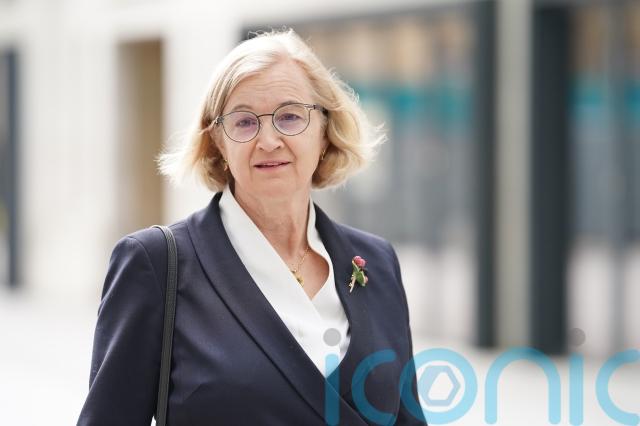
But former head of schools inspectorate Ofsted, Baroness Amanda Spielman, said the proposals are “not good enough for me”.
She told the Today programme: “They (the guidelines) enable schools to act on what they perceive to be a solution, which may, in fact, be – the problem that the school is looking at – may be something that is part of a much bigger picture where parents and clinicians are discussing, thinking, acting responsibly in the child’s interests, and the school is substituting, with no clinical expertise, its view of what is in the child’s best interests.
“This could drive huge wedges between schools and parents in some of the most difficult cases.”
The newly-proposed guidance is different to the draft guidance published under the Conservatives, which said primary school children should not be using pronouns different from their biological sex, and schools could decline requests from older children to change their pronouns.
The new draft guidance does not include this and Baroness Spielman said it “doesn’t help schools or anybody who is uncomfortable about being compelled to use the language of preferred pronouns”.
She added: “This guidance appears to leave it open to schools to mandate that for teachers and for pupils, and I foresee that there will be many challenges to that.”
However, Mr Di’Iasio said: “In a social way, I think there’ll be no problem with a choice of pronoun. This is about people getting on together in a school setting.”
The Stonewall charity said the final statutory guidance must reflect the experiences of young people questioning their gender, adding that “many in the LGBTQ+ community, especially trans people, are increasingly feeling their voices are not heard”.
Gender-critical campaigner Maya Forstater, from the organisation Sex Matters, welcomed a move to put guidance on a statutory footing, to ensure “schools have the same legal duties towards all children”.
But she added: “Schools are still being left with the idea that they can facilitate ‘social transition’ – which remains undefined – and that they should negotiate this on a case-by-case basis.”
She warned against a “dangerous fairy tale” of “allowing children and parents to think that a child who starts their education as a girl can graduate as a boy or vice versa”.

Subscribe or register today to discover more from DonegalLive.ie
Buy the e-paper of the Donegal Democrat, Donegal People's Press, Donegal Post and Inish Times here for instant access to Donegal's premier news titles.
Keep up with the latest news from Donegal with our daily newsletter featuring the most important stories of the day delivered to your inbox every evening at 5pm.

This publication supports the work of the Press Council of Ireland and Office of the Press Ombudsman, and our staff operate within the Code of Practice of the Press Council. You can obtain a copy of the Code, or contact the Council, at www.presscouncil.ie, Lo-call 1800 208 080 or email: info@presscouncil.ie.