Search


04 Apr 2026
Search
04 Apr 2026

Please allow ads as they help fund our trusted local news content.
Kindly add us to your ad blocker whitelist.
If you want further access to Ireland's best local journalism, consider contributing and/or subscribing to our free daily Newsletter .
Support our mission and join our community now.
To continue reading this article, you can subscribe for as little as €0.50 per week which will also give you access to all of our premium content and archived articles!
Alternatively, you can pay €0.50 per article, capped at €1 per day.
Thank you for supporting Ireland's best local journalism!


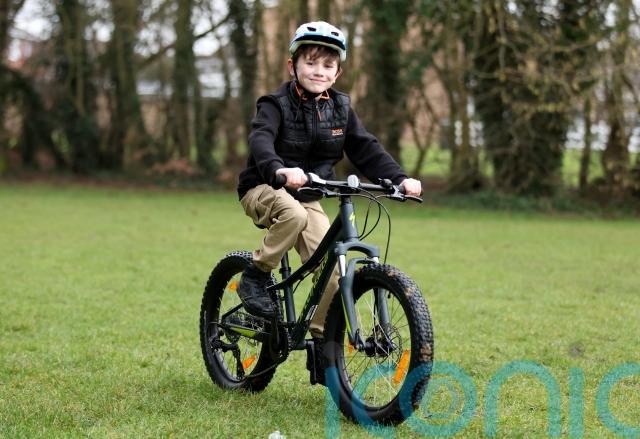
A nine-year-old boy has become the first person in the UK to have pioneering surgery to make him taller.
Alfie Phillips has fibular hemimelia, which affects fewer than one in 40,000 births and caused his right leg to not develop properly, leaving it more than an inch shorter than his left.
Experts implanted a lengthening nail on the surface of Alfie’s right thigh bone, which was slowly pulled apart over time using magnets to help him gain 3cm.
Prior to seeing specialists at Alder Hey Children’s Hospital in Liverpool, his only option for treatment was to have an external frame fixed to his bone with pins or wires, which carries a risk of pain, infection and scarring.
Alfie, from Northampton, told the Press Association that he was “excited” and scared to be the first to have the procedure, but almost a year on he is now “running around as normal” and enjoys playing basketball.
Alder Hey has since performed the technique on three other children with fibular hemimelia.
Lengthening nails have been fitted inside the bone of adults, but the procedure was not an option for younger children because of the risk of damaging the growth plates.
Nick Peterson, a consultant orthopaedic surgeon at Alder Hey, told PA: “We know that being able to lengthen internally is less painful and a better experience overall.
“But before this technique, it wasn’t available for children.”
The new method, developed in the US, involved placing a lengthening nail – known as a motorised telescopic nail – on the surface of Alfie’s femur, the long bone in the thigh.
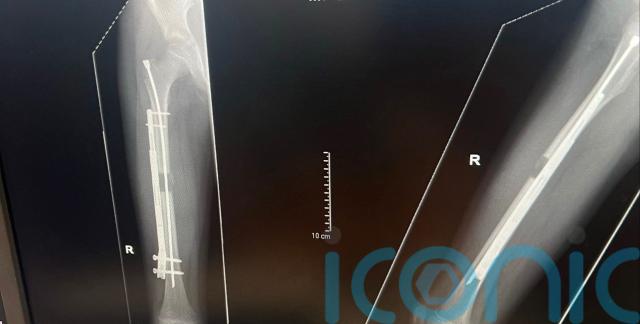
The bone is surgically cut, with a rod placed down the middle to keep it straight.
To make the limb longer, a magnetic device was placed on Alfie’s leg three times a day for a month.
This process helped the nail slowly pull the two bone ends apart – by around 1mm each day – while the body naturally filled the gap with new bone tissue.
Before being referred to Alder Hey in 2024, Alfie’s only option to make his leg longer was to have an external fixator fitted.
Mr Peterson said these can be “difficult to live with”, with problems such as infections at the pin sites and pain, and complications like knee stiffness and scarring.
The operation to install the nail was performed on Alfie in March 2025 and he spent less than a week in hospital.
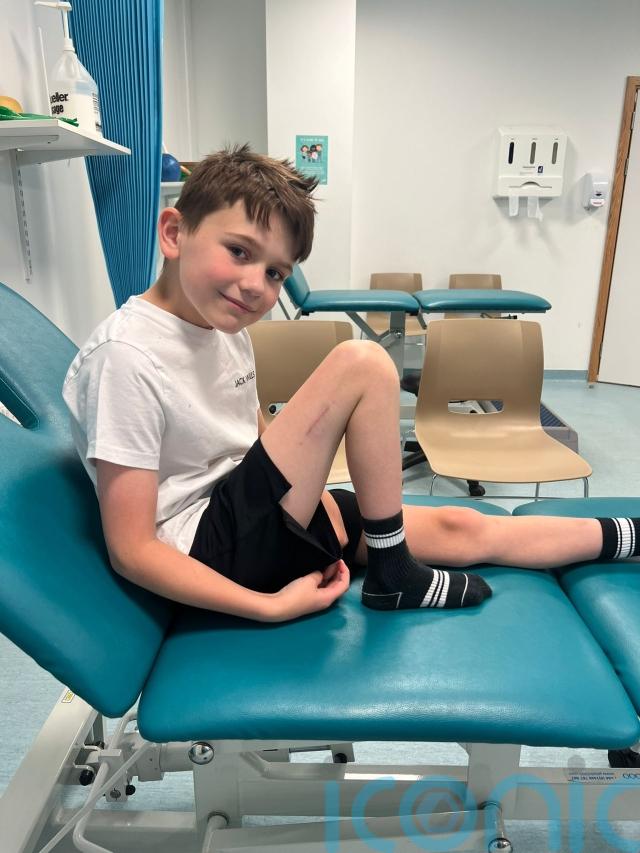
His mother, Laura Ducker, 34, said: “By the next morning, he was up walking around with his zimmer frame to the toilet.
“We were told that with the external fixator, he would never have been comfortable enough to do.
“From day seven, he didn’t need any pain relief, he just managed.”
Alfie was given around a week to recover before lengthening began.
He then returned to hospital for weekly physiotherapy sessions and reviews by doctors and specialist nurses until the lengthening process had finished, which took around six weeks.
Alfie continued to have physio until the nail was removed from his leg, which was around three to four months after the operation.
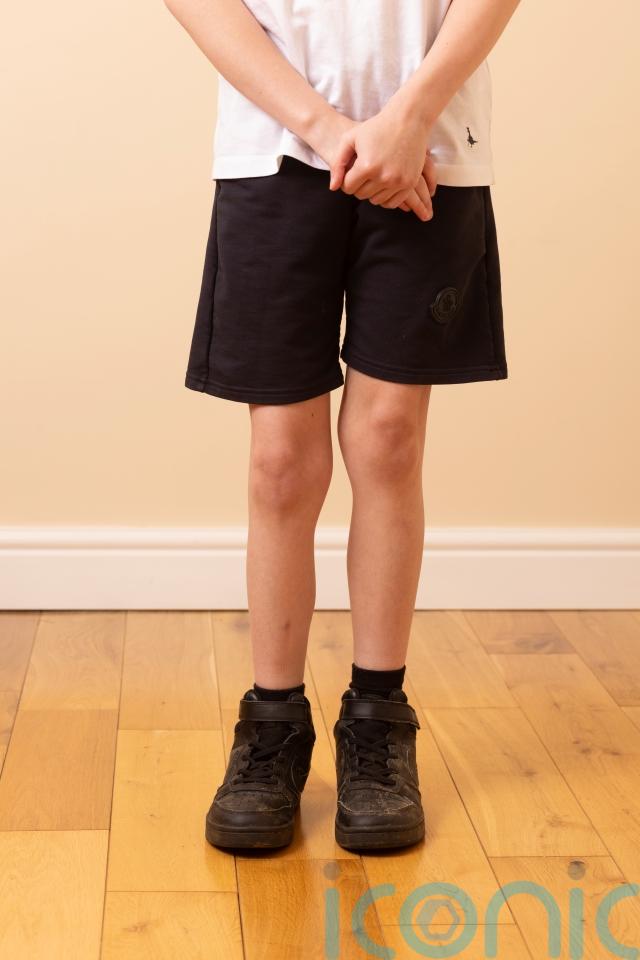
“He healed really well,” Ms Ducker added. “He coped magnificently. He was keen to go back to school fairly quickly.”
Although Alfie may need further lengthening treatment on his shin bone in the future, Mr Peterson said his experience for his age has been “vastly superior to what it would have been”.
He described his patient’s recovery as “remarkable”.
Ms Ducker added: “He’s running around as normal, if you were to look him you would never know that there had ever been anything happen. He is just incredible.”
Alfie, who was diagnosed with fibular hemimelia shortly after he was born, said: “When I was obviously a lot younger, I didn’t think it was any different, because I grew up with it.”
As he got older, Alfie was given orthotic boots with a raised sole to help even out the difference in his limbs.
He told PA some of his peers said he “ran a bit different” and admits he could not skip.
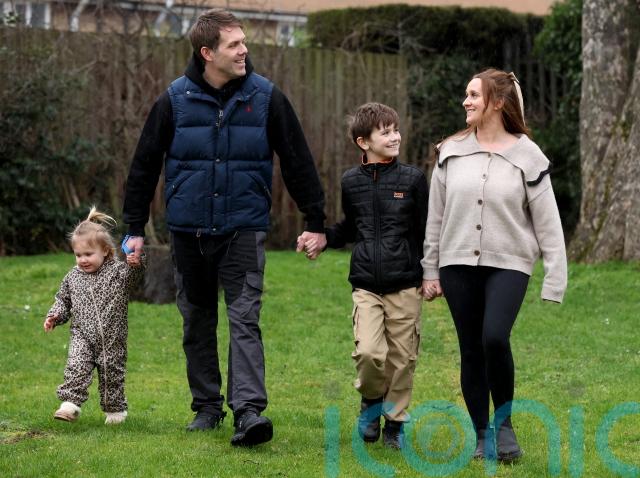
Doctors at a different hospital initially told Ms Ducker, who is an NHS midwife, that the difference in her son’s leg length was 1.5cm.
However, specialists at Alder Hey measured the difference at 4cm, and projected it would increase to 6cm by the time Alfie was fully grown at around 16.
Mr Peterson said: “That is not something that you could manage a normal life with, really.”
He added that fibular hemimelia has a “spectrum of severity” with Alfie considered a “moderately severe case”.
Mr Peterson told PA he became aware of different techniques of treating the condition while on a fellowship in the US in 2019.
“Lengthening with something on the inside is much, much better for patients,” he said.
“But for children, it’s often not possible because the implants are too big and they won’t fit inside the bone.”
Mr Peterson delivered a presentation on the topic in 2023 and set up a working group of surgeons around the country to try and introduce the new technique using a nail on the bone instead of inside.
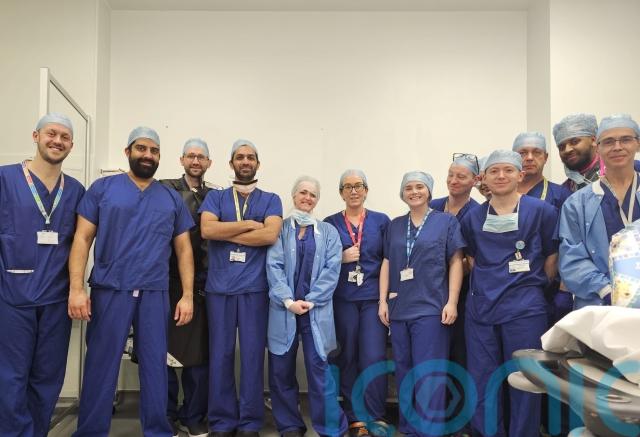
He added: “I was really waiting for a patient in the right circumstances whose family were happy to go ahead with that technique, and when the clinical approvals were in place through the hospital, we were then able to adopt that technique that had been done previously in the US.”
Mr Peterson said Alfie’s case “paves the way for this technique to replace that old fashioned way of doing things”.
“Because of how well he’s done,” he added. “Obviously that needs to be reproduced in other patients, but, I think for Alfie, he’s made a really good recovery after that operation.”
Alder Hey has since been contacted by specialists from other centres in England who wish to introduce the technique at their hospitals.
“There’s been a huge amount of interest from my colleagues around the country,” he added.

Subscribe or register today to discover more from DonegalLive.ie
Buy the e-paper of the Donegal Democrat, Donegal People's Press, Donegal Post and Inish Times here for instant access to Donegal's premier news titles.
Keep up with the latest news from Donegal with our daily newsletter featuring the most important stories of the day delivered to your inbox every evening at 5pm.

This publication supports the work of the Press Council of Ireland and Office of the Press Ombudsman, and our staff operate within the Code of Practice of the Press Council. You can obtain a copy of the Code, or contact the Council, at www.presscouncil.ie, Lo-call 1800 208 080 or email: info@presscouncil.ie.