Search


18 Feb 2026
Search
18 Feb 2026

Please allow ads as they help fund our trusted local news content.
Kindly add us to your ad blocker whitelist.
If you want further access to Ireland's best local journalism, consider contributing and/or subscribing to our free daily Newsletter .
Support our mission and join our community now.
To continue reading this article, you can subscribe for as little as €0.50 per week which will also give you access to all of our premium content and archived articles!
Alternatively, you can pay €0.50 per article, capped at €1 per day.
Thank you for supporting Ireland's best local journalism!


The average UK house price increased by 2.4% annually in December last year, slowing from 2.8% growth in the year to November, the Office for National Statistics (ONS) said.
The typical property value in December 2025 was £270,000.
Average house prices increased to £292,000 in December (1.7% annual growth) in England, £215,000 (5.0%) in Wales, and £191,000 (4.9%) in Scotland.
Within England, the North East had the highest house price inflation, at 4.6%, in the 12 months to December. Price growth there slowed compared with a 7.5% increase in the 12 months to November.
Average UK house prices up by 2.4%, to £270,000 in the 12 months to Dec 2025, down from 2.8% in the 12 months to Nov 2025.
Average UK private rents rose by 3.5%, to £1,367 in the 12 months to Jan 2026, down from 4.0% in the 12 months to Dec 2025.
➡️ https://t.co/zjafEpxFNp pic.twitter.com/taCF0Aab8P
— Office for National Statistics (ONS) (@ONS) February 18, 2026
Annual house price inflation was weakest in London. Average property values in London fell by 1.0% annually in December. This was a sharper fall compared with a 0.7% price decrease in the 12 months to November.
The average house price for Northern Ireland was £196,000 in the fourth quarter of 2025, marking a 7.5% annual increase.
Nathan Emerson, chief executive of property professionals’ body Propertymark, said: “A slowing in the annual growth of house prices signals ongoing affordability pressures and cautious buyer sentiment. While modest price adjustments may improve access for some purchasers, reduced activity can dampen overall market confidence.
“Ensuring a supportive lending environment and increasing housing supply will be critical to maintaining stability and encouraging sustainable levels of market activity.”
ONS figures released on Wednesday also showed that the rate of Consumer Prices Index (CPI) inflation was 3% in January, slowing from 3.4% in December.
Hina Bhudia, partner, Knight Frank Finance, said: “The combination of softer inflation data this morning and weak jobs figures yesterday raises the likelihood of two rate cuts this year.
“Leading fixed rates have remained steady in the past four weeks and there has been considerable jostling for position in the middle of the market. We think this week’s figures will pave the way for fixed rates to ease further in the coming month leading up to the next interest rate decision on March 19.
“Any falls will be incremental, but they will have a meaningful impact on sentiment. Supply is high and buyers have plenty of choice. That, combined with easing mortgage rates, could tee up a busy spring in the housing market.”
Jason Tebb, president of OnTheMarket, said of the 1.0% annual price fall in London: “Increased supply, low buyer demand and stretched affordability in the capital – where values tend to be significantly higher than elsewhere – are combining to keep a lid on prices.
“With inflation slowing to 3% in the year to January and moving closer to the Bank of England’s 2% target, this should enable further base rate reductions.”
He said Bank of England base rate cuts “have improved affordability and had a huge positive impact on the market, with any further cuts likely to lead to renewed activity this year”.
Nicky Stevenson, managing director at Fine & Country, said: “The fundamentals remain supportive, and while wage growth may be easing, there is improving certainty around borrowing costs.
“These conditions have helped keep buyers engaged, while sellers are increasingly adapting to a market that rewards realistic pricing and strong presentation.
“In the current environment, good homes in the right locations can still attract healthy competition, but over-ambitious asking prices are far more likely to be challenged.”
Iain McKenzie, chief execitove of The Guild of Property Professionals, said: “Encouragingly, the wider economic backdrop has become more supportive. Inflation easing to around 3% and intensifying competition among lenders are already pushing mortgage rates down, improving affordability, particularly for buyers with larger deposits.
“With around 1.8 million households due to remortgage in 2026, a downward rate trajectory will be welcome relief and should help sustain market confidence.”
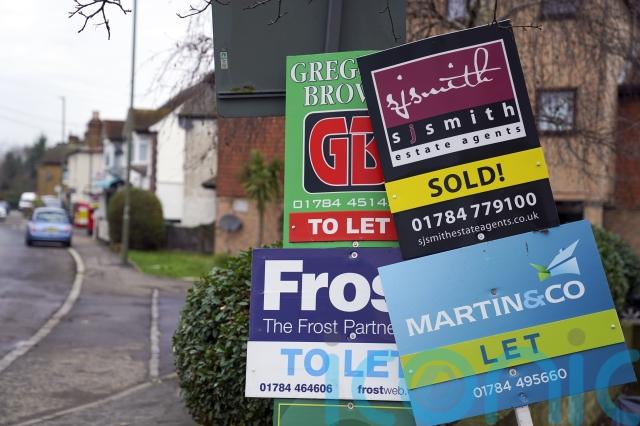
The report also said that average UK monthly private rents increased by an estimated 3.5%, to £1,367, in the 12 months to January 2026. The average monthly rent was £46 higher than a year earlier.
ONS head of housing market indices Ian Boreham said: “The rental market continues to cool, with UK rents inflation slowing to its lowest annual rate since March 2022.”
The average monthly rent in England was £1,423 in January 2026, up 3.5% (£48) year-on-year. This was the lowest annual growth rate since March 2022.
In Wales, the average monthly rent was £826 in January, up 5.8% (£45) from a year earlier. The annual rise was higher than a 5.7% annual increase recorded in December 2025.
Average monthly rent for Scotland was £1,021 in January 2026, up 2.6% (£25) from a year earlier. The ONS said this was the lowest annual rise it had recorded for more than four years. But its report suggested caution should be used when comparing the figures with other countries due to data collection limitations for Scotland.
The typical monthly rent in Northern Ireland was £875 in November 2025, the latest month for which this figure is available. This marks a 5.6% of £46 increase compared with a year earlier.

Subscribe or register today to discover more from DonegalLive.ie
Buy the e-paper of the Donegal Democrat, Donegal People's Press, Donegal Post and Inish Times here for instant access to Donegal's premier news titles.
Keep up with the latest news from Donegal with our daily newsletter featuring the most important stories of the day delivered to your inbox every evening at 5pm.

This publication supports the work of the Press Council of Ireland and Office of the Press Ombudsman, and our staff operate within the Code of Practice of the Press Council. You can obtain a copy of the Code, or contact the Council, at www.presscouncil.ie, Lo-call 1800 208 080 or email: info@presscouncil.ie.