Search


18 Feb 2026
Search
18 Feb 2026

Please allow ads as they help fund our trusted local news content.
Kindly add us to your ad blocker whitelist.
If you want further access to Ireland's best local journalism, consider contributing and/or subscribing to our free daily Newsletter .
Support our mission and join our community now.
To continue reading this article, you can subscribe for as little as €0.50 per week which will also give you access to all of our premium content and archived articles!
Alternatively, you can pay €0.50 per article, capped at €1 per day.
Thank you for supporting Ireland's best local journalism!


Inflation dropped to a 10-month-low in January, driven by reductions in the cost of petrol, airfares and food.
The Office for National Statistics (ONS) reported an annual rate of Consumer Prices Index (CPI) inflation of 3% for the month, falling from 3.4% in December.
It represented the lowest figure since March last year and came after a surprise uptick in the previous month.
Here, the Press Association looks at why inflation slowed down and what it means for households and the economy.
– What is inflation?
Inflation is the term used to describe the rising price of goods and services.
The inflation rate refers to how quickly prices are going up.
January’s inflation rate of 3% means if an item cost £100 a year ago, it would now cost £103.
It is lower than the 3.4% rate recorded in December, meaning that prices are still rising but at a slower rate than they had been before.
– What made inflation fall?
Official statisticians said the falling price of petrol and diesel was the biggest single downward drag on inflation in January.
The average price of petrol fell by 3.1p per litre between December 2025 and January 2026 and the price of diesel slid 3.2p per litre, the ONS said.
It also highlighted that a drop in airfares also helped bring inflation down.
The cost of air travel typically drops in January as airlines launch sales and discounts, but prices plunged by 26.5% in January compared with the previous month in a much sharper drop than usual.
Food and non-alcoholic drink prices were also lower month-on-month, with bread and cereals among those dropping in price.
Meanwhile, butter prices were up 1.4% for the month after a sharp slowdown from 8.9% in December, while recent coffee price increases also slowed sharply.

– Is inflation rising in any areas?
The decrease in broad inflation in January does not mean that price rises are slowing for all goods and services.
Wednesday’s figures showed that hotels and other accommodation costs swung higher in January, rising by 0.4% in the month after declining in December.
A number of other prices linked to leisure and hospitality also accelerated, amid recent warnings from the sector over high labour costs and impending tax rises.
Cinema, theatre and concert tickets increased by 10.2% in January, jumping from a 3.7% rise a month earlier.
– Will inflation keep going down?
Economists have predicted that inflation will continue to drop in the next few months, with a particular fall in April.
James Smith, developed markets economist at ING, said inflation is on track to fall as low as 1.9% in April.
This will be partly linked to Government support on energy bills announced in the autumn budget, as well as less sharp rises to water bills.
This inflation level would also bring CPI inflation below the 2% target rate set by the Government and the Bank of England.
Inflation is, however, then expected to tick slightly higher again later this year before settling around 2% for the long term.
Matt Swannell, chief economic adviser to the EY Item Club, said: “Inflation is likely to drift up again from the second half of 2026, with sticky pay growth likely to stop services inflation from softening materially.”
– What does it mean for interest rates?
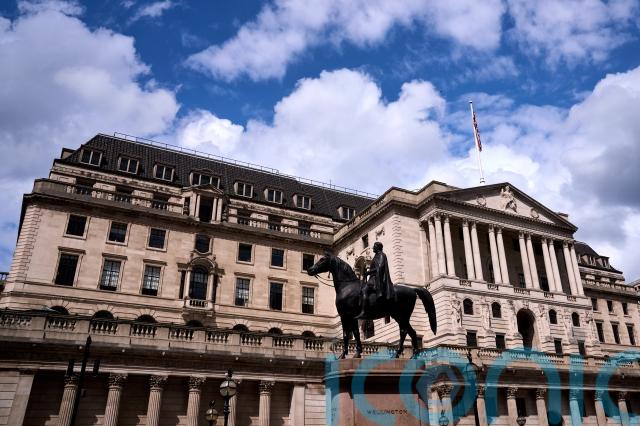
The UK’s base interest rate currently sits at 3.75% after steady reductions over the past year and a half, which have brought it down from a peak of 5.25%.
Earlier this month, the Bank of England’s nine-strong rate-setting committee voted to hold rates at 3.75% but said future cuts were “likely”.
Elevated interest rates are typically used in order to bring inflation down, but they can be cut in a bid to stop inflation dropping too sharply or to stimulate economic growth.
The latest slowdown in inflation, and predictions it will fall below the 2% target, come amid a backdrop of rising unemployment and modest growth.
Economists are therefore widely predicting the rates will be cut at the Bank’s meeting next month.
Yael Selfin, chief economist at KPMG UK, said: “Today’s inflation data will likely prompt the Bank of England to lower interest rates next month.”
Ms Selfin predicted the Bank will cut interest rates three times before the end of the year to 3%.
A number of other economists, such as ING’s Mr Smith, have predicted two cuts, with one in the summer as well as the expected March cut, to take rates down to 3.25%.

Subscribe or register today to discover more from DonegalLive.ie
Buy the e-paper of the Donegal Democrat, Donegal People's Press, Donegal Post and Inish Times here for instant access to Donegal's premier news titles.
Keep up with the latest news from Donegal with our daily newsletter featuring the most important stories of the day delivered to your inbox every evening at 5pm.

This publication supports the work of the Press Council of Ireland and Office of the Press Ombudsman, and our staff operate within the Code of Practice of the Press Council. You can obtain a copy of the Code, or contact the Council, at www.presscouncil.ie, Lo-call 1800 208 080 or email: info@presscouncil.ie.