RIP: Tragic news for family as body of missing man is found after Garda search
Search


22 Feb 2026

Please allow ads as they help fund our trusted local news content.
Kindly add us to your ad blocker whitelist.
If you want further access to Ireland's best local journalism, consider contributing and/or subscribing to our free daily Newsletter .
Support our mission and join our community now.
To continue reading this article, you can subscribe for as little as €0.50 per week which will also give you access to all of our premium content and archived articles!
Alternatively, you can pay €0.50 per article, capped at €1 per day.
Thank you for supporting Ireland's best local journalism!


High-level talks are ongoing after Donald Trump’s announcement of 15% global tariffs and the Government wants “the best possible deal” for UK firms, a Cabinet minister has said.
Education Secretary Bridget Phillipson admitted businesses face “uncertainty” after the move but insisted Britain expects its “preferential” trade arrangements with the US to continue.
The US president said on Saturday he would be imposing a 15% global tariff “effective immediately” after the Supreme Court overturned his previous import taxes policy in a ruling on Friday.
The UK’s biggest business organisation swiftly expressed dismay at the announcement and urged the Government to continue dialogue with US counterparts to keep Britain’s competitive advantage.
The British Chambers of Commerce warned the change would mean an extra 5% increase in tariffs on a “wide range” of exports to America, except those covered under a transatlantic trade deal.
Facing broadcasters on Sunday, Ms Phillipson was asked whether it was time to use the “steel fist” rather than the “velvet glove” in dealings with the White House.
She insisted the UK has a “really good relationship” with the US despite a period of strained tensions over the president’s ambitions to annex Greenland, which Britain and other European countries opposed.
“You talked about the approach in whether you take a hard approach or a more nuanced approach … it has to be a combination of all of those things,” the minister told Sky’s Sunday Morning With Trevor Phillips.
“In reality you get more done when you are prepared to have serious conversations, often not in front of cameras or out there in the public, but actually behind the scenes, working closely between governments, and we do have a really strong relationship with the US.
“That is something that is not about one president or one prime minister, it’s about that long-standing and enduring relationship that is right for our country and right for national security.”
Asked about the implications of the new tariff rate for Britain, she said: “So, we did secure a preferential deal.
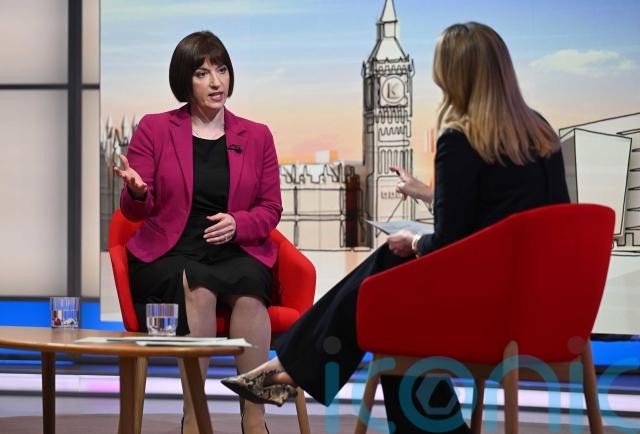
“We, through the work that the Prime Minister has been leading in engaging with the US government and with President Trump, we would hope and expect that to continue, but these discussions are ongoing.
“This is an evolving situation. But, of course, we want to get the best possible deal for British businesses.
“I understand the uncertainty it does cause for them, but they can be assured that we will always be working to make sure they get everything that they need.”
Mr Trump signed an executive order on Friday night that enabled him to bypass Congress and impose a 10% tax on imports from around the world, after his “reciprocal tariffs”, introduced under an emergency powers law in April, were struck down by the Supreme Court.
In a post on Truth Social on Saturday, he then said he would raising this rate to 15% following “ridiculous, poorly written and extraordinarily anti-American decision on tariffs issued yesterday”.
Britain had received the lowest tariff rate of 10% and a subsequent agreement struck by Prime Minister Sir Keir Starmer and Mr Trump saw further carve-outs for the country’s steel industry and car manufacturers.
Questions remain over the implications for the UK, although officials are understood to believe the changes will not have an impact on most of Britain’s trade with America.
Asked whether previous deals still stand, Ms Phillipson said there were “conversations right to the very, very highest levels” going on “to make sure that what we regard as being in our national interest is heard loud and clear”.
The BCC, a network representing 50,000 UK firms, swiftly expressed dismay at the president’s latest announcement.
“This will be bad for trade, bad for US consumers and businesses, and weaken global economic growth,” head of trade policy at the organisation, William Bain, said.
“Businesses on both sides of the Atlantic need a period of clarity and certainty. Higher tariffs are not the way to achieve that.”
Reform UK Treasury spokesman Robert Jenrick said the party opposed blanket tariffs “very strongly”, describing the move as “harmful for trade” at a time when we can “ill-afford it”.
Asked if he wants Nigel Farage to tell Donald Trump that he is wrong, Mr Jenrick said: “Yes, absolutely.
“And, look, Keir Starmer has tried his best, but I would bet that Nigel Farage will be better at negotiating with Donald Trump than Keir Starmer has been.”
He added: “If Keir Starmer is willing to swallow his pride and ask for Nigel’s help to try to resolve the situation, then I can assure you that Nigel would want to do that.”

Subscribe or register today to discover more from DonegalLive.ie
Buy the e-paper of the Donegal Democrat, Donegal People's Press, Donegal Post and Inish Times here for instant access to Donegal's premier news titles.
Keep up with the latest news from Donegal with our daily newsletter featuring the most important stories of the day delivered to your inbox every evening at 5pm.

This publication supports the work of the Press Council of Ireland and Office of the Press Ombudsman, and our staff operate within the Code of Practice of the Press Council. You can obtain a copy of the Code, or contact the Council, at www.presscouncil.ie, Lo-call 1800 208 080 or email: info@presscouncil.ie.