Search


22 Apr 2026
Search
22 Apr 2026

Please allow ads as they help fund our trusted local news content.
Kindly add us to your ad blocker whitelist.
If you want further access to Ireland's best local journalism, consider contributing and/or subscribing to our free daily Newsletter .
Support our mission and join our community now.
To continue reading this article, you can subscribe for as little as €0.50 per week which will also give you access to all of our premium content and archived articles!
Alternatively, you can pay €0.50 per article, capped at €1 per day.
Thank you for supporting Ireland's best local journalism!


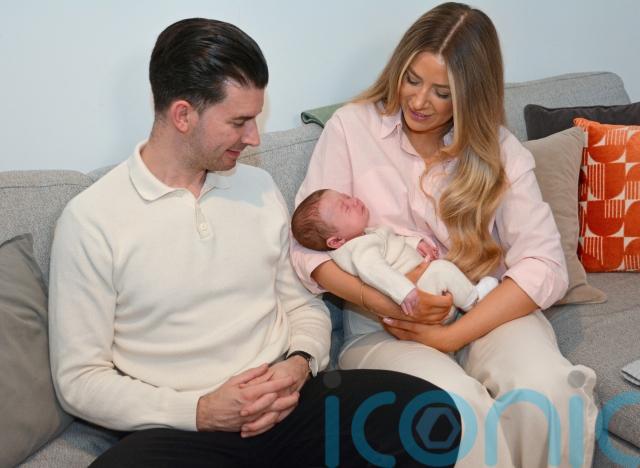
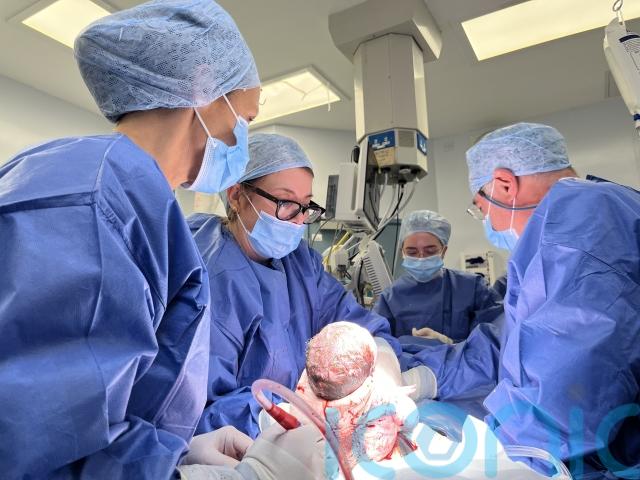
The birth of a baby boy in the UK’s first womb transplant involving a dead donor offers hope to other couples wanting children.
– What has happened?
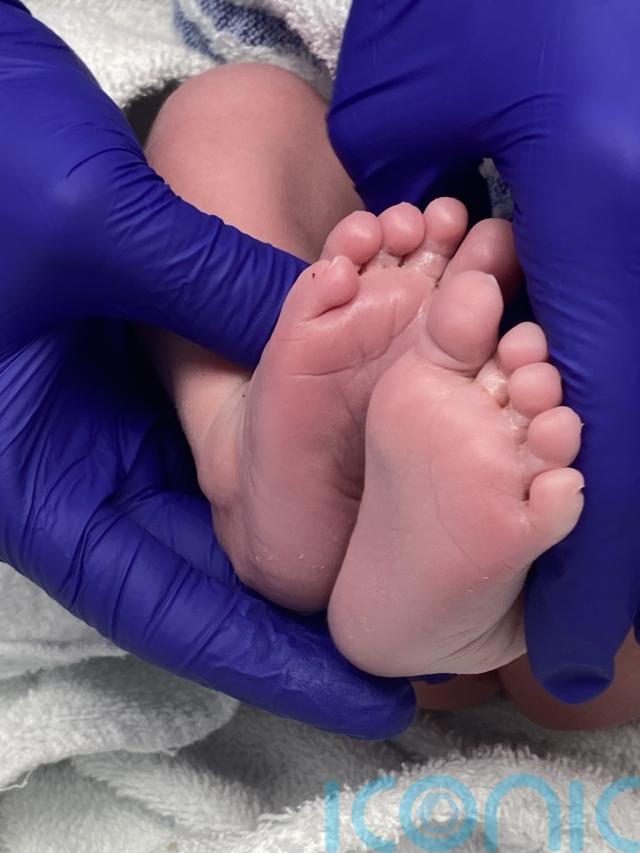
Hugo Richard Norman Powell was born weighing 6lb 13oz (3.1kg) in December at Queen Charlotte’s and Chelsea Hospital, part of Imperial College Healthcare NHS Trust.
The transplant marks the first birth in the UK using a womb from a deceased donor, with only two previous cases ever reported in Europe.
It follows the UK’s first womb transplant in 2023 involving a living donor.
Then, baby Amy was born to parents Grace and Angus Davidson after Mrs Davidson received a womb from her older sister.
Both Mrs Davidson and Hugo’s mother, Grace, have Mayer-Rokitansky-Kuster-Hauser (MRKH), a rare condition affecting about one in every 5,000 women which results in an underdeveloped or missing womb.
However, the ovaries are intact and still function to produce eggs and female hormones, making conceiving via fertility treatment a possibility.
– How do people become womb donors?
In the case of living donors, people undergo extensive counselling to ensure there is no coercion and that they understand the risks of donating an organ.
Each donation is considered by the Human Tissue Authority (HTA) and only happens once HTA approval is in place.
In the case of deceased donors, the womb is not covered by the normal consent for organ donation, nor by joining the organ donor register, and it is not covered by deemed consent (which presumes people want to donate unless they opt out).
If families have agreed to donate other organs, they may then be approached and told about the womb transplant research programme.
Only then are they asked specifically whether they wish to donate the womb, separate from other organs.
Women aged 18 to 51 who have been confirmed dead through brain stem death testing may be considered.
The deceased donor programme is a research programme combining expertise from Imperial College Healthcare NHS Trust, Oxford University Hospitals NHS Foundation Trust, NHS Blood and Transplant, Womb Transplant UK and The Lister Hospital.
– Is there a shortage of donor wombs?
Womb Transplant UK is running two programmes, one involving living donors and another with organs from women who have died.
The living donor programme in the UK has so far focused on women with relatives who are willing to give their wombs.
However, the team believes that, in the future, the living donor programme will expand to include friends or altruistic donors.
This is fairly common in the US and hundreds of women in the UK have approached the team saying they would like to donate.
Transplants from deceased donors only happen when the families of those who have died are asked specifically if they wish to donate the womb.
– Did the NHS pay for the womb transplant?
No. Each womb transplant costs about £30,000 and is fully funded by the charity Womb Transplant UK.
This includes payment to the NHS for theatre time and the patient’s stay on a ward.
The operations are only carried out at times when the NHS is not using the operating theatre, so they do not have an impact on usual NHS waiting lists.
Surgeons and medical staff involved in the transplant have not been paid for their time.
Once a patient becomes pregnant through self-funded IVF, the NHS takes over the costs of managing pregnancy and the safe delivery of the baby, as with any other pregnancy.
– Will there be more transplants in the UK?
Yes. to date, surgeons have carried out five womb transplants in the UK – two womb transplants involving a living donor and three using a deceased donor.
Two babies have been born – one using a womb from a live donor and the other from a deceased donor.
Experts believe a maximum of 20 to 30 womb transplants per year could be carried out in the UK in the future.
Transplants could help women born without a functioning womb and those who lose their organ to cancer or other medical conditions.
Estimates suggest there are 15,000 women in the UK of childbearing age who do not have a functioning womb.
To be eligible for the programme, women must live in the UK and be aged 24 to 40 (or 42 if embryos are frozen before the age of 38).
– Have other womb transplants been carried out around the world?
More than 100 womb transplants have been carried out internationally, with most operations involving a living donor. More than 70 healthy babies are thought to have been born globally.
To date, womb transplants have been carried out in many countries, including Saudi Arabia, Turkey, Sweden, the US, China, Czech Republic, Brazil, Germany, Serbia and India.
In 2016, a successful birth was announced from a deceased donor transplant in Brazil.
Some 10 previous transplants from a dead donor had failed or resulted in miscarriage, according to reports.
– How successful is the operation?
Data from the US shows that more than half of women who received a womb through a transplant in the US went on to have successful pregnancies.
Between 2016 and 2021, 33 women received womb transplants in the US and, as of 2022, 19 of them (58%) had delivered a total of 21 babies.
In 74% of those receiving a womb, the organ was still functioning one year after transplant and 83% of this group had live-born children.
UK data is limited but all transplants carried out so far have led to fully functioning wombs.
– How many staff are needed for a womb transplant?
More than 30 staff are involved in looking after UK patients having a womb transplant.
Womb Transplant UK has approval for a live donor programme for five transplants.
The deceased donor research programme has approval for 10 transplants.

Subscribe or register today to discover more from DonegalLive.ie
Buy the e-paper of the Donegal Democrat, Donegal People's Press, Donegal Post and Inish Times here for instant access to Donegal's premier news titles.
Keep up with the latest news from Donegal with our daily newsletter featuring the most important stories of the day delivered to your inbox every evening at 5pm.

This publication supports the work of the Press Council of Ireland and Office of the Press Ombudsman, and our staff operate within the Code of Practice of the Press Council. You can obtain a copy of the Code, or contact the Council, at www.presscouncil.ie, Lo-call 1800 208 080 or email: info@presscouncil.ie.