Search


22 Apr 2026
Search
22 Apr 2026

Please allow ads as they help fund our trusted local news content.
Kindly add us to your ad blocker whitelist.
If you want further access to Ireland's best local journalism, consider contributing and/or subscribing to our free daily Newsletter .
Support our mission and join our community now.
To continue reading this article, you can subscribe for as little as €0.50 per week which will also give you access to all of our premium content and archived articles!
Alternatively, you can pay €0.50 per article, capped at €1 per day.
Thank you for supporting Ireland's best local journalism!


Sir Keir Starmer has expressed “solidarity” with the leaders of several Middle Eastern countries “in the face of dangerous Iranian escalation” following joint US-Israeli air strikes.
Downing Street said the Prime Minister had spoken to the kings of Jordan and Bahrain as well as the crown prince of Kuwait on Sunday as strikes continued across the region.
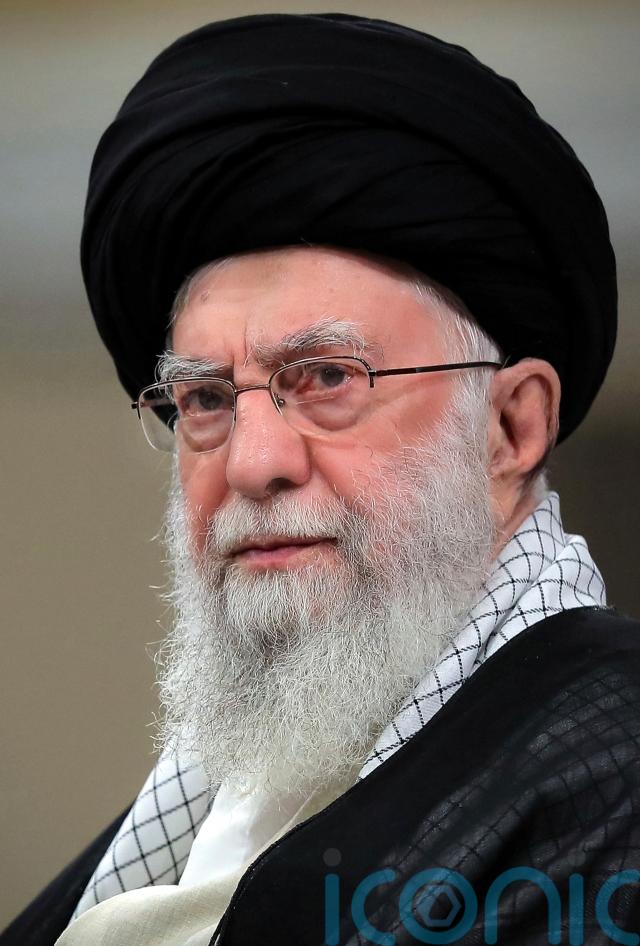
Explosions have been heard in multiple Gulf states as Iran vowed to carry out its “most intense operation” ever in retaliation for the killing of Supreme Leader Ayatollah Ali Khamenei.
Speaking to the three leaders, Sir Keir “expressed the UK’s solidarity in the face of dangerous Iranian escalation, which has seen indiscriminate missile and drone attacks launched at their countries in the last 24 hours”, a Downing Street spokesperson said.
The Prime Minister also expressed “deep concern” about attacks on civilian sites, and discussed ensuring the safety of British nationals and military personnel.
The death of 86-year-old Mr Khamenei, who ruled Iran for almost 37 years before he was killed in a US-Israeli strike on Saturday morning, has thrown his country’s future into doubt and threatened to destabilise the wider region.
Iran’s parliamentary speaker Mohammad Bagher Qalibaf pledged that Tehran would deliver “such devastating blows” in response, while US President Donald Trump warned Iran that the US would use “a force that has never been seen before” if it continued its retaliation.
The Iranian regime was warned. CENTCOM is now delivering swift and decisive action as directed. pic.twitter.com/nNDoDexH6g
— U.S. Central Command (@CENTCOM) March 1, 2026
Three US service members have been killed and five seriously wounded during that retaliation, according to the American military’s Central Command.
The US provided no further details regarding the identity of those killed or injured, or the location of the incident, but added that several other service members had sustained “minor shrapnel injuries and concussions”.
Meanwhile, the Israeli military said it had carried out further air strikes in the Iranian capital to “establish aerial superiority and pave the path to Tehran”.
Concern is also mounting about the security of the Strait of Hormuz, a key shipping lane for the global economy off Iran’s southern coast, where two vessels are reported to have been struck by “unknown projectiles” on Sunday.
The UK has played no part in the US-Israeli strikes, but Defence Secretary John Healey warned on Sunday that Iranian retaliation could put UK personnel and allies at risk.
Speaking on Sky News’s Sunday Morning With Trevor Phillips programme, Mr Healey said Iranian missiles and drones had landed within “a few hundred yards” of some 300 British troops at a base in Bahrain, while two missiles had been fired in the direction of Cyprus, where thousands of UK personnel are based.
He said: “We don’t believe they were targeted at Cyprus, but nevertheless, it’s an example of how there is a very real and rising threat from a regime that is lashing out widely across the region.”
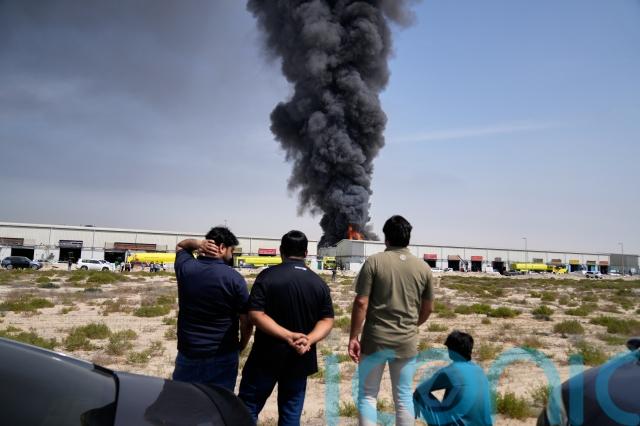
British aircraft have been deployed on defensive operations, flying from Cyprus and Qatar and “taking down” drones and missiles “menacing” UK bases and allies, Mr Healey added.
He also confirmed to Times Radio that a British “counter-drone team” in northern Iraq had shot down Iranian drones.
But although he said “few people” would mourn the Ayatollah, the Defence Secretary repeated declined to say whether the UK backed the US-Israeli strikes that killed him, or if the UK believed they were legal.
Asked six times by the BBC’s Laura Kuenssberg whether the UK backed the strikes or thought they were legal, John Healey declined to give a direct answer.
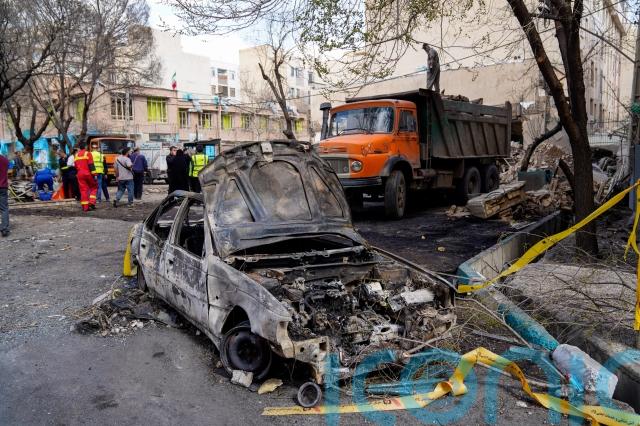
He said: “Britain played no part in the strikes on Iran.
“We share, however, the primary aim of all allies in the region and the US that Iran should never have a nuclear weapon.”
He later added: “It is for the US to set out the legal basis of the action that it took.”
The Government, along with France and Germany, has condemned Iran’s retaliation and urged Tehran to return to the negotiating table.
But other allies have gone further, with both Canada and Australia saying they supported the US “acting to prevent Iran from obtaining a nuclear weapon” and continuing to threaten “international peace and security”.
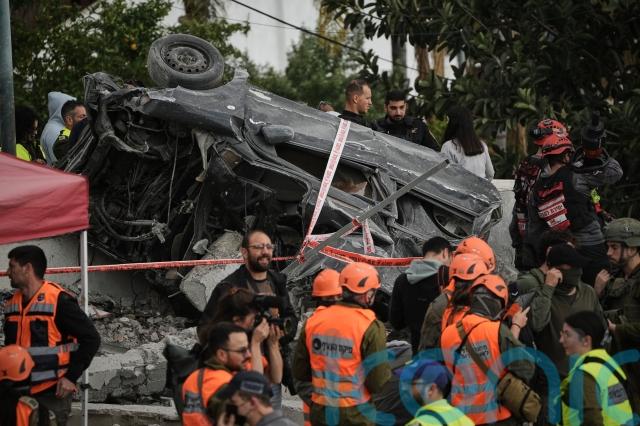
The Government’s reluctance to say whether it backed the strikes has drawn criticism from parties to both its left and right.
Branding the attacks “illegal and unprovoked”, Green Party leader Zack Polanski told the BBC: “We’ve got a Defence Secretary saying that diplomacy is the long runway we need but won’t condemn Donald Trump when he attacks a country and assassinates its leader.
“That’s the law of the jungle. That’s an end to international law.”
But Conservative shadow foreign secretary Dame Priti Patel said the Government should have been “more proactive” in supporting the strikes.
She said: “Why were some of our bases not used? And was the British Government asked about use of our military bases in the defensive strikes that took place?”
The Government has so far declined to say whether the US asked for permission to use British bases for the strikes, including Diego Garcia in the Indian Ocean.

Subscribe or register today to discover more from DonegalLive.ie
Buy the e-paper of the Donegal Democrat, Donegal People's Press, Donegal Post and Inish Times here for instant access to Donegal's premier news titles.
Keep up with the latest news from Donegal with our daily newsletter featuring the most important stories of the day delivered to your inbox every evening at 5pm.

This publication supports the work of the Press Council of Ireland and Office of the Press Ombudsman, and our staff operate within the Code of Practice of the Press Council. You can obtain a copy of the Code, or contact the Council, at www.presscouncil.ie, Lo-call 1800 208 080 or email: info@presscouncil.ie.