Scary times: Valerie Wheeler and Gavin Young enjoying their honeymoon before ‘missile and drone interceptions’ in Dubai
Search


02 Mar 2026

Please allow ads as they help fund our trusted local news content.
Kindly add us to your ad blocker whitelist.
If you want further access to Ireland's best local journalism, consider contributing and/or subscribing to our free daily Newsletter .
Support our mission and join our community now.
To continue reading this article, you can subscribe for as little as €0.50 per week which will also give you access to all of our premium content and archived articles!
Alternatively, you can pay €0.50 per article, capped at €1 per day.
Thank you for supporting Ireland's best local journalism!


This winter was the wettest on record for the counties of Cornwall, Leicestershire and the West Midlands, according to provisional figures from the Met Office.
Dorset and Warwickshire had their second wettest winter since comparable records began in 1836, while southern England experienced its fourth wettest.
In the past three months a string of low-pressure weather systems moved across the UK from the Atlantic, with repeated outbreaks of wet and windy conditions.
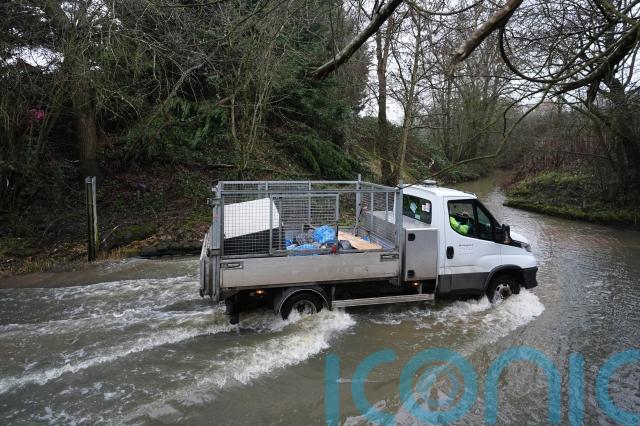
Three named storms in January – Goretti, Ingrid and Chandra – all brought downpours to many areas, leading to flooding and widespread travel disruption.
The rain persisted for much of February, although drier and sunnier conditions arrived towards the end of the month.
No records were broken at a national level, with the UK clocking up 390.1mm of rain during winter 2025/26, 13% above the long-term seasonal average but well below the all-time high of 539.9mm set in 2014.
There were also wide variations between areas of the country.
While England received 42% more rain than usual across the past three months, Scotland finished the winter 14% below its seasonal average.
There was a geographical divide in England, with rainfall in the north 17% above average, but 58% above in the south.
“The wet conditions were particularly pronounced across southern and central England, where saturated ground from early season rainfall left areas more sensitive to impacts from further wet weather,” the Met Office said.
Northern Ireland received 27% more rain than the long-term average, while Wales had 20% more rain.
Devon, Hampshire, Nottinghamshire and Northamptonshire were among a number of counties that experienced one of their five wettest winters on record.
Berkshire, Kent, Oxfordshire and Surrey were some of the counties that saw one of their top 10 wettest winters.
“While this winter’s weather has been heavily influenced by natural variability and atmospheric patterns, climate change provides important context,” the Met Office said.
“A warmer atmosphere can hold more moisture – approximately 7% more for every degree Celsius of warming.
“This means that when it does rain, downpours can be heavier and more intense.
“This characteristic is already being observed in the UK and globally, with rainfall totals on the wettest days increasing over recent decades.”
While the past winter was very wet for many, some areas also saw particularly mild temperatures.
Southern England experienced its eighth warmest winter since records began in 1884, with a mean average temperature across December, January and February of 6.16C.
Five of the top eight warmest winters in southern England have occurred this century, with 2016 in first place (6.99C) and 2024 second (6.69C).
Last month was the fourth warmest February on record for England and the ninth warmest for the UK.
The mild temperatures did not mean the country was treated to much sunshine, however.
It was the gloomiest February on record for Wales and the fourth gloomiest for the whole of the UK.

Subscribe or register today to discover more from DonegalLive.ie
Buy the e-paper of the Donegal Democrat, Donegal People's Press, Donegal Post and Inish Times here for instant access to Donegal's premier news titles.
Keep up with the latest news from Donegal with our daily newsletter featuring the most important stories of the day delivered to your inbox every evening at 5pm.

This publication supports the work of the Press Council of Ireland and Office of the Press Ombudsman, and our staff operate within the Code of Practice of the Press Council. You can obtain a copy of the Code, or contact the Council, at www.presscouncil.ie, Lo-call 1800 208 080 or email: info@presscouncil.ie.