
Image via @popeyesuk on Instagram
Search


03 Mar 2026

Please allow ads as they help fund our trusted local news content.
Kindly add us to your ad blocker whitelist.
If you want further access to Ireland's best local journalism, consider contributing and/or subscribing to our free daily Newsletter .
Support our mission and join our community now.
To continue reading this article, you can subscribe for as little as €0.50 per week which will also give you access to all of our premium content and archived articles!
Alternatively, you can pay €0.50 per article, capped at €1 per day.
Thank you for supporting Ireland's best local journalism!


The escalation of conflict in the Middle East has raised concerns about the potential knock-on impacts to economies around the world.
This largely stems from potential disruption to the supply and shipping of certain products and commodities, but also incorporates the broader impact to prices and the world’s financial markets.
Here, the Press Association looks at how the conflict could impact people’s finances in different ways.
– What’s happening to gas and oil prices?
A major impact of escalating conflict in the Middle East is on the world’s oil and gas supplies.
Oil supplies could be affected by the conflict after Iran reportedly warned tankers on the Strait of Hormuz, a crucial shipping route, that no ships would be allowed to pass through.
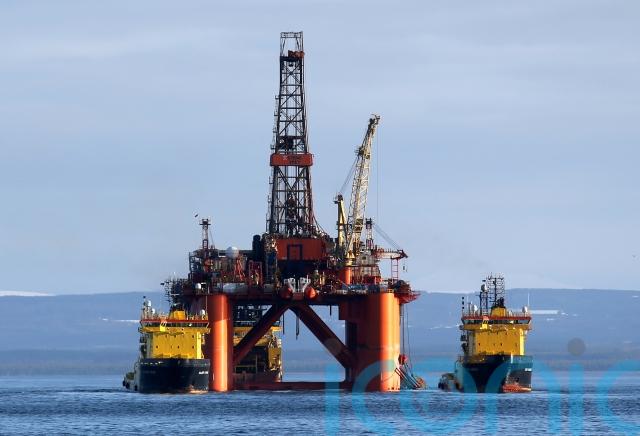
The Strait of Hormuz is used by tankers carrying about one fifth of the world’s oil supplies and seaborne gas.
Furthermore, Qatar’s state-backed energy company QatarEnergy said it had halted production of liquified natural gas because of attacks on its facilities, sending global prices spiking.
– What does this all mean for my energy bill?
The UK imports oil and liquified natural gas (LNG) from a variety of places, not just the Middle East.
However, if supplies passing through the Strait of Hormuz are disrupted, then demand for alternatives go up and there could be a significant rise in gas and electricity prices, which is what happened after Russia’s invasion of Ukraine in 2022.
David Aikman, director of the National Institute of Economic and Social Research, warned: “If it persists, it will raise household bills and business costs in the months ahead, putting renewed upward pressure on inflation.”
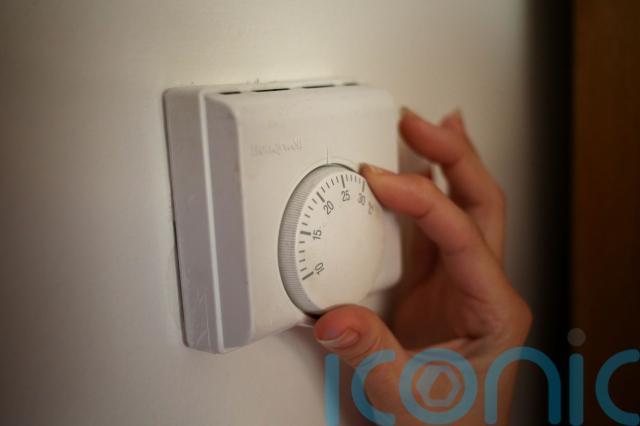
This is because wholesale gas prices feed through into electricity prices and how much it costs to heat people’s homes.
However, Kathleen Brooks, research director at XTB, pointed out that Europe is “much less reliant on gas from Russia and the Middle East and instead gets the bulk of its LNG from the US”, meaning markets could “absorb a few weeks of disruption to Qatari LNG flow”.
Essentially, experts think the longer-term impact will largely depend on how quickly the conflict de-escalates or whether it is likely to persist and lead to prolonged disruption.
– What about petrol and diesel prices?
Drivers have been warned that an increase in global oil prices could push up fuel costs in the UK.
AA president Edmund King said prices will “inevitably increase” in the coming weeks but stressed there was “no need for drivers to break their refuelling routine” because it takes time for higher wholesale costs to filter through to the pump.
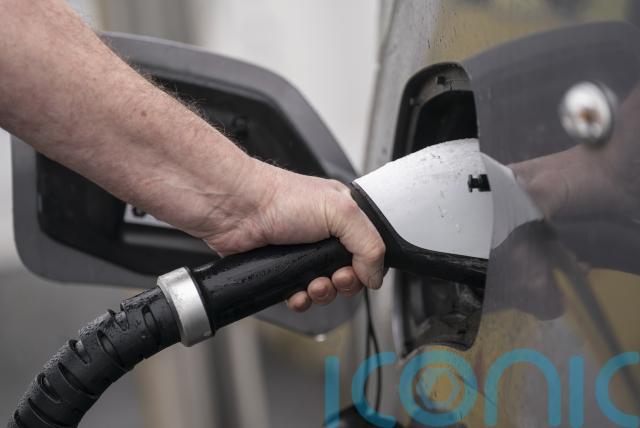
RAC head of policy Simon Williams said the conflict has the potential to push up pump prices in the UK, but that it was not a certainty.
“The oil price would have to rise significantly and stay that way for some time to have a dramatic effect,” he said.
Other experts suggested that motorists could see price rises happen gradually for both petrol and diesel.
– Are prices in shops going to be affected too?
UK retailers are bracing for knock-on effects that could reach British shoppers in the form of higher prices and fewer discounts.
Again, the impact will depend on how long the conflict lasts, but rising oil and shipping costs alongside disruption to supply routes and raw materials could start to filter through to shop prices in the months ahead.

Analysts have said specific categories to watch include fragrance, as the Middle East plays a key role in producing ingredients used in many perfumes, particularly oud and other luxury scent bases.
The countries currently affected by conflict are also significant producers of dates, olive oil, nuts and spices such as saffron.
However fashion, electronics and homeware could also be affected if freight costs increase or delivery times lengthen, as many UK brands rely on global supply routes that pass through or near the region.
– What could this mean for interest rates and the mortgage market?
If conflict in the Middle East pushes up the rate of UK inflation, this could mean that it takes longer for interest rates to come down.
Sanjay Raja, chief UK economist for Deutsche Bank, said that “should energy prices stick at their current levels, we would expect rate cuts to slow”.
“A March rate cut would be in doubt, with concerns around higher energy prices leaving inflation expectations stickier becoming a major consideration for the MPC,” he said.
On the other hand, he said that if energy price rises ease in the coming weeks then the Bank could continue to reduce borrowing costs on the back of slowing inflation.
As well as a more uncertain outlook for interest rates, some housing market experts have suggested that the wider economic uncertainty may potentially affect the risk appetites of some lenders.
– What could the impact be for pensions?
Maike Currie, vice president of personal finance at PensionBee, said pension savers may see the impacts of unsettled financial markets in their pension pots.
She said: “While this can be unnerving, it’s important to remember that pensions are ultimately long term investments, typically spanning decades.

“Over that time, markets have repeatedly demonstrated their resilience, recovering from wars, recessions, pandemics and political shocks.”
She added that most workplace and personal pensions are invested in diversified funds, meaning money is spread across different places to limit the shock of events affecting one area or one market.
– What about investors?
Joe Wiggins, investment research director at St James’s Place, said global events can cause market volatility and result in increased uncertainty for investors.
He suggested that, in general, it could be “helpful” for investors and advisers to consider questions such as whether the impacts are likely to be material in the long-term, whether uncertainties change the objectives of the investor and whether investment portfolios are appropriately diversified.

Subscribe or register today to discover more from DonegalLive.ie
Buy the e-paper of the Donegal Democrat, Donegal People's Press, Donegal Post and Inish Times here for instant access to Donegal's premier news titles.
Keep up with the latest news from Donegal with our daily newsletter featuring the most important stories of the day delivered to your inbox every evening at 5pm.

This publication supports the work of the Press Council of Ireland and Office of the Press Ombudsman, and our staff operate within the Code of Practice of the Press Council. You can obtain a copy of the Code, or contact the Council, at www.presscouncil.ie, Lo-call 1800 208 080 or email: info@presscouncil.ie.