Search


03 Mar 2026
Search
03 Mar 2026

Please allow ads as they help fund our trusted local news content.
Kindly add us to your ad blocker whitelist.
If you want further access to Ireland's best local journalism, consider contributing and/or subscribing to our free daily Newsletter .
Support our mission and join our community now.
To continue reading this article, you can subscribe for as little as €0.50 per week which will also give you access to all of our premium content and archived articles!
Alternatively, you can pay €0.50 per article, capped at €1 per day.
Thank you for supporting Ireland's best local journalism!


The UK faces weaker economic growth and higher unemployment than previously expected but Rachel Reeves insisted she had the right plan and the country must “stay the course”.
The Chancellor said her plan was “more necessary than ever before in a world of uncertainty” with the Iran conflict threatening economic stability.
In a highly political spring statement – taking aim at Reform UK, the Green Party and with a warning to critics in her own party – Ms Reeves cautioned against any “change of course”.
But the Office for Budget Responsibility indicated gross domestic product will increase by 1.1% in 2026, down from the 1.4% it forecast in November.
The watchdog upgraded its forecasts for 2027 and 2028 from 1.5% to 1.6%.
The unemployment rate is forecast to hit 5.3% this year, up from the 4.9% forecast in November, with the rates in 2027 and 2028 also likely to be higher than had been expected in autumn.
The watchdog said entrants into the labour force were “struggling to find work amid subdued hiring demand”.
Updating MPs on the forecasts in her spring statement, against the backdrop of the war in the Middle East, Ms Reeves said: “This Government has the right economic plan for our country, a plan that is even more important in a world that in the last few days has become yet more uncertain.”
She added: “The new forecasts from the Office for Budget Responsibility confirm that our plan is the right one – inflation is down, borrowing is down, living standards are up and the economy is growing.”
“But I am not yet satisfied with these forecasts,” she said, acknowledging “the economy is not yet working for everyone”.
She said she has “confidence” the Government can outperform the economic forecasts.
Taking aim at her opponents, Ms Reeves said: “In the year ahead, more of the choices that we have already made will come into effect – discounts on business energy costs, trade deals with India, the US and the EU, reforms to back our entrepreneurs, investments in our infrastructure, skills funding for further education and more planning reforms.
“Progress – opposed by the Conservatives, opposed by Reform, opposed by the Liberal Democrats, and opposed by the Green Party too – because it is Labour, and only Labour, that has the right plan for our country.”
In the wake of Labour’s by-election humiliation in Gorton and Denton, Sir Keir Starmer and Ms Reeves have faced pressure to shift to the left.
But Ms Reeves insisted “we must reject the temptation of easy answers and reckless borrowing”.
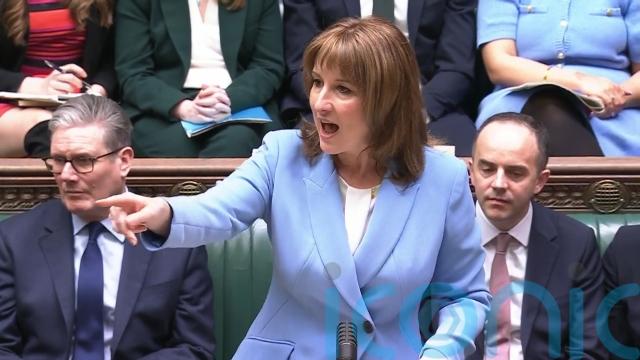
“My plan is the right one. I am in no doubt about how great the rewards can be if we stay the course.”
Slower wage growth contributes to lower inflation forecasts, with the consumer prices index falling from 3.4% in 2025 to 2.3% this year and hitting the Bank of England’s 2% target from 2027.
Borrowing is to reduce by “nearly £18 billion compared to the autumn”, and public sector net borrowing is expected to fall from 4.3% this year to 3.6% next year, then 2.9%, 2.5% and 1.8% in 2029-30, she said.
The Chancellor said her buffer against her rule of meeting day-to-day spending through tax receipts rather than borrowing was set to increase from £21.7 billion to £23.6 billion in 2029-30.
The Chancellor’s statement did not include any tax and spending changes, after Ms Reeves committed to delivering just a single budget a year.
But the Chancellor indicated she would make a more significant speech later this month, including setting out her goal for closer trade ties with the European Union.
In a swipe at the Tories she said Brexit “cut us off from our closest trading partners”.
She said she would use a major speech in the City of London later this month to set out plans for “breaking down trade barriers and deepening alliances with our European partners for a more secure and connected economy”.
Shadow chancellor Sir Mel Stride called it a “surrender statement”, saying: “As our economy bleeds out, what does (the Chancellor) do? She comes to this house with nothing to say and with no plan, unless of course doing nothing is a cunning plan to avoid those U-turns further down the line.”
The Confederation of British Industry’s chief economist Louise Hellem said businesses needed more help: “Reducing the cost of living, cutting borrowing and growing the economy are the right priorities, but they can’t be achieved without clear efforts to tackle the high cost of doing business.”

Subscribe or register today to discover more from DonegalLive.ie
Buy the e-paper of the Donegal Democrat, Donegal People's Press, Donegal Post and Inish Times here for instant access to Donegal's premier news titles.
Keep up with the latest news from Donegal with our daily newsletter featuring the most important stories of the day delivered to your inbox every evening at 5pm.

This publication supports the work of the Press Council of Ireland and Office of the Press Ombudsman, and our staff operate within the Code of Practice of the Press Council. You can obtain a copy of the Code, or contact the Council, at www.presscouncil.ie, Lo-call 1800 208 080 or email: info@presscouncil.ie.