Search


21 Apr 2026
Search
21 Apr 2026

Please allow ads as they help fund our trusted local news content.
Kindly add us to your ad blocker whitelist.
If you want further access to Ireland's best local journalism, consider contributing and/or subscribing to our free daily Newsletter .
Support our mission and join our community now.
To continue reading this article, you can subscribe for as little as €0.50 per week which will also give you access to all of our premium content and archived articles!
Alternatively, you can pay €0.50 per article, capped at €1 per day.
Thank you for supporting Ireland's best local journalism!


A man has told the Covid-19 inquiry that he believes his mother was denied the chance of survival in April 2020.
Glen Grundle from Coleraine was at times tearful as he spoke about his mum Milda’s experience in hospital, describing “issues at all levels”, and calling for accountability.
He was among a number of members of the Northern Ireland Covid-19 Bereaved Families for Justice group to give evidence to the latest module of the UK Covid-19 Inquiry on Tuesday.
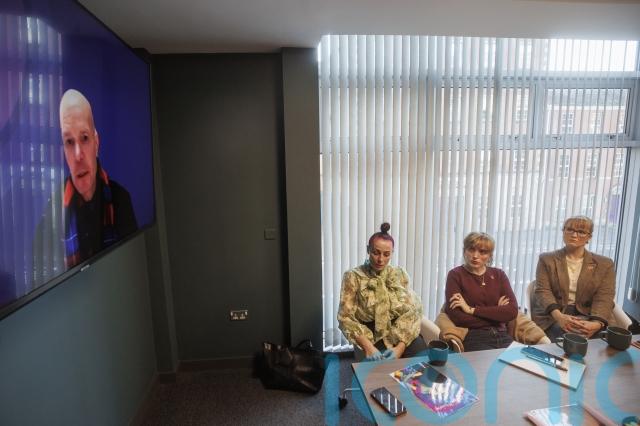
Mr Grundle gave evidence on the impact of Covid-19 restrictions on funerals and wakes in Northern Ireland, describing the coming together of families and friends to share memories as “very much part of the culture here”.
He also described examples of the impact of “pandemic grief”, such as him not having given anyone a “proper hug” since the last time he saw his mother.
Appearing remotely before the inquiry in London, Mr Grundle said his mother, Milda Grundle, who had MS, was taken to hospital in early April 2020 and said she was “immediately put under pressure” to agree to DNACPR, a Do-Not-Resuscitate order.
Mr Grundle told the inquiry that a consultant said she had “no quality of life” because she used a hoist and had carers.
“I was absolutely shocked, I argued with him on the telephone, I told him that there would be repercussions … I couldn’t believe someone was playing God, which can never be allowed to happen,” he said.
“Quality of life is something only that person knows.”
He said he started emailing politicians and doing media interviews to highlight his concerns, and said that the consultant was later removed from his mother’s case.
However, he said there were continued efforts to get his mother to agree to a DNACPR, adding she accepted to a certain extent when they told her she wouldn’t get a ventilator in the Intensive Care Unit.
At that time, he said there were warnings in the media about the health service being short of resources, adding hospitals were “terrified at the anticipated tsunami of patients” that they had seen in other countries.
“It’s my personal belief that my mum was denied a chance at survival,” he said.
“The DNACPR has room for three signatures and only one consultant signed it, there were supposed to be three different people involved in the assessment, and I don’t consider it valid … of course, I didn’t have access to the hospital, so I didn’t know what was going on.”
Mr Grundle said he wants answers about his mother’s care and how she got Covid-19, adding he has been campaigning for an inquest into her death.
“I really haven’t started to grieve … if we can’t even get information, to accept what has happened, to understand,” he said.
“You see this with Hillsborough as well, the families’ pain is prolonged, that’s why the work on the duty of candour is so important.
“We need to have access to this information. I’m never going to have closure or peace about what happened to my mum, but I at least need that information to know what happened, and then to be able to go on and get some accountability.
“Truth, accountability and justice for my mum, and that’s what we want.”
Marie McArdle also gave evidence to the inquiry about the experience of her mother Ann McIvor from Moneymore who died in hospital with Covid-19 on May 20 2020 at the age of 80.
She described her mother as having become frail, but able to get about and still mentally very good, but while she was a strong person, she was very frightened about going into hospital.
She had to go into hospital after a swelling on her leg emerged in case it was a clot.
“I had never seen my mother afraid of anything in her life, she was a formidable character,” she said, describing the communication as a major issue.
“One person would tell you something, the next person would tell you the opposite, it was a complete nightmare.”
Ms McArdle said she believes her mother contracted Covid in hospital and when she was discharged to a care home. She went back to hospital on May 15.
“It was so difficult to get information,” she said, adding video calls were also frustrating as she could hardly make out what her mother was saying.
She said she and her siblings were not able to be with her mother when she died, and said they were all separately saying the Divine Mercy prayer when she passed.
“We were saying it in each of our four homes, we had just finished when I got the phone call to say she had passed, so I do believe our Lord was with her then, but I wasn’t there, and my sister and my two brothers,” she said.
The siblings had to watch their mother’s funeral on a screen from a funeral home as it took place at the church.
“We were socially distant, we couldn’t hug each other, hold each other’s hands, the coffin was there in front, I remember sitting looking at that coffin wondering is mummy in there,” she said.
“Prior to this, mum and I had been at Marks and Spencer, shopping, coffee, scone, and now she had disappeared. It was so painful and traumatic.
“The guilt of not seeing her in the hospital … I just feel so much like I let her down.”

Subscribe or register today to discover more from DonegalLive.ie
Buy the e-paper of the Donegal Democrat, Donegal People's Press, Donegal Post and Inish Times here for instant access to Donegal's premier news titles.
Keep up with the latest news from Donegal with our daily newsletter featuring the most important stories of the day delivered to your inbox every evening at 5pm.

This publication supports the work of the Press Council of Ireland and Office of the Press Ombudsman, and our staff operate within the Code of Practice of the Press Council. You can obtain a copy of the Code, or contact the Council, at www.presscouncil.ie, Lo-call 1800 208 080 or email: info@presscouncil.ie.