Search


03 Mar 2026
Search
03 Mar 2026

Please allow ads as they help fund our trusted local news content.
Kindly add us to your ad blocker whitelist.
If you want further access to Ireland's best local journalism, consider contributing and/or subscribing to our free daily Newsletter .
Support our mission and join our community now.
To continue reading this article, you can subscribe for as little as €0.50 per week which will also give you access to all of our premium content and archived articles!
Alternatively, you can pay €0.50 per article, capped at €1 per day.
Thank you for supporting Ireland's best local journalism!


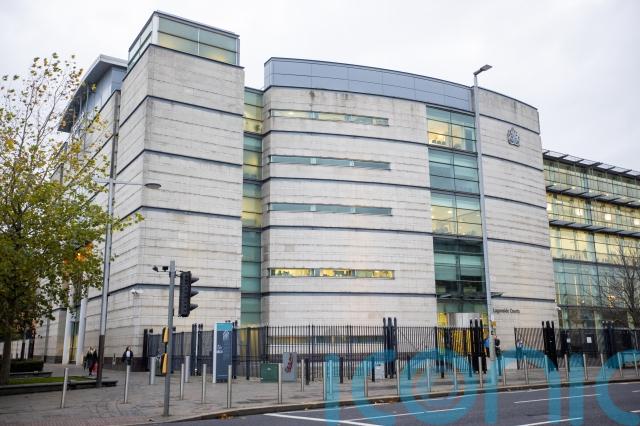
The body of Noah Donohoe was found in a water tunnel as “quickly and safely” as was possible, a police officer has told an inquest.
The PSNI sergeant also told Belfast Coroner’s Court how he decided to carry out a search of a storm drain after discovering a cover on it could be opened.
A separate witness has said there was “complete and utter darkness” in the tunnel system where the schoolboy was discovered.
The inquest into the death of the schoolboy at Belfast Coroner’s Court, which is being heard with a jury, is now in its sixth week.
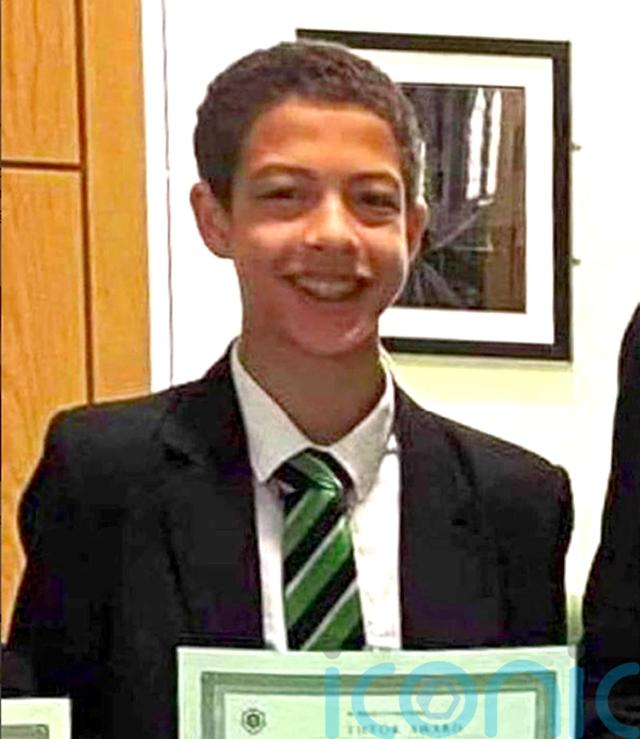
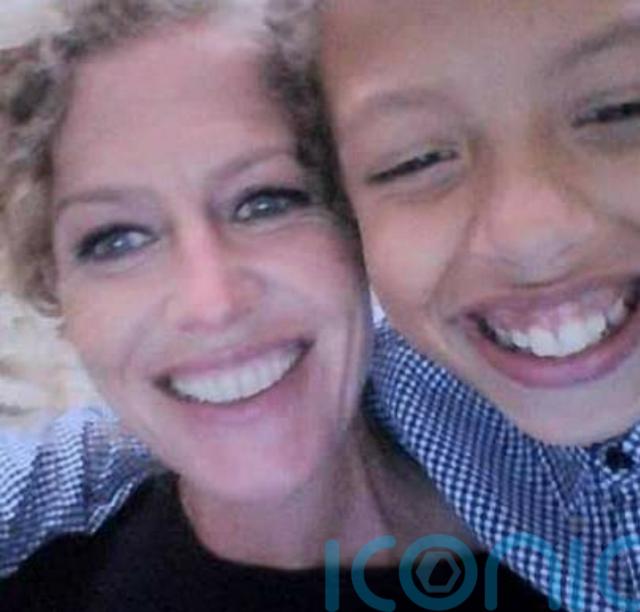
Noah, a pupil at St Malachy’s College, was 14 when his naked body was found in a storm drain tunnel in north Belfast in June 2020, six days after he left home on his bike to meet two friends in the Cavehill area of the city.
A post-mortem examination found the cause of death was drowning.
On Tuesday, the court heard from Sergeant Hutchings, who was the lead PolSA (police search adviser) in the search for Noah in June 2020.
The officer told the inquest he had tasked a team to conduct a search of a storm drain in Northwood Linear Park on Tuesday, June 23 2020, after discovering that a hatch door to the culvert could be opened.
Noah had last been seen in Northwood Road on the Sunday, close to the the area where the culvert is located.
Sergeant Hutchings said: “I’m aware that the search of the storm drain was very hazardous and bore a significant number of risks to officers’ safety, including confined space slips, gases and water.”
He said the team utilised both cameras and officers to search the underground water tunnel system.
The witness told the inquest that the search was suspended on more than one occasion later in the week because of the risk of rising water levels.
He said: “There was no obvious sign of Noah but they could not assure me he was not in there.”
He said he contacted the PSNI diving team to continue the search of the tunnel system.
Sergeant Hutchings told the court that at approximately 10am on Saturday, June 27, he was informed that the body of Noah had been located in the storm drain.
He said: “The search of the storm drain was conducted safely, methodically and systematically, from the place of last sighting.
“Noah was found as quickly and safely as he could have been, given the nature of the search environment and the specially trained search assets available to me.”
Sergeant Hutchings was then questioned by counsel for the coroner Declan Quinn.
The officer told the inquest he had taken on responsibility for the search when he came on duty on Monday morning, the day after Noah had disappeared.
He said he had limited information at this point and had initially considered Cavehill as the most likely location where he could be.
He said Northwood Road and Linear Park had not been mentioned at that point.
The officer was asked by Mr Quinn whether he ever stayed on beyond his working hours.
Sergeant Hutchings said: “I wanted to find Noah. I have teenage kids, teenage boys.
“So I know how his mum had felt and with the experience I had, I wanted to find him.”
The officer said he had wanted to stay on duty later on the Monday and Tuesday evenings but had been prevented from doing so.
The officer then told the inquest how on Tuesday morning he was in the Northwood area where Noah’s bike had been found when he noticed the storm drain nearby.
He said: “I thought it has got a cage around it. I don’t have to search this.
“Then I thought, I’d better check it anyway.
“So I walked down to it and lifted the hinge to see that it was insecure.”
The officer said there was nothing at this point to suggest that Noah was in the underground tunnels, but he had wanted to exclude it.
The officer told how a crowd had turned up at Linear Park on the Wednesday to help with the search for Noah, but they had “got in the way”.
He said Covid restrictions were in place at the time.
Sergeant Hutchings added: “Local councillors had called on everybody to come and help.
“They wanted to help, yes, but at some point they were getting in the way of the search teams.
“There were people turning up in high heels, pushing prams in the park.
“If you go on YouTube, there’s a video of people, a crowd of people, several hundred all together, walking through the park and getting stuck at a locked gate and looking around as if to say ‘where am I going next?’
“They were called out, but there was no control over those people, and they were getting in the way of the search team.”
Earlier, the inquest heard from Owen McGivern, an official from the Department for Infrastructure Rivers.
Mr McGivern was questioned by Donal Lunny KC, who represents the PSNI, about lighting in the tunnel network.
He told the court: “Once you go beyond the first 10/15/20 metres of the culvert, it’s black.
“It’s not like black like night, where you can see in your bedroom; you couldn’t see your hand in front of your face.
“It is complete and utter darkness.”
The witness was then asked about the risks associated with gas in the culvert system.
He said gas within the tunnels would arise only when it was “agitated”.
He said: “I’ve been in it several times and the gas alarms never went off.”
Mr Lunny asked Mr McGivern about de-silting work which had begun in the tunnel network before Noah disappeared, but the work had had to be stopped.
Mr McGivern said: “There were a couple of factors, Covid was a big factor.
“But before that we took the material away, the material was identified as contaminated so we then had to deal with getting rid of contaminated material and then Covid happened so we had to pause and then unfortunately Noah happened.”
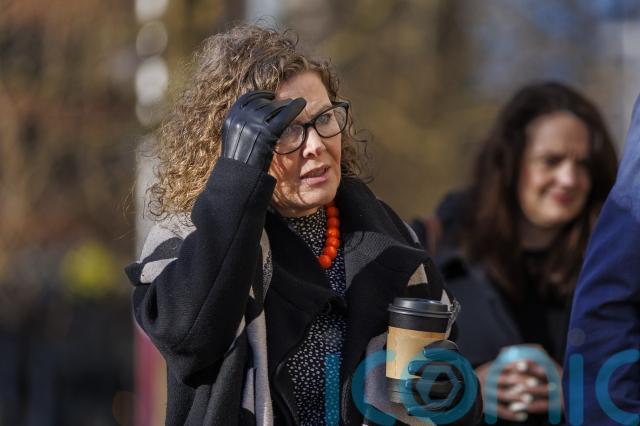
Malachy McGowan, representing Noah’s mother Fiona Donohoe, told the court that the jury had been on a site visit on Monday to the scene where Noah’s body had been found.
The barrister said the grill over the culvert, which had been in place in June 2020, was a debris screen, intended to prevent larger branches passing through, but wide enough to enable a person to pass through the bars.
The witness confirmed this.
Mr McGowan said the inquest had heard evidence from a number of local residents about whether they could access land near to the entry to the culvert system.
The witness said the department accepted some local residents could access the area from their back gardens.
Mr McGowan asked how the department would have known people could access the area.
Mr McGivern said the department would have known this from speaking to local residents.
He was asked if the department was aware that children would have visited the area.
The witness said: “I don’t know about that.”
The barrister pointed to media reports after Noah’s body was found, which showed a local parent raising concerns about her children being able to access the area of the culvert entrance.
He added: “Would you accept that the best and most appropriate way to identify the real risk of children playing at or near a culvert is to consult with local residents?”
Mr McGivern agreed.
The inquest will resume on Wednesday.

Subscribe or register today to discover more from DonegalLive.ie
Buy the e-paper of the Donegal Democrat, Donegal People's Press, Donegal Post and Inish Times here for instant access to Donegal's premier news titles.
Keep up with the latest news from Donegal with our daily newsletter featuring the most important stories of the day delivered to your inbox every evening at 5pm.

This publication supports the work of the Press Council of Ireland and Office of the Press Ombudsman, and our staff operate within the Code of Practice of the Press Council. You can obtain a copy of the Code, or contact the Council, at www.presscouncil.ie, Lo-call 1800 208 080 or email: info@presscouncil.ie.