The shocking act happened near the Shannon River on the Condell Road I PICTURE: Google Maps
Search


12 Mar 2026

Please allow ads as they help fund our trusted local news content.
Kindly add us to your ad blocker whitelist.
If you want further access to Ireland's best local journalism, consider contributing and/or subscribing to our free daily Newsletter .
Support our mission and join our community now.
To continue reading this article, you can subscribe for as little as €0.50 per week which will also give you access to all of our premium content and archived articles!
Alternatively, you can pay €0.50 per article, capped at €1 per day.
Thank you for supporting Ireland's best local journalism!


Wetland farming sites can support three times more birds than drained agricultural grassland – including rare species, a study has shown.
The findings that “paludiculture” sites can boost birdlife add to previous research showing raising water levels on lowland peat for wet farming reduces the carbon emissions from drained peatlands and slows erosion.
Researchers also said wetland-adapted crops – such as bulrush – have the potential to be commercialised for insulation and textiles, providing a financially viable way to keep lowland peat in places such as the East Anglian fens and Somerset Levels wet, support wildlife and store carbon.
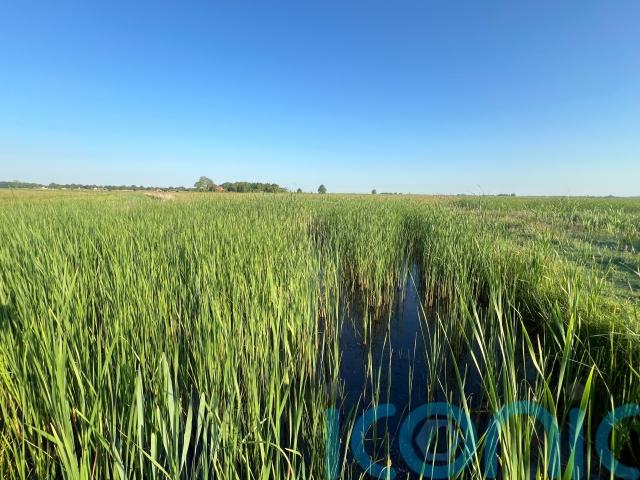
The new study – led by the RPSB and the University of Cambridge – surveyed birdlife on 10 paludiculture plots growing bulrush (Typha), nine nearby natural wetlands and nine drained and grazed grasslands dominated by ryegrass in the Netherlands.
It found bird numbers were three times higher on the wetland farming sites than on the grassland areas, and comparable to numbers in the natural wetlands.
The study also showed that, alongside typical grassland species, some wetland specialists – birds that only live and thrive on wetland habitat – were found in the paludiculture sites.
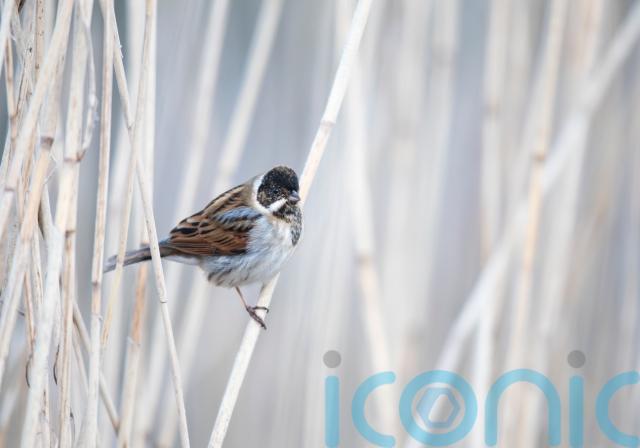
These included reed warbler, reed bunting and sedge warbler – which use the bulrush for feeding and nesting.
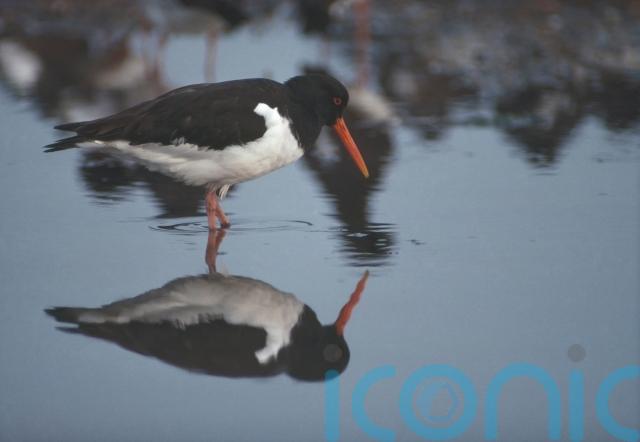
And some birds which are listed for conservation concern on a European or global level were also found in the wetland farming sites, including amber-listed Eurasian oystercatchers, amber-listed meadow pipits, and Eurasian coots.
The research found that while paludiculture did not replicate natural wetlands, it can function as an important habitat for birds within wetland and grassland landscapes.
And more space could be provided for wetland bird species if cutting and harvesting were timed to minimise impacts on the breeding season, the RSPB said.
Dr Catherine Waite, from the University of Cambridge and co-lead author, said: “As pressures on land continue to grow, research like this provides vital insight into how different land management choices affect nature.
“This evidence is key to informing local and landscape level management decisions that balance environmental and human needs.”
The findings have implications for areas of lowland peatland in the UK, such as East Anglia’s fens and Somerset Levels, which are major carbon stores and important areas for productive agriculture.
Some 90% of the UK’s lowland peat has been drained for agriculture since the 1600s, the RSPB said, but it contributes 4% of the country’s carbon emissions.
This is because when water levels fall through drainage, microbes in peat turn it into carbon dioxide in the presence of oxygen.
It also means productive peatland soils are disappearing, at a rate of 1-3cm a year in places such as the fens.
Dr Joshua Copping, RSPB conservation scientist and co-lead author of the study, said: “We know that paludiculture can reduce greenhouse gas emissions associated with farming on peat, but our findings show its potential for wildlife too.
“Farmed wetlands support bird communities simply not found on drained grasslands.”
Dr Copping added: “As the sector develops, paludiculture could help deliver a just transition for farmers who wish to continue farming while contributing to a nature-rich landscape.”
While the study focused on sites in the Netherlands, wet farming or paludiculture is being trialled in some places in the UK.
The RSPB is conducting trials at its Greylake reserve in Somerset, as part of a project led by the Farming and Wildlife Advisory Group (FWAG) South West to develop best practices for establishing and managing bulrush crops.
And Bedfordshire, Cambridgeshire and Northamptonshire Wildlife Trust has a five-year trial as part of its Great Fen project, growing crops including bulrush that can be used to insulate homes and “wonder crop” Sphagnum moss that can act as alternative to peat compost.
The study was published in the journal Ecological Solutions and Evidence.

Subscribe or register today to discover more from DonegalLive.ie
Buy the e-paper of the Donegal Democrat, Donegal People's Press, Donegal Post and Inish Times here for instant access to Donegal's premier news titles.
Keep up with the latest news from Donegal with our daily newsletter featuring the most important stories of the day delivered to your inbox every evening at 5pm.

This publication supports the work of the Press Council of Ireland and Office of the Press Ombudsman, and our staff operate within the Code of Practice of the Press Council. You can obtain a copy of the Code, or contact the Council, at www.presscouncil.ie, Lo-call 1800 208 080 or email: info@presscouncil.ie.