Search


15 Mar 2026
Search
15 Mar 2026

Please allow ads as they help fund our trusted local news content.
Kindly add us to your ad blocker whitelist.
If you want further access to Ireland's best local journalism, consider contributing and/or subscribing to our free daily Newsletter .
Support our mission and join our community now.
To continue reading this article, you can subscribe for as little as €0.50 per week which will also give you access to all of our premium content and archived articles!
Alternatively, you can pay €0.50 per article, capped at €1 per day.
Thank you for supporting Ireland's best local journalism!


Sir Keir Starmer and Donald Trump have spoken of the importance of reopening a key shipping route in the Middle East, in their first conversation since the US president called for Britain to send warships to the Strait of Hormuz.
Tehran’s stranglehold on oil tankers passing through the narrow sea passage has driven energy prices up across the world.
At home, its has resulted in the Government mulling over steps to help people with the cost of living.
On the global stage, the crisis has led Mr Trump to appeal to other world leaders – including Sir Keir – to help secure the strait with a naval presence.
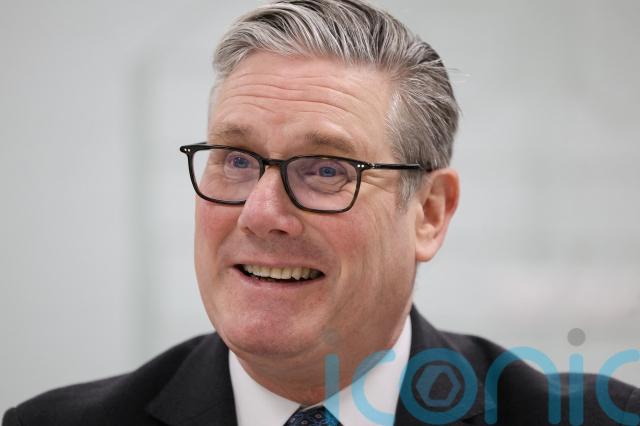
Giving a readout of the Sunday call between Sir Keir and the US leader, a Downing Street spokeswoman said the pair “discussed the ongoing situation in the Middle East and the importance of reopening the Strait of Hormuz to end the disruption to global shipping, which is driving up costs worldwide”.
“The Prime Minister also expressed his condolences for the American service personnel who have lost their lives during the conflict,” she added.
Sir Keir and Canada’s Prime Minister Mark Carney also agreed on the importance of ending the blockade in a separate call on Sunday.
Mr Trump’s plea for aid from the UK and other nations on Saturday came only a week after he said the US does not “need people that join wars after we’ve already won”, in response to reports that Britain was considering sending more warships to defend its bases in the region.
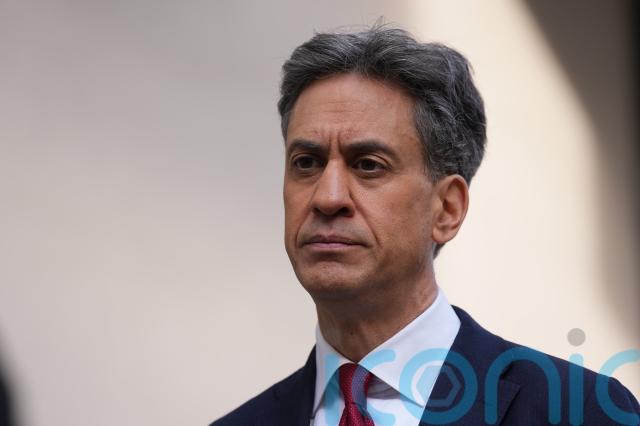
Energy Secretary Ed Miliband told Sky News’ Sunday Morning With Trevor Phillips the UK is “intensively” looking at what it can do to help reopen the Strait of Hormuz.
Minehunting drones are one of the options the UK is considering sending to the strait to unblock Iran’s stranglehold, it is understood.
The Sunday Times, which first reported the proposals, said the minehunting drones could be deployed from the Royal Navy’s Mine and Threat Exploitation Group, which is currently in the Middle East.
There are growing concerns that Iran has begun placing mines in the narrow sea passage as part of its blockade.
Numerous oil tankers have come under fire as they attempted to pass through since the start of the conflict.
Mr Miliband also suggested Britain’s minesweeping ships were being considered for deployment.
The Royal Navy’s last minesweeper in the Middle East recently returned to the UK for maintenance.
The Energy Secretary also said the Government will “stand by the British people in this crisis” when asked whether plans to hike fuel duty in the autumn were being reconsidered.
Fuel duty, the 52.95p per litre tax on fuel paid at the pump, is due to rise for the first time in 16 years at the end of August.
Ministers have faced calls from their political rivals to U-turn on the planned 1p tax hike as it will add an extra burden to motorists beyond the oil price spikes caused by the US-Israeli war on Iran.
Asked whether ministers would consider scrapping the planned tax rise in the wake of the energy price rises, Mr Miliband told the BBC: “Let me answer that by saying this, which is, I’ll be candid with you, we don’t know how long this conflict is going to go on and therefore, with five months to go until September, we will have to see where we are, obviously.”

Subscribe or register today to discover more from DonegalLive.ie
Buy the e-paper of the Donegal Democrat, Donegal People's Press, Donegal Post and Inish Times here for instant access to Donegal's premier news titles.
Keep up with the latest news from Donegal with our daily newsletter featuring the most important stories of the day delivered to your inbox every evening at 5pm.

This publication supports the work of the Press Council of Ireland and Office of the Press Ombudsman, and our staff operate within the Code of Practice of the Press Council. You can obtain a copy of the Code, or contact the Council, at www.presscouncil.ie, Lo-call 1800 208 080 or email: info@presscouncil.ie.