
A veil of sadness has fallen over County Limerick following the tragic passing of Ruth Staunton
Search


16 Mar 2026

Please allow ads as they help fund our trusted local news content.
Kindly add us to your ad blocker whitelist.
If you want further access to Ireland's best local journalism, consider contributing and/or subscribing to our free daily Newsletter .
Support our mission and join our community now.
To continue reading this article, you can subscribe for as little as €0.50 per week which will also give you access to all of our premium content and archived articles!
Alternatively, you can pay €0.50 per article, capped at €1 per day.
Thank you for supporting Ireland's best local journalism!


A school pupil and a student at the University of Kent have died following an outbreak of meningitis.
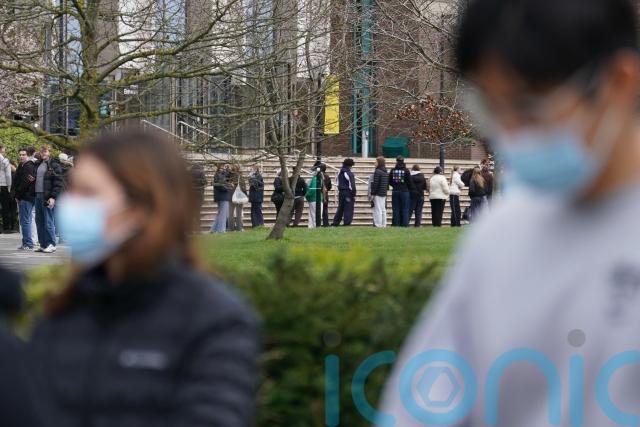
The UK Health Security Agency (UKHSA) said it had been notified of 13 cases from Friday to Sunday in the Canterbury area and the specific strain had not yet been identified.
But what is meningitis, what are the symptoms, and why are young people at risk?
– What is meningitis and what causes it?
Meningitis is an infection of the protective membranes that surround the brain and spinal cord. It is usually caused by a bacterial or viral infection. Bacterial meningitis is rarer but more serious than viral meningitis.
It can affect anyone but is more common in babies, children, teenagers and young adults.
Meningitis can be very serious if not treated quickly, and can lead to life-threatening sepsis and permanent damage to the brain or nerves.
– What are the symptoms?
Symptoms of meningitis and sepsis can include a high temperature, cold hands and feet, vomiting, confusion, muscle and joint pain, pale, mottled or blotchy skin, spots or a rash, a headache, a stiff neck, aversion to bright lights, being very sleepy and seizures.
Symptoms can appear in any order and some may not appear at all.
– Why are young people at risk?
According to Meningitis Now, one in four 15 to 19-year-olds carry meningococcal bacteria in the back of their throats, compared to one in 10 of the UK population.

People can carry this harmlessly without becoming unwell, but it can be passed from person to person by coughing, sneezing and kissing.
Increased social interaction in this age group means the bacteria can be passed on more easily.
In universities, students can be more vulnerable because of living in more “cramped” housing or halls of residence. Young people also come together from all over the world to live, study and socialise.
– What causes these outbreaks and how serious are they?
Outbreaks can happen when a particular meningococcal strain enters a community where people are mixing closely.
Universities which include halls of residence, parties, and large social groups, can help the bacteria to spread more easily.

But the risk to the general public in Kent is low, with people at the highest risk usually close contacts of cases.
– How is meningitis treated?
Hospital treatment is recommended by the NHS for all cases of bacterial meningitis.
Treatments include antibiotics and fluids administered directly into a vein, oxygen if there are breathing difficulties, and in some cases steroid medication to prevent swelling around the brain.
Patients may need to stay in hospital for a few days or weeks.
In cases of mild meningitis, patients may be sent home if tests confirm it is viral, which usually gets better on its own. Most patients start to feel better within seven to 10 days.
Meningitis can be very serious if not treated quickly.
The NHS website has all the information you need, including what to look out for and when to get medical help.
➡️ https://t.co/FlXxJRTbqp pic.twitter.com/xSCVAnGB2S
— NHS (@NHSuk) March 16, 2026
But severe viral meningitis may also be treated in hospital.
– What action is being taken to stop the spread in Kent?
Close contacts of the University of Kent students affected will be given antibiotics.
On Sunday, the UKHSA said specialists were interviewing affected individuals and their families to “help identify all close contacts and arrange antibiotics to limit spread”.
The agency had also worked with the University of Kent to provide advice letters to all 16,000 students, providing information on recent cases, the signs and symptoms of the illness, how to obtain antibiotics, and what to do if they felt unwell.
– Are there vaccines available for meningitis?
There are two vaccines for meningitis.
NHS childhood vaccinations protect children from diseases including #Measles, #Meningitis and #Polio. 👶🧒👧
Find out if your child is up to date by checking their Red Book or contacting your GP practice. 📚
🔗 https://t.co/klFAYtceVS pic.twitter.com/fQg2rovQLs
— UK Health Security Agency (@UKHSA) October 8, 2025
The MenACWY vaccine is a single dose jab that protects against four strains of meningococcal bacteria.
It is offered to teenagers in school and is also available to those entering university, up to the age of 25.
Experts say that this jab is “highly effective at protecting against invasive disease”.
But Andrew Preston, a professor of microbial pathogenicity at University of Bath, said that uptake among teenagers was about 73%.
“So there are a lot of unvaccinated students given the size of the student cohort,” he said.
Elsewhere, there are the MenB, 6-in-1, pneumococcal and MMRV vaccines for babies and children.
– What should you do if you think you have meningitis?
The NHS recommends that people call 999 for an ambulance or go to their nearest A&E.
People are advised to trust their instincts, as someone with meningitis or sepsis can get a lot worse very quickly.

Subscribe or register today to discover more from DonegalLive.ie
Buy the e-paper of the Donegal Democrat, Donegal People's Press, Donegal Post and Inish Times here for instant access to Donegal's premier news titles.
Keep up with the latest news from Donegal with our daily newsletter featuring the most important stories of the day delivered to your inbox every evening at 5pm.

This publication supports the work of the Press Council of Ireland and Office of the Press Ombudsman, and our staff operate within the Code of Practice of the Press Council. You can obtain a copy of the Code, or contact the Council, at www.presscouncil.ie, Lo-call 1800 208 080 or email: info@presscouncil.ie.