Search


19 Mar 2026
Search
19 Mar 2026

Please allow ads as they help fund our trusted local news content.
Kindly add us to your ad blocker whitelist.
If you want further access to Ireland's best local journalism, consider contributing and/or subscribing to our free daily Newsletter .
Support our mission and join our community now.
To continue reading this article, you can subscribe for as little as €0.50 per week which will also give you access to all of our premium content and archived articles!
Alternatively, you can pay €0.50 per article, capped at €1 per day.
Thank you for supporting Ireland's best local journalism!


The harrowing impact of the coronavirus pandemic on patients and NHS staff is to be laid bare in a new report.
The UK Covid-19 Public Inquiry is set to publish insights on how the healthcare system in Britain coped in the face of the virus.
A number of health leaders broke down as they gave powerful testimony to the pandemic probe in 2024.
They included a senior medic who broke down in tears as he described scenes “from hell” on intensive care wards, with staff running out of body bags and sick patients “raining from the sky”.
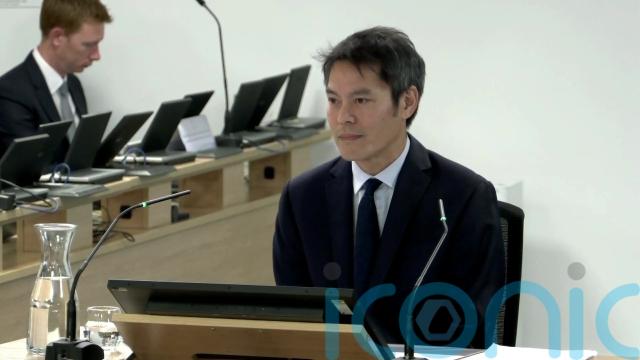
Professor Kevin Fong – former national clinical adviser in emergency preparedness, resilience and response at NHS England – told the probe that the scale of death on intensive care units was “truly astounding” and how one hospital he visited was close to collapse.
Former chief nursing officer for England Dame Ruth May described how the NHS in England went into the pandemic with 40,000 fewer nurses than it needed.
The inquiry heard that in critical care, highly skilled nurses usually care for patients on a one-to-one basis, but during the crisis a decision was made to increase the number of patients cared for by each nurse as patient numbers swelled, with nurses in these units caring for as many as six patients at once.
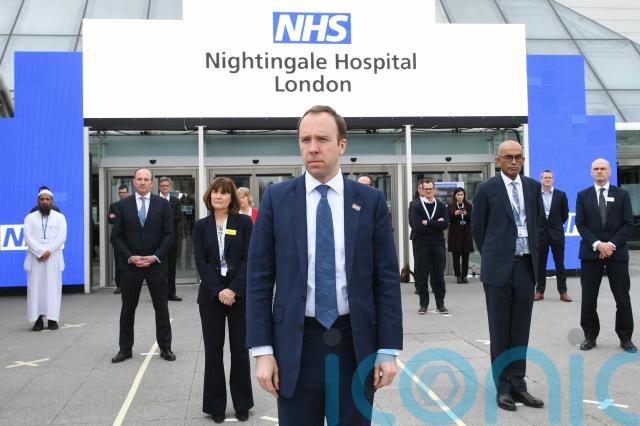
Elsewhere former health secretary Matt Hancock told the inquiry that England’s hospitals were within “hours” of running out of some items of personal protective equipment (PPE) in the early months of the pandemic.
Mr Hancock also said he “reluctantly” approved of the decision to pause non-urgent planned care during the pandemic.
The Government prioritised hospital capacity for Covid-19 and emergency patients, and so paused elective (non-urgent) treatment in spring 2020.
This led to growing waiting lists and meant thousands of people who needed care for non-Covid reasons had to wait or could not access treatment.
The former MP also defended the Stay Home, Save Lives, Protect the NHS messaging implemented during the pandemic.
But England’s chief medical officer, Professor Sir Chris Whitty, said officials “didn’t get it across well enough” that people should continue to go to hospital for serious illnesses other than Covid.
However, he said the UK faced an “absolutely catastrophic situation” as it headed towards the first Covid lockdown and, without such a measure, there were very serious concerns about how the NHS would cope.
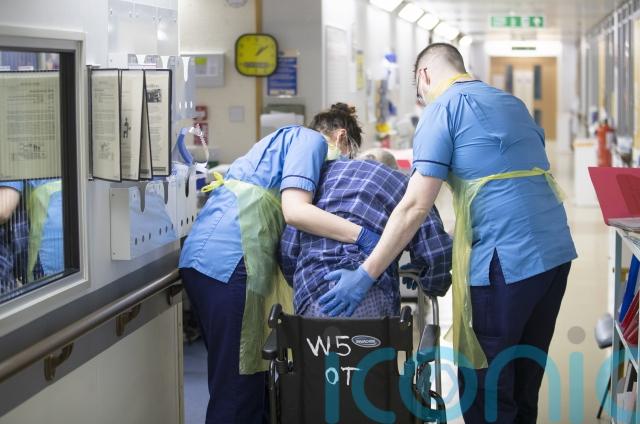
Critics of lockdowns have pointed to the numbers of people who died from non-Covid conditions which may have been treatable, but where the person stayed at home or could not access normal NHS care.
Inquiry chairwoman Baroness Heather Hallett examined all aspects of the NHS during the crisis.
This included how managers led the pandemic response, the role of primary care and GPs, NHS backlogs and how the vaccine programme was integrated.
The diagnosis of long Covid and the support offered to those affected was also analysed as part of the inquiry’s Module 3, which will report its findings on Thursday.
In a statement, Covid-19 Bereaved Families for Justice said: “The Module 3 report must not pull its punches.
“Years of austerity left the NHS dangerously exposed before Covid ever arrived, without the capacity, resilience or headroom needed to cope with a major shock.
“Many of our loved ones died in horrific conditions because ministers failed to strengthen the health service when they had the chance.
“The inquiry must not indulge the false claim pushed by Boris Johnson and Matt Hancock that the NHS coped with Covid.
“It did not.
“Hospitals were overwhelmed, staff were stretched beyond breaking point, and patients paid the price.
“The report must make clear that restoring funding and capacity is now a matter of national urgency.
“We are less prepared now than we were in 2020, and unless that changes, more lives will be put at risk when the next crisis comes.”
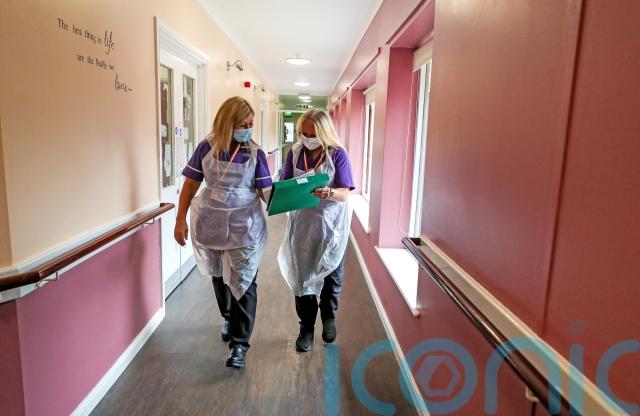
It comes as the Government announced plans to give people stronger rights for hospital and care home visits.
Concerns were raised over visitation rights after visits were curtailed during the pandemic amid efforts to stop the spread of Covid-19.
Changes in the law were initially proposed in 2023 by the former Conservative government.
Now the new Government has said that it will “distribute comprehensive guidance and resources to make visitation rights clear”.
The Department of Health and Social Care said that ministers are “exploring bringing forward proposals for legislating visiting rights as part of wider reform work”.
The guidance will make clear that patients and residents in care homes, hospitals and hospices “will no longer be cut off from their loved ones unless in exceptional circumstances”, the department said.
Care minister Stephen Kinnock said: “No one should be separated from their loved ones unnecessarily. Contact with family and friends should not be seen as a luxury but a basic part of good care.
“These changes will protect patients and residents, give families a stronger voice, and help make sure care is more compassionate, open and humane.”

Subscribe or register today to discover more from DonegalLive.ie
Buy the e-paper of the Donegal Democrat, Donegal People's Press, Donegal Post and Inish Times here for instant access to Donegal's premier news titles.
Keep up with the latest news from Donegal with our daily newsletter featuring the most important stories of the day delivered to your inbox every evening at 5pm.

This publication supports the work of the Press Council of Ireland and Office of the Press Ombudsman, and our staff operate within the Code of Practice of the Press Council. You can obtain a copy of the Code, or contact the Council, at www.presscouncil.ie, Lo-call 1800 208 080 or email: info@presscouncil.ie.