Search


19 Mar 2026
Search
19 Mar 2026

Please allow ads as they help fund our trusted local news content.
Kindly add us to your ad blocker whitelist.
If you want further access to Ireland's best local journalism, consider contributing and/or subscribing to our free daily Newsletter .
Support our mission and join our community now.
To continue reading this article, you can subscribe for as little as €0.50 per week which will also give you access to all of our premium content and archived articles!
Alternatively, you can pay €0.50 per article, capped at €1 per day.
Thank you for supporting Ireland's best local journalism!


Stay home, Protect the NHS, Save Lives messaging used during the Covid-19 pandemic in a bid to avoid the NHS being overwhelmed “sent the message that healthcare was closed”, the probe has concluded.
The message, which was created by Cabinet Office officials without input from health leaders, was part of the reason people were “deterred” from accessing healthcare during the pandemic, according to the UK Covid-19 Public Inquiry.
Some people steered clear of A&E, even for life-threatening emergencies such as heart attacks, they did not seek help for other medical conditions to avoid being a burden to the NHS and did not attend hospital for fear of catching the virus, according to the inquiry’s latest report on the NHS during the crisis.
The report highlights how the need to protect the NHS from being overwhelmed became a key priority for politicians.
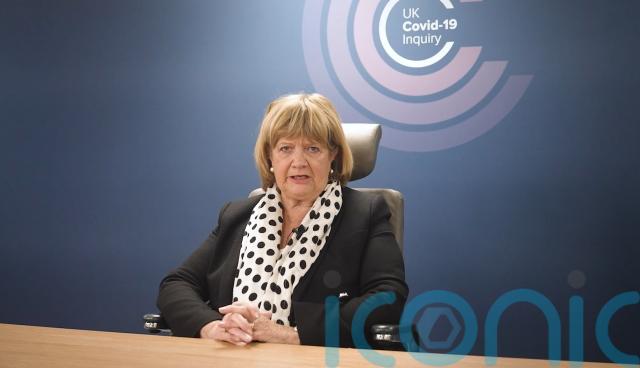
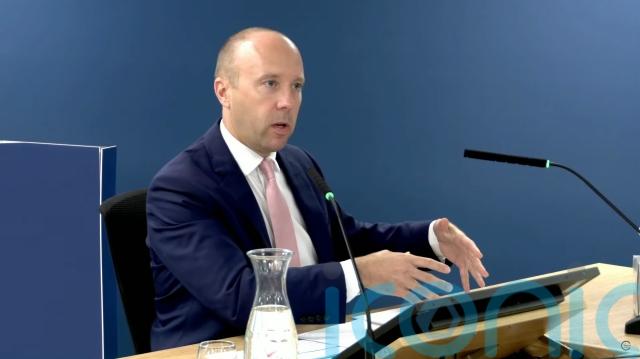
Ministers, including former health secretary Matt Hancock, insisted the health service was not overwhelmed, but inquiry chairwoman Baroness Heather Hallett said this was “semantics”, adding: “There was clearly overwhelm”.
Lady Hallett said UK healthcare systems “teetered on the brink of total collapse”.
Her new 387-page report says the devastating impact on the NHS was “unsurprising” given the “parlous state” the service was in at the start of the crisis.
Lady Hallett said the NHS coped during the pandemic “but only just”.
Other findings from the new UK Covid-19 Public Inquiry report include:
– Thousands of patients died in hospitals alone and grieving families were deprived of the opportunity to say goodbye”;
– Many patients with Covid-19 “did not get the quality of treatment they needed”;
– Patients who did not have Covid-19 had their diagnosis and treatment delayed “to the point where their conditions became untreatable”;
1/ The Chair of the UK Covid-19 Inquiry, Baroness Heather Hallett, has today published her third report. pic.twitter.com/LHhLXZor7q
— UK Covid-19 Inquiry (@covidinquiryuk) March 19, 2026
– Initial guidance on preventing the infection from spreading was “flawed” because it “failed properly to consider the extent to which the virus was also spread by aerosol transmission”, initially focusing on spread through contact;
– Visiting restrictions “may be unavoidable” in a pandemic, but should be “facilitated as far as possible”;
– Communications with millions of people shielding during the crisis “were not always appropriately handled”, with some incorrectly told to shield while others were not given the instruction when they should have;
– Decisions made in the early stage of the crisis – including discharging patients from hospitals to care homes – should have been planned for sooner and not in the “turbulent early stages of the pandemic”;
– She said there also needs to be better planning for end-of-life care, highlighting reports of blanket do not attempt cardiopulmonary resuscitation (DNACPR);
– Access to healthcare for long Covid “has been and remains variable” across the UK;
– The Government prioritised hospital capacity for Covid-19 and emergency patients, and so paused elective (non-urgent) treatment in spring 2020 but once elective care resumed there was “significant variation in the speed with which the backlog was addressed, thereby adding to the already long waiting lists”;
– Pausing cancer screening in some nations – such as pausing the bowel cancer screening programme in Scotland, Wales and Northern Ireland led to a “steep drop in diagnosis” in 2020. Missed and late diagnosis coupled with longer waits for treatment.
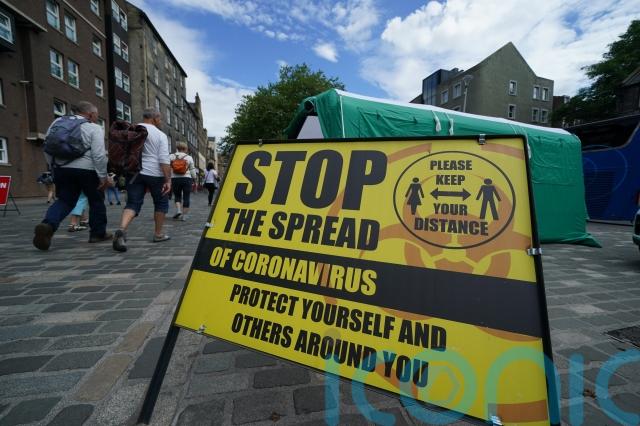
The report contains high praise for NHS staff who worked under “intolerable pressure” for months on end.
And it highlights how supplies of personal protective equipment (PPE) were “particularly constrained” at the start of the pandemic, putting healthcare staff at risk as staff sometimes had to work with inadequate and unsuitable PPE.
Lady Hallett said the UK entered the crisis “ill-prepared”, with the NHS in a “parlous state”, with severe workforce shortages; low hospital bed numbers and high bed occupancy rates.
“It is unsurprising therefore that the impact on the healthcare systems of the four nations was devastating,” she wrote.
She added: “Politicians, including the secretary of state for health and social care, Matt Hancock, were reluctant to accept that healthcare systems were ‘overwhelmed’, as they chose this to mean total collapse.
“Ultimately, in my view, it is a question of semantics. Whatever word one chooses, healthcare systems were placed under intolerable strain.”
She went on: “There was clearly overwhelm.”
In a statement she added: “I can summarise that impact as: we coped, but only just.
“The healthcare systems came close to collapse.
“Healthcare workers carried the burden of caring for the sick in unprecedented numbers. It came at a huge cost to them, their families, their patients and the loved ones of patients.
“Collapse was only narrowly avoided thanks to the extraordinary efforts of all those working in healthcare across the UK.
“Despite those efforts, some patients did not get the level of care they would usually receive.
“The enormous strain placed upon the healthcare systems was unprecedented.
“Those working within it were obliged to work under intolerable pressure for months on end.”
The report makes 10 recommendations “to prevent healthcare systems being overwhelmed in the next pandemic”.
These include increasing capacity in urgent and emergency care; strengthening the body responsible for infection prevention and control guidance and better advance care planning.
Lady Hallett added: “We cannot know when, but there will be another pandemic. My recommendations, taken as a whole, should mean that the UK is better prepared for that pandemic.
“In doing so, we shall avoid some of the terrible human cost of Covid-19.”
The NHS waiting list in England hit a record high in September 2023, with 7.77 million treatments waiting to be carried out for 6.5 million patients.
The latest data show the waiting list has fallen for the third month in a row, with an estimated 7.25 million treatments waiting to be carried out at the end of January, relating to 6.13 million patients.
The inquiry was formally launched in July 2022 and a report published in November last year found chaos at the heart of government and a failure to take Covid-19 seriously cost 23,000 lives in the first wave of the pandemic.
By the end of December, the inquiry had spent just under £204 million including on setup, chairwoman and lawyer costs and holding public hearings in all four nations of the UK.
And the Government said it has spent £111 million in responding to the inquiry, covering legal advice and staffing costs.

Subscribe or register today to discover more from DonegalLive.ie
Buy the e-paper of the Donegal Democrat, Donegal People's Press, Donegal Post and Inish Times here for instant access to Donegal's premier news titles.
Keep up with the latest news from Donegal with our daily newsletter featuring the most important stories of the day delivered to your inbox every evening at 5pm.

This publication supports the work of the Press Council of Ireland and Office of the Press Ombudsman, and our staff operate within the Code of Practice of the Press Council. You can obtain a copy of the Code, or contact the Council, at www.presscouncil.ie, Lo-call 1800 208 080 or email: info@presscouncil.ie.