Search


20 Mar 2026
Search
20 Mar 2026

Please allow ads as they help fund our trusted local news content.
Kindly add us to your ad blocker whitelist.
If you want further access to Ireland's best local journalism, consider contributing and/or subscribing to our free daily Newsletter .
Support our mission and join our community now.
To continue reading this article, you can subscribe for as little as €0.50 per week which will also give you access to all of our premium content and archived articles!
Alternatively, you can pay €0.50 per article, capped at €1 per day.
Thank you for supporting Ireland's best local journalism!


The case of an Albanian criminal who argued against deportation partly citing his son’s aversion to foreign chicken nuggets is “difficult” but has at the heart of it “a particularly vulnerable child”, a human rights boss has said.
The ruling is centred on the rights of Klevis Disha’s 11-year-old son and how he might be impacted if separated from his father, Mary-Ann Stephenson said.
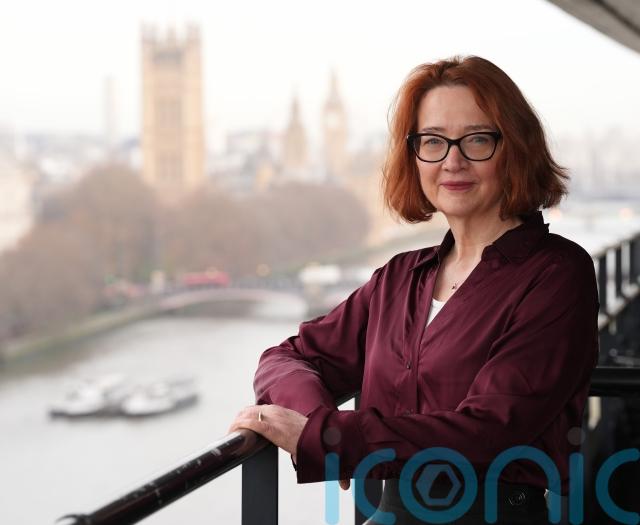
The chairwoman of the Equality and Human Rights Commission (EHRC), who recently marked 100 days in her role with Britain’s rights watchdog, told the Press Association the ruling showed the “difficult balances” which need to be struck between competing rights in certain cases.
Disha, 40, is allowed to remain in the UK despite being a convicted criminal after a tribunal judge allowed his appeal against deportation on human rights grounds.
His son, whom the judge said cannot be named, is described as having “complex and significant behavioural and other challenges”, “has a limited diet” and faces sensory sensitivities including struggles with “certain textures of foods, smells and clothing”.
The ruling published this week by the First-tier tribunal came after an earlier ruling by a different judge which concluded that it would be “unduly harsh” for the child, who is a British citizen and is known as “C” in court documents, to return to Albania with his father.
The young boy’s aversion to eating “the type of chicken nuggets that are available abroad” was listed in court documents.
That ruling was appealed by the Home Office, which argued there was not enough evidence to show Disha’s deportation would be “unduly harsh” on his son.
In a ruling in early 2025, the case was referred to a new judge who published a decision on Tuesday.
Judge Veloso said: “Considering all the evidence in the round, I find that it is in C’s best interests to remain with the appellant (Disha)… in the United Kingdom, the only country C knows.”
The judge said the child’s “familiarity with Albania is limited and C does not speak nor understand Albanian”.
The ruling said the child was on a waiting list for a specialised ASD (autism spectrum disorder) assessment but that a report from a special educational needs co-ordinator had noted his “behaviours remain consistent with autism spectrum”.
Ms Stephenson said it was the needs of a “particularly vulnerable child” that the court was responding to in this case.
Disha had, in September 2017, been sentenced to two years in prison after being found in possession of more than 300,000 euros in cash, known to be proceeds of crime.
He had entered the UK illegally as an unaccompanied minor in 2001, and was stripped of his UK citizenship in 2021.
Government guidance states that for offenders sentenced to less than four years, deportation can be avoided if it is deemed the impact on their child would be “unduly harsh”, but those with longer sentences must show “very compelling circumstances” over and above this.
Ms Stephenson said the way in which the law works recognises the “difficult balances”, with a “significantly higher” bar for the most serious offenders to avoid being deported.
She told PA: “These are difficult balances. It’s not straightforward. I do understand that, but I do think it is important to remember that at the heart of this case, the human rights that we were talking about were the human rights of the child involved.”
Shadow home secretary Chris Philp said at the time the ruling was first reported last year: “This case shows how bogus asylum seekers and foreign criminals are ruthlessly exploiting human rights laws and weak judges to stay in the UK.”
Asked about these comments, Ms Stephenson acknowledged there is a “legitimate political debate” ongoing about the Human Rights Act and membership of the European Convention on Human Rights.

Both the Conservatives and Reform UK have said they would quit it as part of efforts to tackle immigration, and while the Labour Government has said it will not leave the treaty, ministers are reviewing human rights law to make it easier to deport people who have no right to be in the UK.
Changes to how Article 3 – prohibition on torture or inhuman or degrading treatment – and Article 8 – the right to family life – are applied are included in the Government’s plans to overhaul the asylum system.
Ms Stephenson added: “People have different views on it. I think that human rights provide a really important framework that enable us to live well together.
“I think it is important when people are talking about human rights that they acknowledge the complexity of the cases that they’re dealing with, and acknowledge that actually, this is a case about a child.
“This is a case about the rights of a child who’s autistic and had sensory disorders, and where it was established that being separated from their father would cause them severe problems. And that was the starting point.
“I do think it’s important to recognise that that is difficult… balancing these things is not a straightforward question and sometimes there are hard decisions, but at the heart of this case was the rights of a child.”
The Government said it was “disappointed” by the latest ruling and was considering an appeal to the Upper Tribunal.
Ms Stephenson, this week, delivered a speech in which she said “human rights are under attack” but added that human rights bodies and advocates must do more to persuade the public why rights matter.
Speaking at an event in central London on Thursday, she said: “We don’t do enough to listen to people who start from a place of doubt or frustration.”
She added there is a “tendency” to “talk as if anyone who questions human rights is either misinformed or ill-intentioned” which “can sound like we’re dismissing people’s fears and experiences”.

Subscribe or register today to discover more from DonegalLive.ie
Buy the e-paper of the Donegal Democrat, Donegal People's Press, Donegal Post and Inish Times here for instant access to Donegal's premier news titles.
Keep up with the latest news from Donegal with our daily newsletter featuring the most important stories of the day delivered to your inbox every evening at 5pm.

This publication supports the work of the Press Council of Ireland and Office of the Press Ombudsman, and our staff operate within the Code of Practice of the Press Council. You can obtain a copy of the Code, or contact the Council, at www.presscouncil.ie, Lo-call 1800 208 080 or email: info@presscouncil.ie.