A still from a video, which has been widely shared on the social media, of the shocking incident
Search


23 Mar 2026

Please allow ads as they help fund our trusted local news content.
Kindly add us to your ad blocker whitelist.
If you want further access to Ireland's best local journalism, consider contributing and/or subscribing to our free daily Newsletter .
Support our mission and join our community now.
To continue reading this article, you can subscribe for as little as €0.50 per week which will also give you access to all of our premium content and archived articles!
Alternatively, you can pay €0.50 per article, capped at €1 per day.
Thank you for supporting Ireland's best local journalism!


Britain must be prepared for the Iran war to continue “for some time”, the Prime Minister has said.
Sir Keir Starmer told MPs on Monday it was “hard to answer” how long the crisis would continue and that he had warned his team not to fall into the “false comfort” of thinking there would be “a quick and early end to this”.
The Prime Minister also insisted that the conflict was “not our war, and we are not getting dragged into this war” as he took questions from senior MPs.
Appearing before the Liaison Committee, made up of chairs of Commons select committees, Sir Keir said he welcomed reports of talks between the US and Iran.
But asked how long he expected the conflict to continue, he said: “It’s hard to answer that question, if I’m honest about it.
“I think all our focus and energy has to be in the swift de-escalation, but we’ve got to plan on the basis that it could go on for some time, and that’s the way in which we’ll plan this afternoon.”
His appearance before the Liaison Committee came just hours after US President Donald Trump said he would “postpone” threatened strikes on Iranian energy infrastructure after “very good and productive” talks with Tehran.
Sir Keir told MPs the UK had been “aware” of the talks.
Mr Trump had threatened to obliterate Iranian power plants if Tehran did not open the Strait of Hormuz to shipping by 11.45pm on Monday.
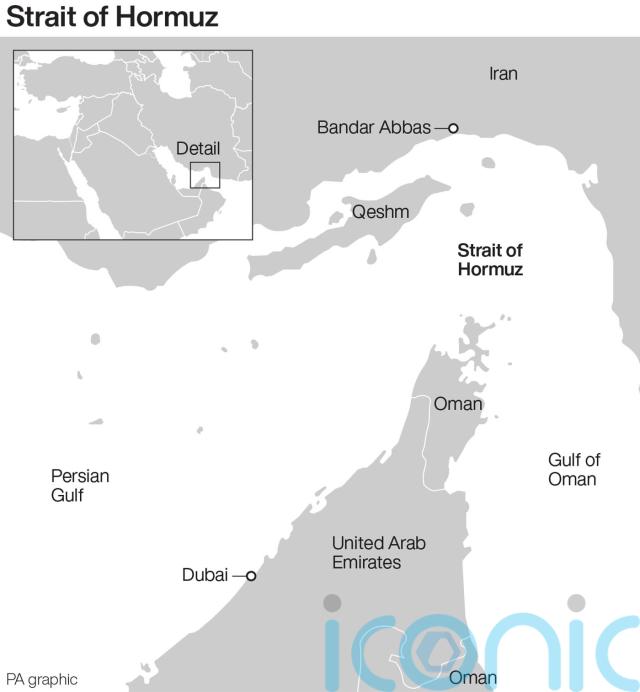
But speaking to reporters in Florida, the president said his advisers had had talks with “a top person” in the Iranian regime, and more conversations were due to take place “at some point very soon”.
He said: “We have had very, very strong talks. We will see where they lead. We have major points of agreement, I would say almost all points of agreement.”
Mr Trump later cautioned against suggestions a peace deal would definitely be struck, though he indicated that he wanted to see Tehran de-fanged of its nuclear programme, and US-Iranian joint control of the Strait of Hormuz as part of any agreement.
Speaking before the Liaison Committee, the Prime Minister insisted the UK would not become more deeply involved in the conflict.
The UK and its allies will continue to act in their own “collective self-defence”, Sir Keir said, adding: “But this is not our war, and we are not getting dragged into this war.”
The Prime Minister also told the committee that Britain has “very effective ways of defending ourselves” amid questions about whether Iranian long-distance missiles aimed at the UK could be intercepted.
But he added: “I don’t want to raise levels of public anxiety. They are anxious about what they’re already seeing on their television screens. They’re anxious about the impact it will have on them, particularly economically, in their households.”
Elsewhere, the Prime Minister revealed a long-delayed defence investment plan was now on his desk awaiting final consideration, and suggested he favoured closer co-operation with the EU on defence in future.
Joining Safe (Security Action for Europe), a Brussels defence fund, will “certainly be on the agenda” of an upcoming summit involving the UK and EU and “intensive discussions” have been had about how to move forward, Sir Keir said.
The Prime Minister will chair a meeting of the Government’s emergency Cobra committee on Monday to discuss how to handle the economic impact of the conflict.
The meeting is expected to involve Cabinet ministers including Chancellor Rachel Reeves, Foreign Secretary Yvette Cooper and Energy Secretary Ed Miliband, along with Bank of England governor Andrew Bailey.
The Prime Minister told the Liaison Committee that the Cobra meeting would examine “a wider set of measures for the economy and specific sectors within the economy”, having already announced support for homes reliant on heating oil.
He also continued to play down the prospect of fuel rationing, saying the Government had no “meaningful concerns about energy supplies” while acknowledging that the price “fluctuates daily”.
Oil prices have risen above 100 US dollars a barrel since the outbreak of the conflict, sparking concerns about the impact on the cost of living in the UK.
On Monday, oil reached 114 dollars a barrel before falling back in the wake of Mr Trump’s announcement of talks to about 101 dollars.
Elsewhere, the British warship sent to the eastern Mediterranean to defend Cyprus, HMS Dragon, has arrived and will be ready to begin “operational integration” into the island’s defence on Monday night, Defence Secretary John Healey told the Commons.
The Type 45 destroyer left Portsmouth some two weeks ago, on March 10. Ministers announced on March 3 it would be deployed to the Middle East.
Its slow deployment in the wake of the American-Israeli bombardment of Iran, and the drone attacks on British bases which followed, has drawn criticism from the Government’s political rivals.

Subscribe or register today to discover more from DonegalLive.ie
Buy the e-paper of the Donegal Democrat, Donegal People's Press, Donegal Post and Inish Times here for instant access to Donegal's premier news titles.
Keep up with the latest news from Donegal with our daily newsletter featuring the most important stories of the day delivered to your inbox every evening at 5pm.

This publication supports the work of the Press Council of Ireland and Office of the Press Ombudsman, and our staff operate within the Code of Practice of the Press Council. You can obtain a copy of the Code, or contact the Council, at www.presscouncil.ie, Lo-call 1800 208 080 or email: info@presscouncil.ie.