
Gardai say the fatal incident happened near Kilworth, County Cork on Monday afternoon | FILE PHOTO
Search


25 Mar 2026

Please allow ads as they help fund our trusted local news content.
Kindly add us to your ad blocker whitelist.
If you want further access to Ireland's best local journalism, consider contributing and/or subscribing to our free daily Newsletter .
Support our mission and join our community now.
To continue reading this article, you can subscribe for as little as €0.50 per week which will also give you access to all of our premium content and archived articles!
Alternatively, you can pay €0.50 per article, capped at €1 per day.
Thank you for supporting Ireland's best local journalism!


Political parties will be banned from accepting donations in cryptocurrencies, Sir Keir Starmer has announced, after the measure was recommended in a review of foreign financial interference.
The Government will also cap donations from UK citizens living abroad who are still on the electoral register in line with former top civil servant Philip Rycroft’s recommendations.
The Prime Minister told MPs the Rycroft review set out the “stark threats posed by illicit finance”.
He said: “We will act decisively to protect our democracy.
“That will include a moratorium on all political donations made through cryptocurrencies.”
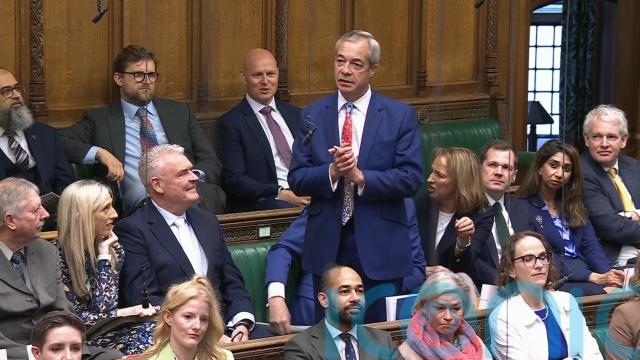
Sir Keir hit out at Nigel Farage, the leader of Reform UK, which has accepted crypto donations.
The Prime Minister said: “I hope that will be welcomed across the House. There is only one party leader who has shown he will say anything, no matter how divisive, if he is paid to do so.”
Mr Farage ignored the jibe as he challenged Sir Keir over his record on small boat migrants.
Reform MPs walked out of Prime Minister’s Questions after Sir Keir made the announcement.
Mr Rycroft urged ministers to legislate for a moratorium in its Representation of the People Bill going through Parliament, in a blow to Nigel Farage’s party.
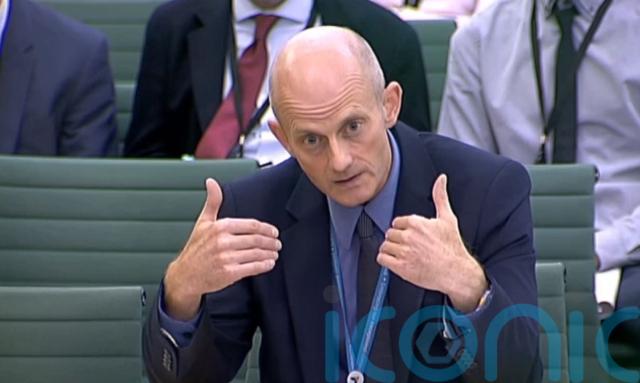
This should be seen not as a “prelude to an outright and permanent ban” but an interlude for regulation to catch up to reality, he wrote in his report.
His recommendations come amid concerns that digital currencies could be used to hide where funding has come from.
The new rules will be applied retrospectively to all cryptocurrency donations received from today, Communities Secretary Steve Reed confirmed.
“This moratorium will remain in place until the Electoral Commission and this Parliament are satisfied there is sufficient regulation in place to ensure full confidence and transparency in donations being made in this way subject to parliamentary approval,” he said.
Donations from British citizens living overseas will also be capped at £100,000 annually in line with Mr Rycroft’s review, he told MPs.
Parties would have 30 days to return any such donations received in the interim once the rules come into force, after which criminal penalties will apply.
This will apply to donations in all UK elections, including the upcoming English local elections, Scottish Parliament elections and Senedd elections, he said.
New rules on crypto will apply “in any amount, including donations of a value that would ordinarily fall below the threshold for control on donations”, he said.
Mr Rycroft also proposed a ban on foreign-funded online political ads.
Attempts to use financial influence to infiltrate politics by gaining leverage and sowing division and distrust are not new but “arguably more acute”, Mr Rycroft noted.
He said he was “not pressing the panic button” but “ringing the alarm bell” on the issue and urged the Government to “act swiftly” on his recommendations.
Speaking to reporters, Mr Rycroft said he had spoken to Reform UK while compiling the report.
Asked about the prospect of Reform feeling targeted by the crypto recommendation, he said: “I wasn’t here to look out for the interests of any political party, I was here to look out for the interest of our democratic processes.”
The publication of Mr Rycroft’s report on Wednesday comes amid heightened fears about political meddling by hostile states.
The review was commissioned in December last year following a series of high-profile cases of attempts by foreign states to influence UK politics, including the jailing of Reform’s former Welsh leader Nathan Gill for taking bribes to make pro-Russian statements.
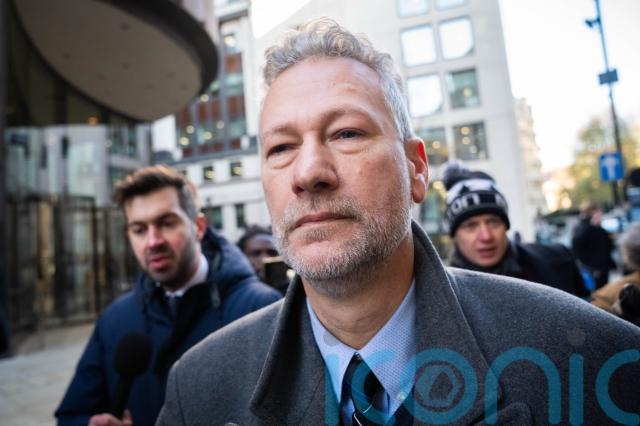
The report’s publication came as National Security Adviser Jonathan Powell visits China.
Mr Rycroft wrote that “foreign interference in our politics is real and persistent”, with the UK a target for espionage from Russia, China and Iran.
He even pointed to the risk emanating from Donald Trump’s US.
He said: “Separately, beyond these hostile state threats, I am also cognisant of a potential new threat: an emerging willingness of foreign actors and private citizens, including from allies like the United States, to interfere in, and influence, politics abroad in pursuit of their own agenda.”
The UK is already experiencing “information warfare” and “our defences are worryingly weak,” Mr Rycroft warned.
His report said foreign actors are subverting the debate on social media “to exacerbate division and increase polarisation with a view simply to destroying the capacity of the UK to function as a well‑governed state”.
Fake accounts and bots “can push large quantities of disinformation,” representing “a new and relatively cheap way” for foreign states and non-state actors to interfere with the democratic process of other countries, Mr Rycroft noted.
“If relentless exposure to disinformation on social media persuades even a small proportion of the UK population that our politics is irretrievably broken, the risk grows rapidly that some will seek to resolve their discontents by extra-political action,” he wrote.
Liberal Democrats Cabinet spokeswoman Lisa Smart said: “Nathan Gill was happy to stuff his pockets with Russian bribes and it looks like Nigel Farage has shown no remorse whatsoever.
“Reform taking untraceable secretive crypto donations to fund their Trump-style politics here in the UK should never have been allowed.
“Farage must return all the crypto donations he’s received from anonymous overseas sources or admit he’s happy to let foreign sources of money poison our politics in the UK.”
Shadow communities secretary James Cleverly said the Conservatives largely agree with the proposals set out but accused the Government of “poor procedure”.
“The Rycroft review, 50 pages, was published 20 minutes before Prime Minister’s Questions, and only five minutes before one of his ministers was hosting a meeting that I was invited to on local government reorganisation, making it very difficult for me to properly read the detail of the report.”
He claimed the proposals were being “rushed into” the Representation of the People Bill “without proper consultation, without proper scrutiny, without proper time”.
Mr Reed said it was “necessary to act us at speed because of the gravity of the threats”.
“We had to act quickly to bring forward the provisions, because we could not allow a window of opportunity to open which would allow malign and hostile actors to evade the intent that we’re all seeking.”

Subscribe or register today to discover more from DonegalLive.ie
Buy the e-paper of the Donegal Democrat, Donegal People's Press, Donegal Post and Inish Times here for instant access to Donegal's premier news titles.
Keep up with the latest news from Donegal with our daily newsletter featuring the most important stories of the day delivered to your inbox every evening at 5pm.

This publication supports the work of the Press Council of Ireland and Office of the Press Ombudsman, and our staff operate within the Code of Practice of the Press Council. You can obtain a copy of the Code, or contact the Council, at www.presscouncil.ie, Lo-call 1800 208 080 or email: info@presscouncil.ie.