'His light was so bright' - Irish man's body brought to grandad's pub after sudden death
Search


27 Mar 2026

Please allow ads as they help fund our trusted local news content.
Kindly add us to your ad blocker whitelist.
If you want further access to Ireland's best local journalism, consider contributing and/or subscribing to our free daily Newsletter .
Support our mission and join our community now.
To continue reading this article, you can subscribe for as little as €0.50 per week which will also give you access to all of our premium content and archived articles!
Alternatively, you can pay €0.50 per article, capped at €1 per day.
Thank you for supporting Ireland's best local journalism!


Parents and children should not be left to shoulder the burden of staying safe online alone, the children’s commissioner has said.
Dame Rachel de Souza said tech companies must take greater responsibility in creating platforms that are safe by design, after prime minister Sir Keir Starmer promised a “fight” with social media firms to protect children.
It comes as the Government issued guidance that advises parents of younger children to limit screen time for two to five-year-olds to an hour a day, and less if possible.
For children under two, screen time should be avoided unless for shared activities that encourage children to interact with others, parents have also been advised.
“I have spoken to thousands of families, and I’m concerned too many very young children are spending longer on screens than the emerging evidence tells us is healthy,” Dame Rachel said.
“For a small but significant group of children, this use is far beyond what is now being recommended – that shows up as disrupted sleep, less interaction with parents or siblings, difficulty paying attention or other impacts on their early development.”
The new guidance is “not about making parents feel guilty”, the children’s commissioner added.
“It aims to give parents more confidence setting boundaries that best support their child, not to shame them into action,” she said.
The Government is also currently consulting on how to protect children under the age of 16 online, which could include an Australia-style social media ban or measures like time limits and curfews.
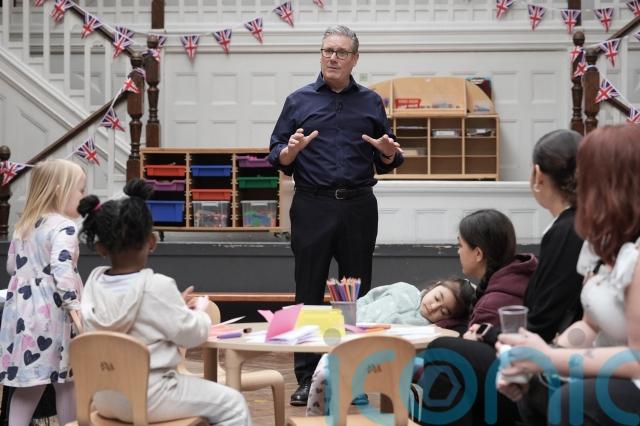
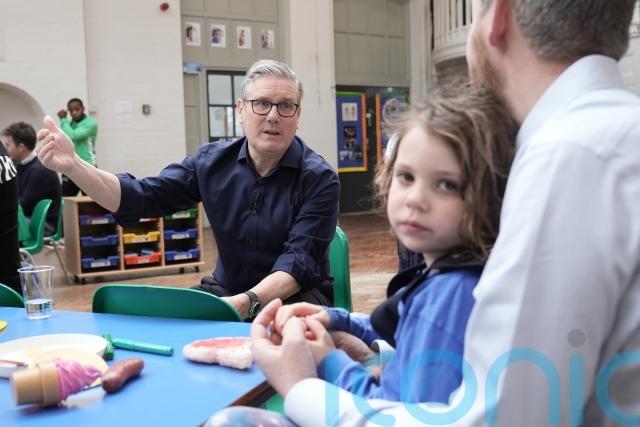
Visiting a school in South London, Sir Keir said: “Some of this will require a fight. If we’re going to do more to protect children, we’re going to have to fight some of the platforms that are putting the material up there because they’re putting this addictive stuff up there for a reason.
“They want more children to spend more time online and we’ve got to fight them and be clear whose side we’re on here.”
“Parents and children should not be left to shoulder this burden alone – tech companies must take greater responsibility creating platforms which are safe by design so that young users are protected on their platforms,” Dame Rachel said.
“Ultimately, my hope is for children’s safety to be at the centre of this evolving debate, tackling dangers online – not simply banning children from real world experiences that make up modern childhood and thinking that’s enough to protect them.”
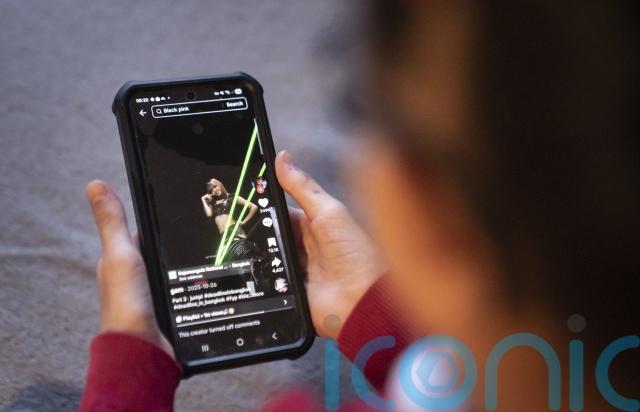
The new guidance on screen time for the youngest children advises families to avoid fast-paced, social media-style videos and toys or tools that use artificial intelligence (AI), and keep bedtimes and mealtimes screen-free.
The guidance was developed by a panel led by the children’s commissioner and children’s health expert, Professor Russell Viner.
Prof Viner, a paediatrician and professor at University College London, said he would next like to see the Government issue more specific advice to parents on what is actually good content for their children to see.
He told the Press Association: “What we have suggested to the Government is better guidance from educationalists on what’s good content and actually what isn’t, because there’s a lot of educational content out there making all sorts of claims that can be confusing for parents.”
Prof Viner said long periods of watching screens without interactive engagement “crowd out” important things for young children’s development like sleep and physical activity.
It also seems to have an impact on children’s language development, he added.
About 98% of children are watching screens on a daily basis by the age of two, the Government has previously said, and those with the highest screen time see an impact on their language.
Appearing on ITV’s Good Morning Britain, education minister Josh MacAlister said there has been “a complete rewiring of childhood” over the last decade due to social media and screen time.
“For parents of really small children, we’re trying to help create some new social norms,” he said.
“There’s no judgment. It’s much easier to say these things than it is to do them, I appreciate.”
A jury ruled on Wednesday in Los Angeles that Google, owner of YouTube; and Meta, which runs Facebook, Instagram and WhatsApp; built platforms to hook young users without regard for their wellbeing.
Sir Keir told reporters on Thursday he was very keen to tackle addictive features on social media.
Prof Viner told PA evidence from Australia, and from a trial on different restrictions, will help the UK to make decisions on how to protect young people.
“We absolutely need to do something to limit the exposure of adolescents to harmful content, as that’s the real issue,” he said.
“I absolutely support thinking about how we get social media companies to design things that are pro-development by design.”

Subscribe or register today to discover more from DonegalLive.ie
Buy the e-paper of the Donegal Democrat, Donegal People's Press, Donegal Post and Inish Times here for instant access to Donegal's premier news titles.
Keep up with the latest news from Donegal with our daily newsletter featuring the most important stories of the day delivered to your inbox every evening at 5pm.

This publication supports the work of the Press Council of Ireland and Office of the Press Ombudsman, and our staff operate within the Code of Practice of the Press Council. You can obtain a copy of the Code, or contact the Council, at www.presscouncil.ie, Lo-call 1800 208 080 or email: info@presscouncil.ie.