The Faulkner continue to ask people to pray for Scarlett's recovery
Search


30 Mar 2026

Please allow ads as they help fund our trusted local news content.
Kindly add us to your ad blocker whitelist.
If you want further access to Ireland's best local journalism, consider contributing and/or subscribing to our free daily Newsletter .
Support our mission and join our community now.
To continue reading this article, you can subscribe for as little as €0.50 per week which will also give you access to all of our premium content and archived articles!
Alternatively, you can pay €0.50 per article, capped at €1 per day.
Thank you for supporting Ireland's best local journalism!


Bosses from energy, shipping and banking firms will meet Sir Keir Starmer as Donald Trump warned he could obliterate Iran’s oil wells and power infrastructure.
The Downing Street discussions will focus on Iran’s ongoing blockade of the Strait of Hormuz, which has disrupted a vital shipping route for the oil and gas industry along with supplies of other products such as fertiliser.
US president Mr Trump threatened the destruction of Iran’s energy infrastructure and possibly its vital water desalination plants unless the strait is “open for business”.
The Prime Minister has pleaded for de-escalation in the Middle East, but Mr Trump has sent thousands of extra US troops and raised the prospect of military action to seize Iran’s Kharg Island, a crucial facility for oil exports.
In a post on his Truth Social platform, Mr Trump said the US had made “great progress” in discussions with a “more reasonable” Iranian regime to end the war triggered by the US-Israeli strikes.
He wrote: “Great progress has been made but, if for any reason a deal is not shortly reached, which it probably will be, and if the Hormuz Strait is not immediately ‘open for business’, we will conclude our lovely ‘stay’ in Iran by blowing up and completely obliterating all of their electric generating plants, oil wells and Kharg Island (and possibly all desalinisation plants!), which we have purposefully not yet ‘touched’.”
Oil prices spiked early on Monday after the US president said he was considering action to take over Kharg Island.
— Rapid Response 47 (@RapidResponse47) March 30, 2026
The talks in Downing Street will involve representatives from energy firms Shell and BP, shipping giant Maersk, maritime insurance specialist Lloyd’s of London and banks HSBC and Goldman Sachs.
The executives will be updated on the situation in the region from Major General Richard Cantrill, the UK’s maritime operations commander.
The summit at No 10 is expected to be followed by a Cobra meeting on Tuesday, where senior ministers will discuss the ongoing economic hit caused by the war.
Ahead of his meeting with business chiefs, Sir Keir launched Labour’s campaign ahead of May’s local elections.
Speaking at the event in Wolverhampton, he said: “People look at their screens and they’re worried when they see explosions, infrastructure blown up, the rhetoric that goes with it, worried about whether this is going to escalate even further.”
Indicating that Britain will not follow the US into an Iranian foray, he added: “This is not our war and we are not going to get dragged into it.”
He said: “We are bringing together the shipping sector, insurance and energy, because obviously that’s a focus of concern.
“A lot of discussion about the Strait of Hormuz and what we can do to get the straits open, which is the single most effective way to bring energy prices down.
“I will have a Cobra tomorrow, another Cobra, to look at the economic impacts of the war and making sure that everything that we need to have in place, everything is monitored and audited properly.”
Asked about whether petrol rationing was being considered, as it has in other European nations, the Prime Minister insisted the advice to motorists is that there was “no need to do anything other than what is normal”.
Tory leader Kemi Badenoch, who was on the campaign trail in Scotland, said: “Sending troops to Kharg Island is an escalation. What I want to see is a de-escalation of this war.”
The conflict has left Britain facing the risk of higher inflation and lower growth.
Mrs Badenoch called for an expansion of North Sea drilling to boost the economy and energy security and scrapping VAT on household electric and gas bills to cut costs for consumers.
“The Government has a choice and they are making bad choices,” Mrs Badenoch told the Press Association.
The cost of oil benchmark Brent crude lifted more than 3% to 117 US dollars a barrel at one stage in Monday morning trading, reaching levels not seen since 2022.
The impact of the ongoing Strait of Hormuz blockade was compounded by Iran-backed Houthis in Yemen launching strikes against Israel, raising the possibility of attacks on Red Sea shipping.
Diesel prices have reached their most expensive level since December 2022, with the average price of a litre of the fuel at UK forecourts on Monday hitting 181.2p according to RAC analysis.
That represents a 27% increase from 142.4p on February 28, the day the war in the Middle East began.
Average petrol prices have reached 152.0p per litre, a rise of 14% from 132.8p over the same period.
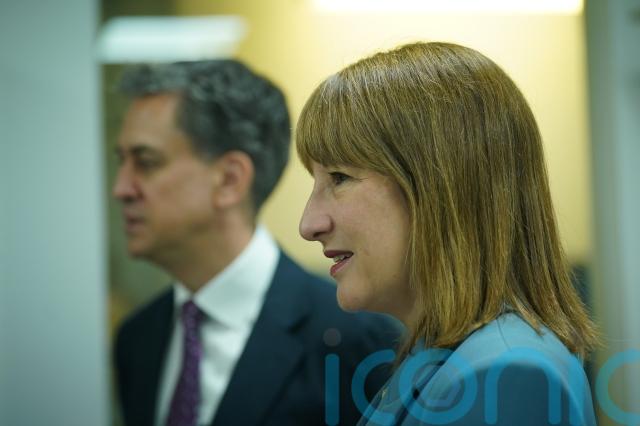
Meanwhile, Chancellor Rachel Reeves joined a virtual meeting of G7 finance and energy ministers and central bank governors, along with Energy Secretary Ed Miliband.
The G7 – the UK, US, Germany, France, Italy, Canada and Japan along with the European Union – were considering ways to respond to the economic hit from the war.
Defence Secretary John Healey is in the Middle East to speak to the UK’s allies in the Gulf.

Subscribe or register today to discover more from DonegalLive.ie
Buy the e-paper of the Donegal Democrat, Donegal People's Press, Donegal Post and Inish Times here for instant access to Donegal's premier news titles.
Keep up with the latest news from Donegal with our daily newsletter featuring the most important stories of the day delivered to your inbox every evening at 5pm.

This publication supports the work of the Press Council of Ireland and Office of the Press Ombudsman, and our staff operate within the Code of Practice of the Press Council. You can obtain a copy of the Code, or contact the Council, at www.presscouncil.ie, Lo-call 1800 208 080 or email: info@presscouncil.ie.