
Rest in Peace James McEvoy
Search


31 Mar 2026

Please allow ads as they help fund our trusted local news content.
Kindly add us to your ad blocker whitelist.
If you want further access to Ireland's best local journalism, consider contributing and/or subscribing to our free daily Newsletter .
Support our mission and join our community now.
To continue reading this article, you can subscribe for as little as €0.50 per week which will also give you access to all of our premium content and archived articles!
Alternatively, you can pay €0.50 per article, capped at €1 per day.
Thank you for supporting Ireland's best local journalism!


Grocery price inflation held steady at 4.3% in March amid warnings that the figure is “likely to increase” as the Middle East conflict continues.
The conditions that “make shoppers feel vulnerable” were “only intensifying”, with more than 20% of Britons describing themselves as financially struggling and more than 60% very or extremely concerned about the rising price of groceries even before the war started, Worldpanel by Numerator said.
Each additional 1% on the rate of inflation could add more than £50 to the annual supermarket bill for the average household, it warned.
Fraser McKevitt, head of retail and consumer insight at Worldpanel, said: “Financial anxiety among British consumers was already running high before the conflict began.
“Shoppers will look to lessen the impact on their baskets when faced with rising prices, and while there remains a level of uncertainty, we are watching the data closely for behavioural changes like trading down and switching which often emerge during periods of economic pressure.”
However, just over 40% of shoppers bought at least one pack of hot cross buns in the past four weeks and 30% bought at least one Easter egg, despite rising prices for the treat.
Mr McKevitt added: “While the pace of chocolate price inflation eased again – down to 8% from 9.3% last month – continued price pressures mean the average amount paid for an Easter egg was 9% higher than last year, up to £3.27.
“Despite this, there is no sign of shoppers choosing smaller eggs though, with an average weight of 162g, a marginal increase on last year.”
Lidl increased its market share by 0.5 percentage points – more than any other grocer – over the 12 weeks to March 22, to achieve 8.3%, with sales at the discounter rising 9.6% year on year.
Online only retailer Ocado grew even faster, with sales rising by 12.3% and now accounting for 2.2% of the market.
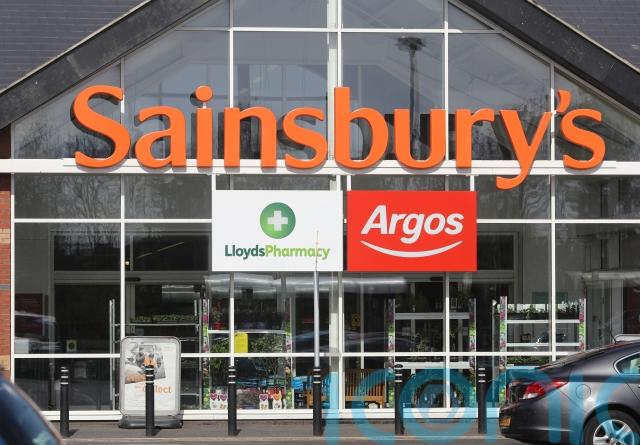
Sainsbury’s attracted more new households than any other grocer, with 387,000 more customers through the door than in the same quarter a year ago.
Tesco made the same share gain, an increase of 0.3 percentage points, giving them 28% of all sales, while spending through the tills at Britain’s largest supermarket was up by 5%.
Asda held 11.6% of the market with sales down 0.9%, although this marked its best performance since April 2024.
Higher average spending per trip drove a 5.8% sales growth at Waitrose, its fastest rate of growth in five years.

Subscribe or register today to discover more from DonegalLive.ie
Buy the e-paper of the Donegal Democrat, Donegal People's Press, Donegal Post and Inish Times here for instant access to Donegal's premier news titles.
Keep up with the latest news from Donegal with our daily newsletter featuring the most important stories of the day delivered to your inbox every evening at 5pm.

This publication supports the work of the Press Council of Ireland and Office of the Press Ombudsman, and our staff operate within the Code of Practice of the Press Council. You can obtain a copy of the Code, or contact the Council, at www.presscouncil.ie, Lo-call 1800 208 080 or email: info@presscouncil.ie.