The woman was conveyed to University Hospital Limerick for treatment of serious injuries. She was pronounced deceased yesterday evening.
Search


01 Apr 2026

Please allow ads as they help fund our trusted local news content.
Kindly add us to your ad blocker whitelist.
If you want further access to Ireland's best local journalism, consider contributing and/or subscribing to our free daily Newsletter .
Support our mission and join our community now.
To continue reading this article, you can subscribe for as little as €0.50 per week which will also give you access to all of our premium content and archived articles!
Alternatively, you can pay €0.50 per article, capped at €1 per day.
Thank you for supporting Ireland's best local journalism!


Sir Keir Starmer has warned the Iran war will “affect the future of our country” but insisted the UK was “well-placed” to weather the storm as the conflict hits the economy and pushes up fuel and energy costs for consumers.
The Prime Minister sought to reassure Britons that there would be a “long-term plan” in place to emerge a “stronger and more secure nation” amid widespread concerns about the impact of the crisis on the cost of living.
Meanwhile, Foreign Secretary Yvette Cooper will host a meeting of international leaders to “assess all viable diplomatic and political measures” to reopen the Strait of Hormuz, he said, as Tehran’s stranglehold on the key shipping route has seen oil and gas prices soar.
At a Downing Street press conference on Wednesday, Sir Keir said he was not prepared to let the British people to relive the energy shocks of the 1970s.
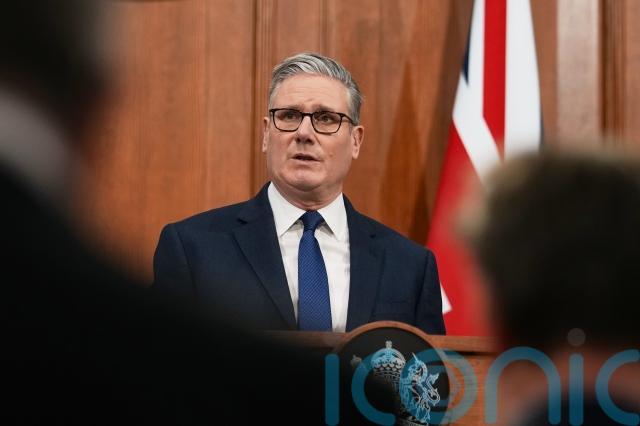
“I know that this is causing huge concern,” he said.
“People turn on their televisions, they look at their screens, they see explosions, infrastructure blown up, aggressive rhetoric.
“They worry that the UK will be dragged into this. We won’t.”
He told the televised news conference that “no matter how fierce this storm, we are well-placed to weather it” and “we have a long-term plan to emerge from it a stronger and more secure nation.”
Britain will also push forward with its pursuit of closer ties with the EU in the wake of the oil crisis, Sir Keir said, the transatlantic relationship comes under strain amid Donald Trump’s repeated criticism of allies for the extent of their involvement in the conflict.
The US President has said he is considering whether to pull America out of Nato and has suggested the UK and other countries that did not take part in strikes against Iran should secure the Strait of Hormuz themselves and “go get your own oil”.
Asked about the remarks on Wednesday, Sir Keir said he would continue to act in the British national interest “whatever the pressure on me and others, whatever the noise” and reiterated his insistence that the UK would not get dragged into a “wider war” beyond defensive action.
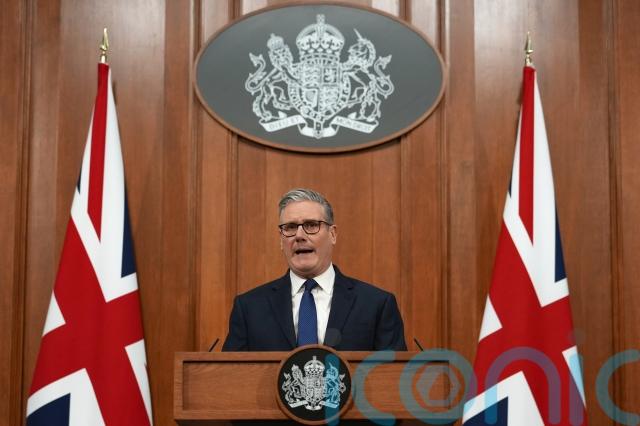
The Prime Minister defended Nato as “single most effective military alliance the world has ever seen” and said Britain remained fully committed to the bloc.
The Foreign Secretary will host a virtual meeting on Thursday with representatives from 35 countries including France, Germany, Italy, Japan, Canada and the Netherlands, where allies will discuss a plan to get tankers moving again in Hormuz.
A number of working-level meetings are expected to take place afterwards to work through the detail following the talks as the passage, through which a fifth of the world’s oil is shipped, remains blocked.
As a spike in oil prices pushes up the cost on forecourts across the country, Sir Keir has faced opposition calls to introduce measures to ease the burden on consumers.
Average diesel prices on Tuesday were 182.8p per litre, up 40p since the start of the conflict on February 28, with petrol at 152.8p per litre, an increase of 20p. Fuel duty is frozen until September and the scheduled increase is under review, but other countries have already cut taxes on petrol and diesel.
Elsewhere, experts have predicted that a drop in household energy bills of 7% from Wednesday could be followed by an 18% hike from July after Ofgem’s price cap fell from £1,758 to £1,641 – a reduction of £117 for the average dual fuel household.
The reduction is lower than the average £150 cut to bills pledged by the Chancellor in November, when she moved 75% of the cost of the renewables obligation from household bills onto general taxation and scrapped the energy company obligation (Eco) scheme.
Respected energy analyst Cornwall Insight has also said its prediction for Ofgem’s July to September price cap on household bills now stands at £1,929 for a typical dual fuel household – an increase of £288 on April’s limit.
The Chancellor will meet supermarket bosses and regulators on Wednesday to discuss the impact on consumers.
The extent of the economic disruption could depend on Mr Trump’s approach to the Strait of Hormuz.
He has indicated he is prepared to walk away from the military campaign he started with Israel against Iran without securing the reopening of the vital maritime chokepoint.

Subscribe or register today to discover more from DonegalLive.ie
Buy the e-paper of the Donegal Democrat, Donegal People's Press, Donegal Post and Inish Times here for instant access to Donegal's premier news titles.
Keep up with the latest news from Donegal with our daily newsletter featuring the most important stories of the day delivered to your inbox every evening at 5pm.

This publication supports the work of the Press Council of Ireland and Office of the Press Ombudsman, and our staff operate within the Code of Practice of the Press Council. You can obtain a copy of the Code, or contact the Council, at www.presscouncil.ie, Lo-call 1800 208 080 or email: info@presscouncil.ie.