The woman was conveyed to University Hospital Limerick for treatment of serious injuries. She was pronounced deceased yesterday evening.
Search


01 Apr 2026

Please allow ads as they help fund our trusted local news content.
Kindly add us to your ad blocker whitelist.
If you want further access to Ireland's best local journalism, consider contributing and/or subscribing to our free daily Newsletter .
Support our mission and join our community now.
To continue reading this article, you can subscribe for as little as €0.50 per week which will also give you access to all of our premium content and archived articles!
Alternatively, you can pay €0.50 per article, capped at €1 per day.
Thank you for supporting Ireland's best local journalism!


Sir Keir Starmer said the UK could weather the economic storm caused by the Iran conflict as Donald Trump claimed Tehran has asked for a ceasefire.
The Prime Minister acknowledged the Middle East crisis will “affect the future of our country” as households faced higher fuel costs now and the prospect of energy bill hikes later this year.
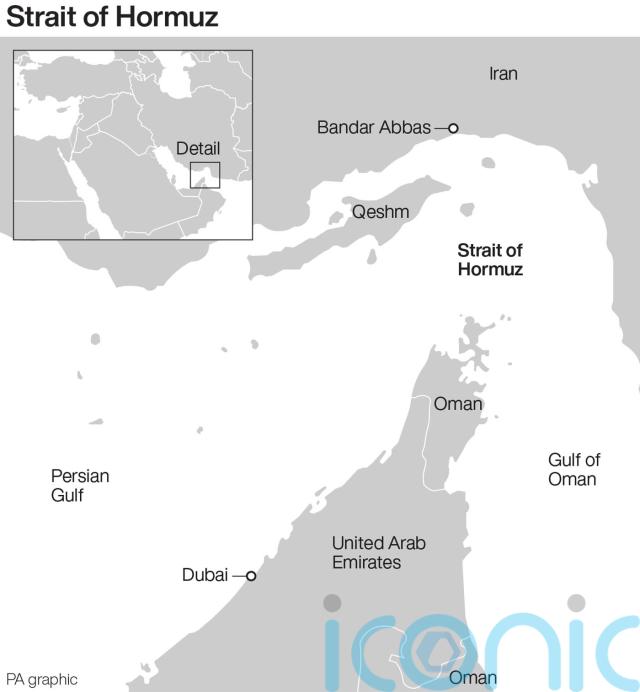
The UK is leading a diplomatic initiative to reopen the Strait of Hormuz, the vital oil and gas shipping route which Iran has effectively closed for most exports, but restoring the flow of global trade will not be easy, Sir Keir admitted.
In a post on his Truth Social platform, Mr Trump – who has made a series of claims about negotiations with Iran in recent days which have been denied by Tehran – said he would only consider a ceasefire if the strait is reopened.
He has previously indicated he will be prepared to end military operations without the strait being reopened to shipping traffic, telling the UK and other allies to “go get your own oil” in protest at a lack of support for the US-Israeli bombing campaign.
But in a social media post on Wednesday he said Iran had requested a ceasefire which the US “will consider when Hormuz Strait is open, free, and clear”.
“Until then, we are blasting Iran into oblivion or, as they say, back to the stone ages,” he added.
The Iranian foreign ministry said Mr Trump’s comments were “false and baseless”.
In the UK, Foreign Secretary Yvette Cooper will host an international meeting on Thursday to “assess all viable diplomatic and political measures” to reopen the strait, after 35 countries signed up to a statement expressing willingness to contribute to efforts to ensure safe passage for shipping.
Following the meeting, military planners will consider how to make the strait “accessible and safe” after the fighting has stopped, although this is not expected to involve the deployment of Royal Navy warships to police the waterway.
Sir Keir used a Downing Street press conference to attempt to reassure anxious Britons that the Government had a plan to deal with the cost-of-living pressures caused by the war.
He said he was not prepared to let the British people relive the energy shocks of the 1970s.
“I know that this is causing huge concern,” he said.
“People turn on their televisions, they look at their screens, they see explosions, infrastructure blown up, aggressive rhetoric.
“They worry that the UK will be dragged into this. We won’t.”
He said “no matter how fierce this storm, we are well-placed to weather it” and “we have a long-term plan to emerge from it a stronger and more secure nation”.
Britain will also push forward with its pursuit of closer ties with the EU in the wake of the oil crisis, Sir Keir said, as the transatlantic relationship comes under strain from Mr Trump’s repeated criticism of allies for refusing to join the military action.
The US president told the Telegraph he is considering whether to pull America out of Nato in response to the perceived lack of support.
Asked about the remarks on Wednesday, Sir Keir said he would continue to act in the British national interest “whatever the pressure on me and others, whatever the noise”.
The RAC said the average price of a litre of diesel at UK forecourts on Wednesday was 184.2p, up 29% since the war began on February 28, with petrol up 16% to 153.7p.
The AA advised drivers to cut their speed by 10% to improve fuel efficiency in response to the mounting cost of motoring.
Fuel duty is frozen until September, with the rise scheduled for then under review as a result of the high prices, but other countries including Australia have already taken action to reduce the impact of price hikes for drivers.
Update on UK operations in the Middle East, 1 April 2026. pic.twitter.com/LGYsQAySVL
— Ministry of Defence 🇬🇧 (@DefenceHQ) April 1, 2026
But Chancellor Rachel Reeves said she had to be cautious with the nation’s finances to avoid increasing inflation, interest rates and Government borrowing costs.
“If I promised that I could alleviate every price increase for every person, I wouldn’t be telling the truth, because all that you will be doing if you do that is pushing up inflation, interest rates and taxes in the future,” she told BBC Breakfast.
Meanwhile, RAF Regiment gunners shot down more than 10 Iranian drones overnight.
UK Typhoon and F-35 jets, as well as Wildcat helicopters, also continued defensive missions in Cyprus, Jordan, Bahrain, Qatar and the United Arab Emirates.
The UK has around 1,000 military personnel deployed across the Middle East.

Subscribe or register today to discover more from DonegalLive.ie
Buy the e-paper of the Donegal Democrat, Donegal People's Press, Donegal Post and Inish Times here for instant access to Donegal's premier news titles.
Keep up with the latest news from Donegal with our daily newsletter featuring the most important stories of the day delivered to your inbox every evening at 5pm.

This publication supports the work of the Press Council of Ireland and Office of the Press Ombudsman, and our staff operate within the Code of Practice of the Press Council. You can obtain a copy of the Code, or contact the Council, at www.presscouncil.ie, Lo-call 1800 208 080 or email: info@presscouncil.ie.