The woman was conveyed to University Hospital Limerick for treatment of serious injuries. She was pronounced deceased yesterday evening.
Search


01 Apr 2026

Please allow ads as they help fund our trusted local news content.
Kindly add us to your ad blocker whitelist.
If you want further access to Ireland's best local journalism, consider contributing and/or subscribing to our free daily Newsletter .
Support our mission and join our community now.
To continue reading this article, you can subscribe for as little as €0.50 per week which will also give you access to all of our premium content and archived articles!
Alternatively, you can pay €0.50 per article, capped at €1 per day.
Thank you for supporting Ireland's best local journalism!


The Chancellor and supermarket bosses agreed to explore together how to ease the cost of living for consumers amid a warning that the Middle East conflict could see food inflation soar higher than 9% by the end of 2026.
The Food and Drink Federation (FDF), which represents 12,000 food and drink manufacturers, hiked its inflation forecast for the year in light of the conflict.
Rachel Reeves and Energy Secretary Ed Miliband hosted supermarket bosses, including from Tesco, Sainsbury’s and Aldi, for talks at No 11 on Wednesday.
“They agreed to work together to explore what more can be done to ease the cost of living for consumers and strengthen supply chains,” a Government spokesperson said.
Helen Dickinson, chief executive at the British Retail Consortium, called it a “constructive” meeting and said that while “some inflation is inevitable, there are domestic policy levers that Government can pull in order to mitigate some of the inflationary pressures”.
It comes as economists for the FDF predicted food inflation will reach at least 9% by the end of the year, up from the 3.2% that it had forecast in September last year.
The shift has been caused by the effective closure of the Strait of Hormuz and disruption and damage to energy infrastructure in the Middle East.
This has sent Brent crude oil and natural gas prices skyrocketing to their highest level since 2022.
The FDF said the situation is fast-changing, but its revision to the inflation forecast is based on the assumption that the Strait of Hormuz opens to cargo traffic within the next two to three weeks and the majority of key facilities, such as oil, gas and fertiliser sites, return to normal within a year.
Disruption to oil and gas markets is having a direct and immediate impact on production costs for UK food and drink manufacturers, the FDF said.
This is because it is an industry that requires a lot of energy for the manufacturing process.
Many larger businesses are able to hedge costs by fixing energy contracts, but they are preparing for sharp price rises when contracts end, according to the FDF.
Meanwhile, it said smaller producers tend to buy energy “on the spot” and were already experiencing higher prices.
Dr Liliana Danila, FDF’s chief economist, said: “The food and drink sector is already feeling the force of this geopolitical shock.
“As one of the UK’s energy intensive industries, manufacturers are facing mounting energy bills, rising transport and packaging costs and disruption across key supply chains.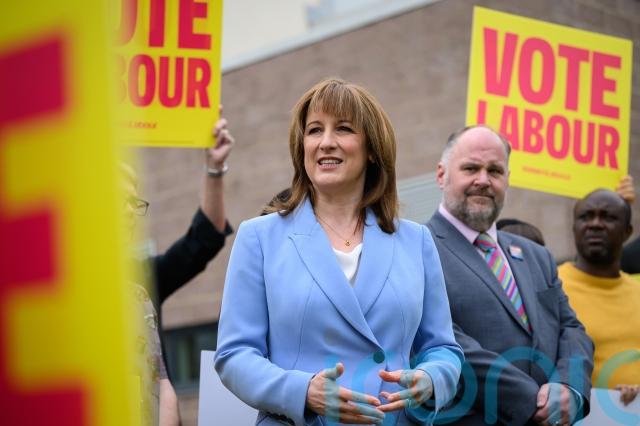
“These pressures are hitting simultaneously, and are a significant challenge for businesses to absorb.”
She added: “The current situation is unprecedented and hard to predict, however given the scale and speed of these cost increases, and despite companies’ best efforts not to pass price increases on, it’s clear that food inflation is going to rise in the months ahead.”

Subscribe or register today to discover more from DonegalLive.ie
Buy the e-paper of the Donegal Democrat, Donegal People's Press, Donegal Post and Inish Times here for instant access to Donegal's premier news titles.
Keep up with the latest news from Donegal with our daily newsletter featuring the most important stories of the day delivered to your inbox every evening at 5pm.

This publication supports the work of the Press Council of Ireland and Office of the Press Ombudsman, and our staff operate within the Code of Practice of the Press Council. You can obtain a copy of the Code, or contact the Council, at www.presscouncil.ie, Lo-call 1800 208 080 or email: info@presscouncil.ie.