Search


06 Apr 2026
Search
06 Apr 2026

Please allow ads as they help fund our trusted local news content.
Kindly add us to your ad blocker whitelist.
If you want further access to Ireland's best local journalism, consider contributing and/or subscribing to our free daily Newsletter .
Support our mission and join our community now.
To continue reading this article, you can subscribe for as little as €0.50 per week which will also give you access to all of our premium content and archived articles!
Alternatively, you can pay €0.50 per article, capped at €1 per day.
Thank you for supporting Ireland's best local journalism!


The Government considered using the emergency alerts system during 2024 summer riots, which targeted mosques and asylum hotels, a freedom of information request has revealed.
The alert system was launched in 2023 to warn the public of a danger to life in their area, with mobile phone users receiving a loud siren-like sound and a message on their devices if they are at risk.
A freedom of information (FOI) request submitted to the Cabinet Office by the Press Association has revealed a list of “near misses” – when alerts were considered but not actually sent out.
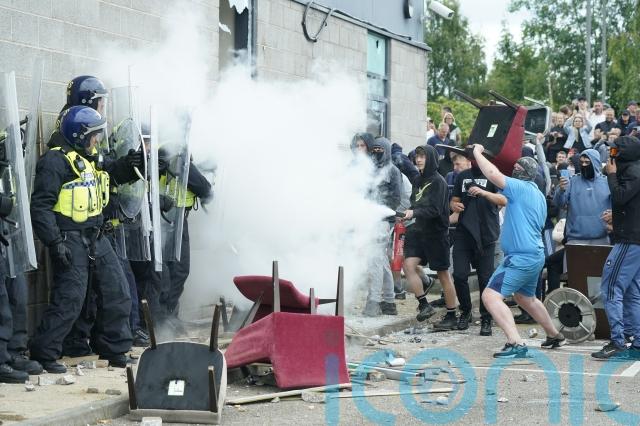
This included during the riots following the Southport attack in which three young girls were murdered at a Taylor Swift-themed dance class in the town on July 29 2024 – which government analysis said last month was “largely instigated” by far-right groups.
The violence quickly spread across the north of England, with mosques, community centres and libraries attacked, while hotels housing asylum seekers were also targeted.
The FOI release stated: “The following situations represent ‘near misses’ where the Cabinet Office has considered the use of the Emergency Alerts capability, which was ultimately stood down.
“The use of Emergency Alerts was considered during the disorder and unrest which occurred across the UK throughout August 2024.”
In another case, an alert to issue a “boil notice” to 40,000 people in the Brixham area of Devon was considered after reports of contaminated drinking water were giving residents severe sickness and diarrhoea.
The outbreak in May 2024 left some people in hospital and hundreds of others ill after contamination of the water supply by the parasite cryptosporidium.
Also among the list of “near miss” alerts that were never sent were concerns that debris from a Chinese Zhuque-3 space rocket weighing 11 tonnes could have hit the UK upon entering the atmosphere.
The Cabinet Office said there was a “very low probability” of impact on UK soil but that an alert was considered “due to the size of the debris, which was larger than usual”.
The debris ended up crashing into Earth some 1,200 miles south of New Zealand in January 2026.
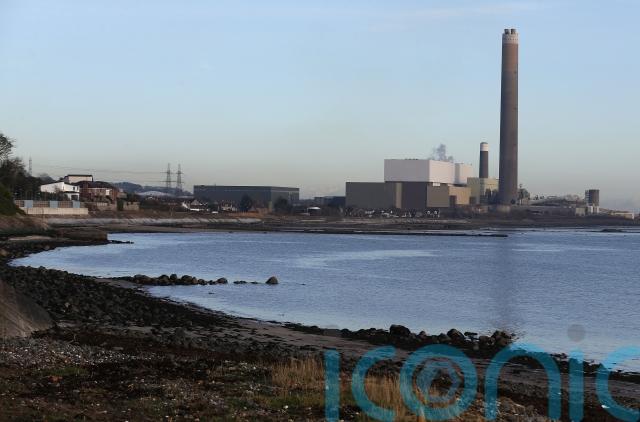
In September 2025, the Kilroot power station in Northern Ireland approached its running limit of 1,500 hours per year under environmental legislation.
The Cabinet Office was made aware of the possibility of power outages and considered the use of an emergency alert.
The alerts were also considered for severe weather events across the UK, including when widespread flooding occurred in Cumbria, Lancashire and Greater Manchester in 2025, and when Storm Babet brought exceptional rainfall and winds to Scotland and the North East of England in 2023.
A government spokesperson told PA: “As the public rightly expects, the government actively considers how to respond to a wide range of potential events.
“The Emergency Alerts system is a vital public safety tool designed to be used sparingly. Its activation threshold is very high and strictly reserved for threats to life.”

Subscribe or register today to discover more from DonegalLive.ie
Buy the e-paper of the Donegal Democrat, Donegal People's Press, Donegal Post and Inish Times here for instant access to Donegal's premier news titles.
Keep up with the latest news from Donegal with our daily newsletter featuring the most important stories of the day delivered to your inbox every evening at 5pm.

This publication supports the work of the Press Council of Ireland and Office of the Press Ombudsman, and our staff operate within the Code of Practice of the Press Council. You can obtain a copy of the Code, or contact the Council, at www.presscouncil.ie, Lo-call 1800 208 080 or email: info@presscouncil.ie.